
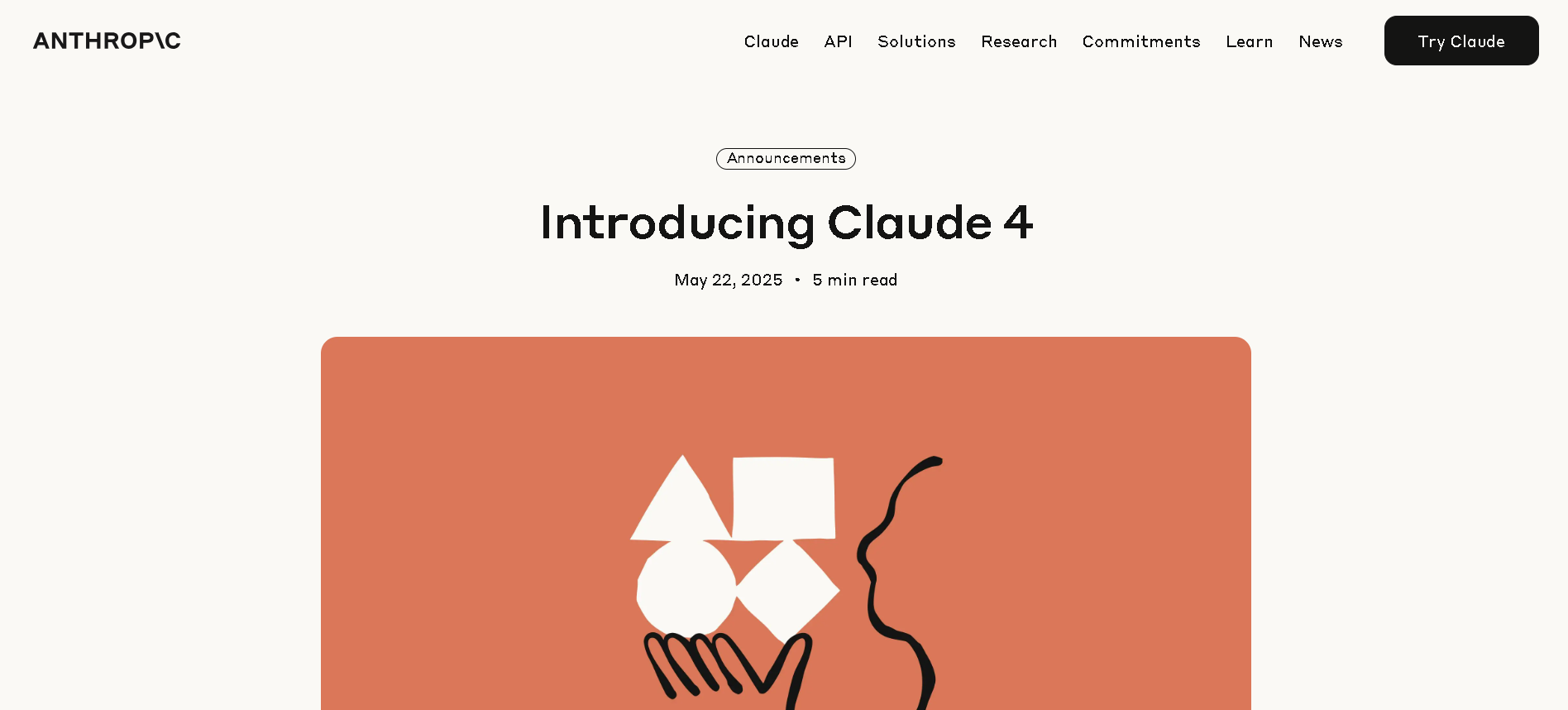
- Developers & Engineers: Drive end-to-end coding projects, debugging, multi-file refactors, tests, and CI pipelines.
- Data Scientists & Analysts: Analyze complex data, interpret visuals, and surface insights from lengthy documents.
- AI & Automation Teams: Build sophisticated AI agents and multi-step workflows with strong reasoning.
- Enterprise & AI-Powered App Builders: Embed Opus 4 via Anthropic API, Amazon Bedrock, Google Vertex AI, Snowflake Cortex AI, and Databricks.
- Writers & Knowledge Teams: Generate polished content and get accurate Q&A over extensive datasets.
How to Use Claude Opus 4?
- Get Access: Available through Anthropic’s API, Amazon Bedrock, and Google Vertex AI on Pro/Max/Team/Enterprise plans.
- Choose Mode: Use Standard Mode for fast answers or enable Extended Thinking for deeper, transparent multi-step reasoning.
- Set Token & Thinking Budgets: Configure input pages and allocate thinking tokens (up to 64K+) to balance speed, depth, and cost.
- Run Long-Running Code Sessions: Launch and maintain complex workflows, refactors, CLI tasks via Claude Code agent interface.
- Unmatched Endurance: Can autonomously execute coding projects uninterrupted for up to seven hours without losing context.
- Benchmark-Driven Excellence: Highest-reported SWE-bench score (72.5%) and leading Terminal-bench result (43.2%).
- Hybrid-Reasoning Model: Offers instant responses or deep reasoning/control, no model switch needed.
- Flagship Coding Agent: Supports agentic command-line workflows via Claude Code—ideal for CI, testing, and automation.
- Broad Enterprise Availability: Accessible via major cloud APIs (Anthropic, Bedrock, Vertex), making deployment flexible.
- Highly capable in real-world programming and debugging
- Best-in-class reasoning and coding benchmark performance
- Long-running sessions ideal for agentic workflows
- Hybrid response control: fast or deep depending on use case
- Flexible API and cloud integration options
- Requires significant tokens for complex tasks
- Advanced capabilities only on paid plans
- Overpowered for casual or lightweight use cases
Pro Mode
$20/month
Connect Google Workspace: email, calendar, and docs
Connect any context or tool through Integrations with remote MCP
Extended thinking for complex work
Ability to use more Claude models
Max
$100/month
- Choose 5x or 20x more usage than Pro
- Higher output limits for all tasks
- Early access to advanced Claude features
- Priority access at high traffic times
API Usage
$15/$75 per 1M tokens
- $15 input & $75 output per 1M tokens
- Prompt caching write - $18.75 / MTok
- Prompt caching read- $1.50 / MTok
Proud of the love you're getting? Show off your AI Toolbook reviews—then invite more fans to share the love and build your credibility.
Add an AI Toolbook badge to your site—an easy way to drive followers, showcase updates, and collect reviews. It's like a mini 24/7 billboard for your AI.
Reviews
Rating Distribution
Average score
Popular Mention
FAQs
Similar AI Tools
Grok 3
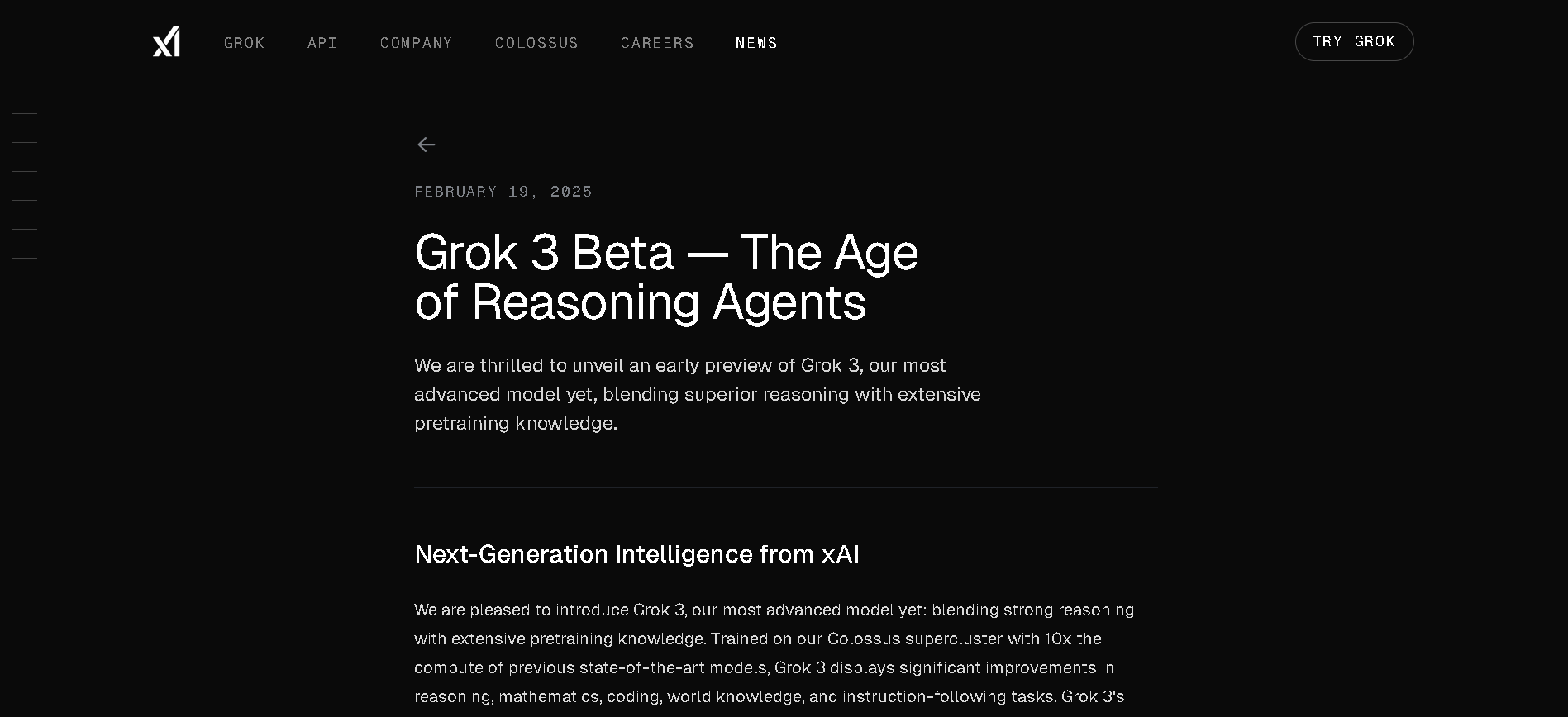
Grok 3 is the latest flagship chatbot by Elon Musk’s xAI, described as "the world’s smartest AI." It was trained on a massive 200,000‑GPU supercomputer and offers tenfold more computing power than Grok 2. Equipped with two reasoning modes—Think and Big Brain—and featuring DeepSearch (a contextual web-and-X research tool), Grok 3 excels in math, science, coding, and truth-seeking tasks—all while offering fast, lively conversational style.
Grok 3
Grok 3 is the latest flagship chatbot by Elon Musk’s xAI, described as "the world’s smartest AI." It was trained on a massive 200,000‑GPU supercomputer and offers tenfold more computing power than Grok 2. Equipped with two reasoning modes—Think and Big Brain—and featuring DeepSearch (a contextual web-and-X research tool), Grok 3 excels in math, science, coding, and truth-seeking tasks—all while offering fast, lively conversational style.
Grok 3
Grok 3 is the latest flagship chatbot by Elon Musk’s xAI, described as "the world’s smartest AI." It was trained on a massive 200,000‑GPU supercomputer and offers tenfold more computing power than Grok 2. Equipped with two reasoning modes—Think and Big Brain—and featuring DeepSearch (a contextual web-and-X research tool), Grok 3 excels in math, science, coding, and truth-seeking tasks—all while offering fast, lively conversational style.

Gemini 2.5 Pro
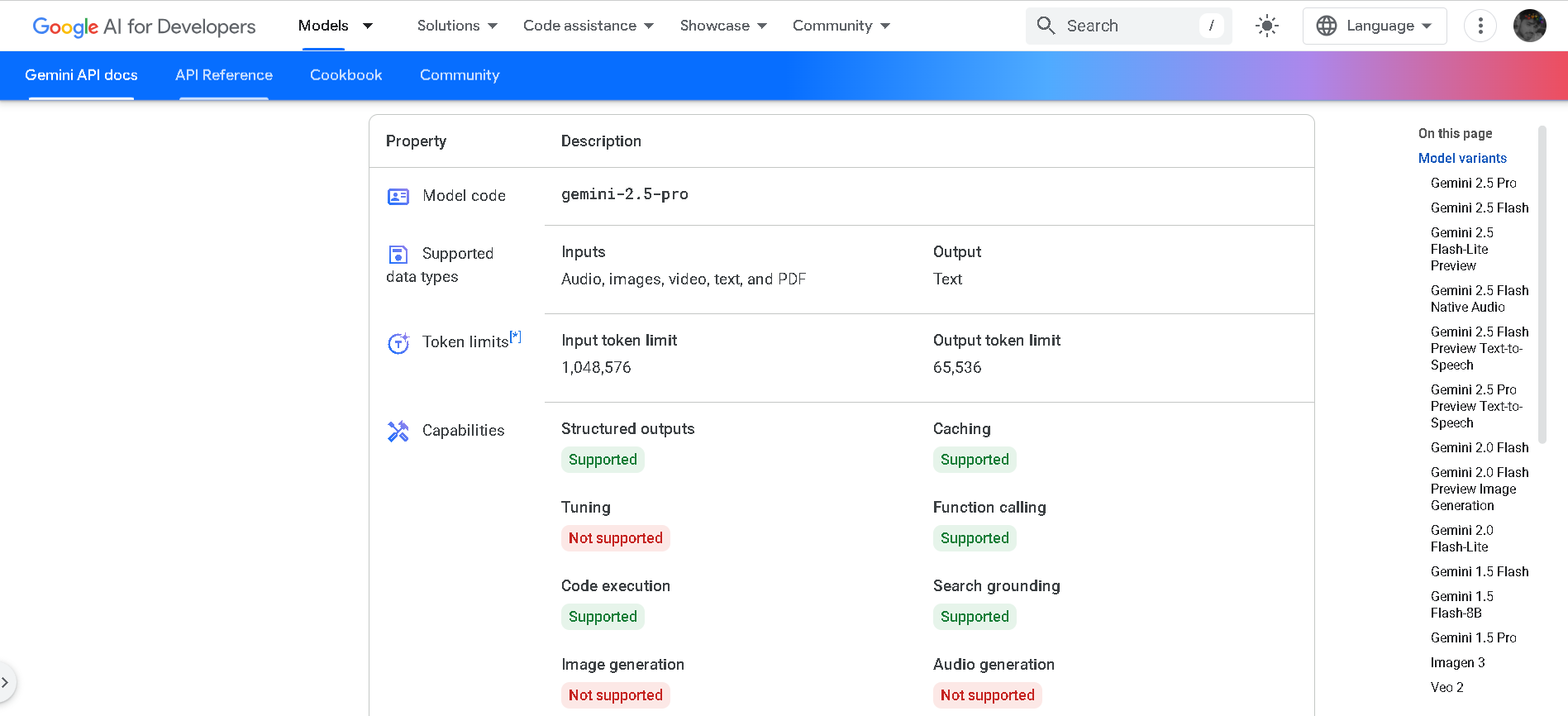
Gemini 2.5 Pro is Google DeepMind’s advanced hybrid-reasoning AI model, designed to think deeply before responding. With support for multimodal inputs—text, images, audio, video, and code—it offers lightning-fast inference performance, up to 2 million tokens of context, and top-tier results in math, science, and coding benchmarks.
Gemini 2.5 Pro
Gemini 2.5 Pro is Google DeepMind’s advanced hybrid-reasoning AI model, designed to think deeply before responding. With support for multimodal inputs—text, images, audio, video, and code—it offers lightning-fast inference performance, up to 2 million tokens of context, and top-tier results in math, science, and coding benchmarks.
Gemini 2.5 Pro
Gemini 2.5 Pro is Google DeepMind’s advanced hybrid-reasoning AI model, designed to think deeply before responding. With support for multimodal inputs—text, images, audio, video, and code—it offers lightning-fast inference performance, up to 2 million tokens of context, and top-tier results in math, science, and coding benchmarks.
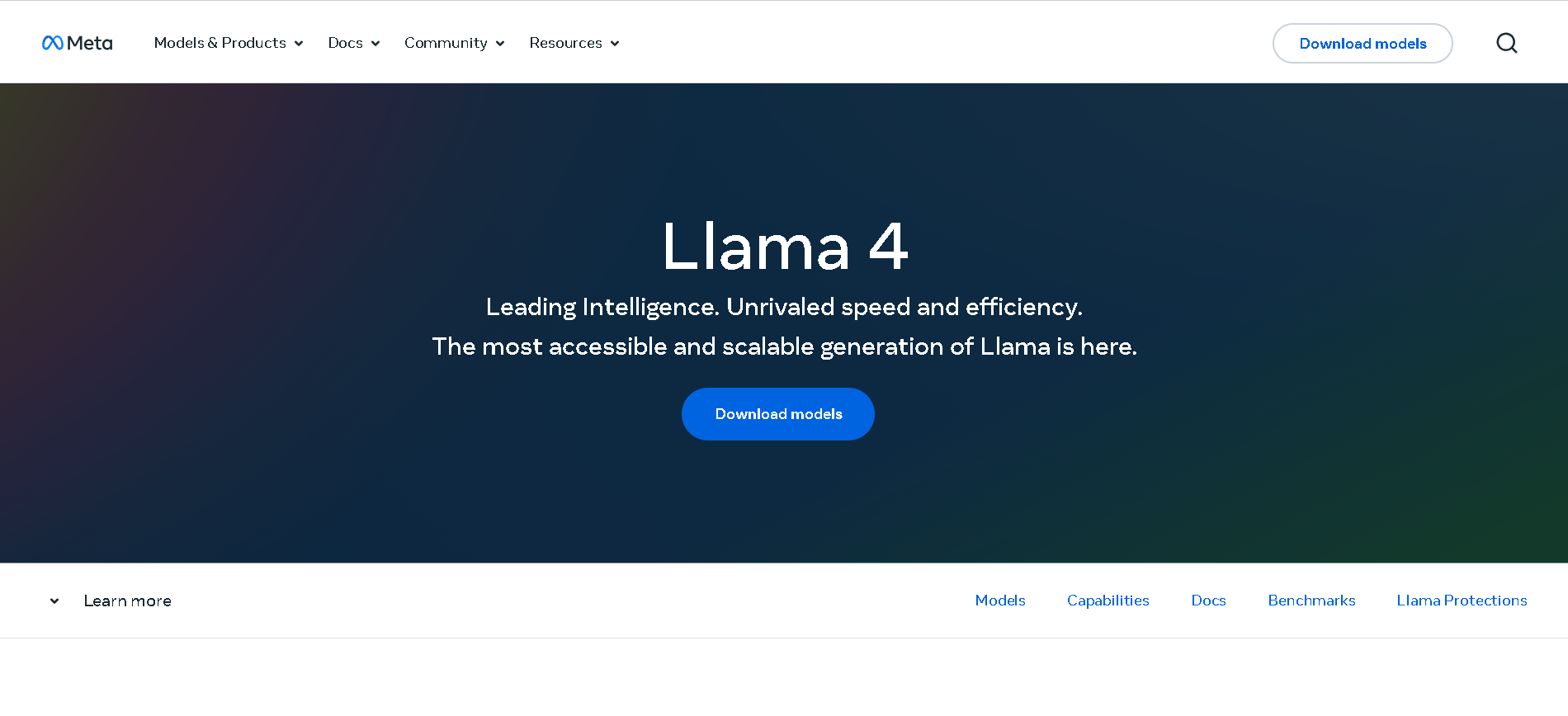

Meta Llama 4
Meta Llama 4 is the latest generation of Meta’s large language model series. It features a mixture-of-experts (MoE) architecture, making it both highly efficient and powerful. Llama 4 is natively multimodal—supporting text and image inputs—and offers three key variants: Scout (17B active parameters, 10 M token context), Maverick (17B active, 1 M token context), and Behemoth (288B active, 2 T total parameters; still in development). Designed for long-context reasoning, multilingual understanding, and open-weight availability (with license restrictions), Llama 4 excels in benchmarks and versatility.
Meta Llama 4
Meta Llama 4 is the latest generation of Meta’s large language model series. It features a mixture-of-experts (MoE) architecture, making it both highly efficient and powerful. Llama 4 is natively multimodal—supporting text and image inputs—and offers three key variants: Scout (17B active parameters, 10 M token context), Maverick (17B active, 1 M token context), and Behemoth (288B active, 2 T total parameters; still in development). Designed for long-context reasoning, multilingual understanding, and open-weight availability (with license restrictions), Llama 4 excels in benchmarks and versatility.
Meta Llama 4
Meta Llama 4 is the latest generation of Meta’s large language model series. It features a mixture-of-experts (MoE) architecture, making it both highly efficient and powerful. Llama 4 is natively multimodal—supporting text and image inputs—and offers three key variants: Scout (17B active parameters, 10 M token context), Maverick (17B active, 1 M token context), and Behemoth (288B active, 2 T total parameters; still in development). Designed for long-context reasoning, multilingual understanding, and open-weight availability (with license restrictions), Llama 4 excels in benchmarks and versatility.
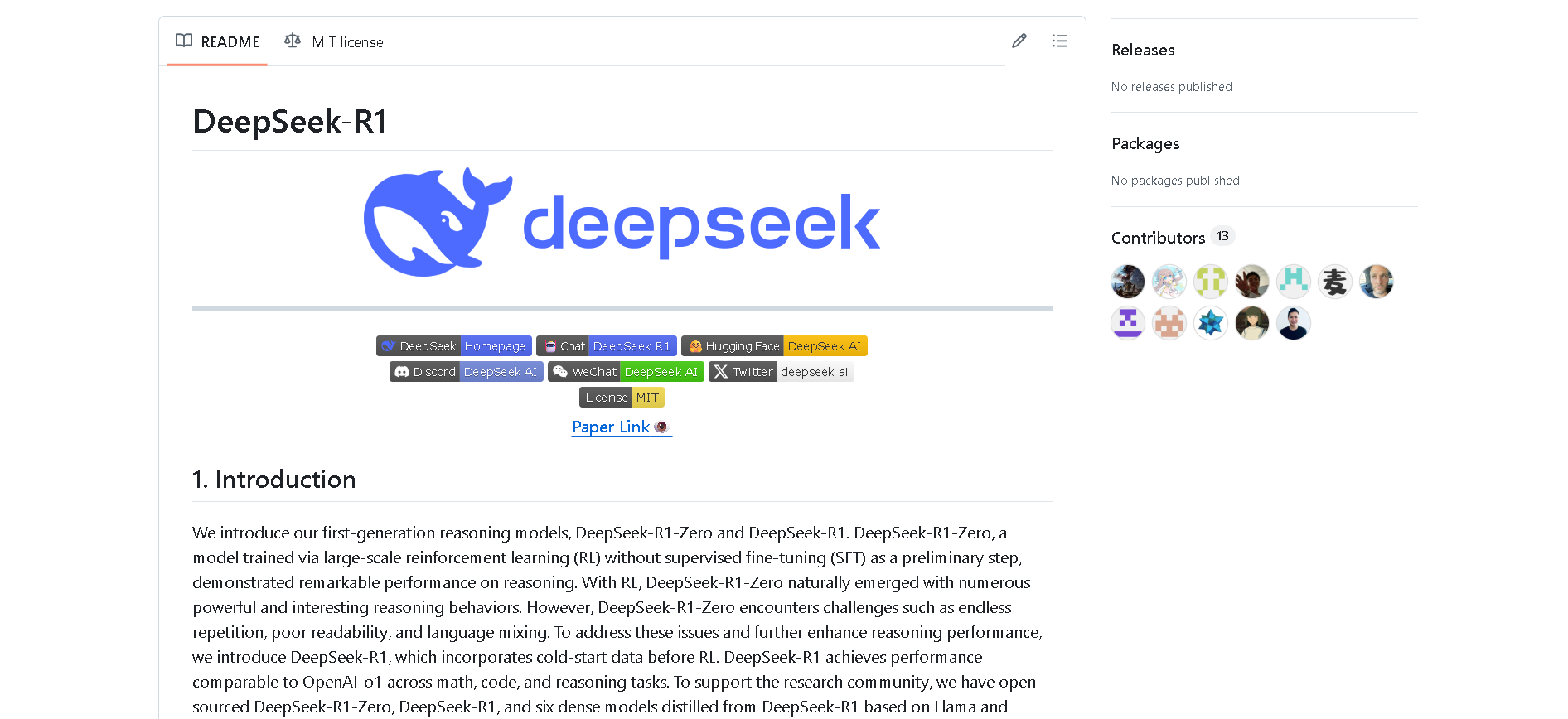

DeepSeek-R1
DeepSeek‑R1 is the flagship reasoning-oriented AI model from Chinese startup DeepSeek. It’s an open-source, mixture-of-experts (MoE) model combining model weights clarity and chain-of-thought reasoning trained primarily through reinforcement learning. R1 delivers top-tier benchmark performance—on par with or surpassing OpenAI o1 in math, coding, and reasoning—while being significantly more cost-efficient.
DeepSeek-R1
DeepSeek‑R1 is the flagship reasoning-oriented AI model from Chinese startup DeepSeek. It’s an open-source, mixture-of-experts (MoE) model combining model weights clarity and chain-of-thought reasoning trained primarily through reinforcement learning. R1 delivers top-tier benchmark performance—on par with or surpassing OpenAI o1 in math, coding, and reasoning—while being significantly more cost-efficient.
DeepSeek-R1
DeepSeek‑R1 is the flagship reasoning-oriented AI model from Chinese startup DeepSeek. It’s an open-source, mixture-of-experts (MoE) model combining model weights clarity and chain-of-thought reasoning trained primarily through reinforcement learning. R1 delivers top-tier benchmark performance—on par with or surpassing OpenAI o1 in math, coding, and reasoning—while being significantly more cost-efficient.
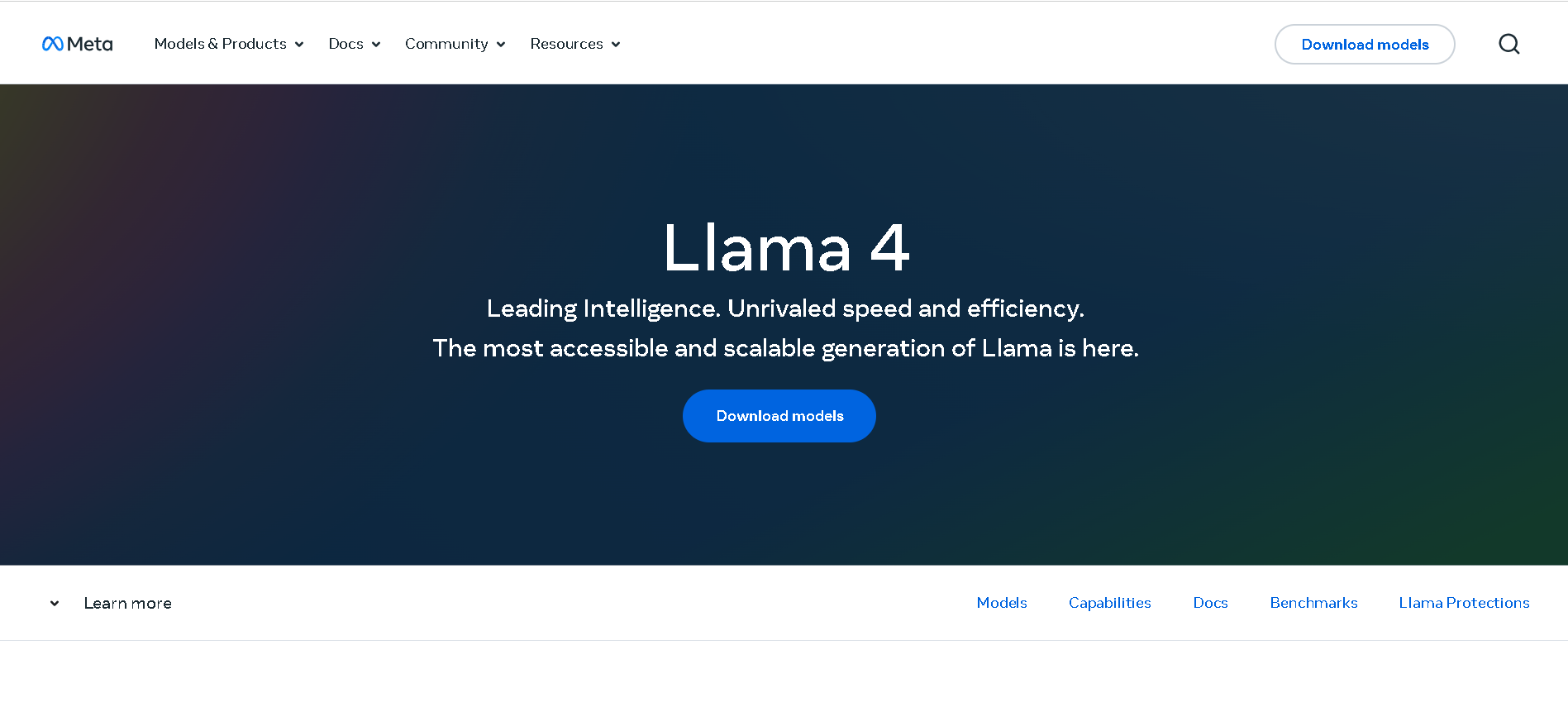

Meta Llama 4 Scout
Llama 4 Scout is Meta’s compact and high-performance entry in the Llama 4 family, released April 5, 2025. Built on a mixture-of-experts (MoE) architecture with 17B active parameters (109B total) and a staggering 10‑million-token context window, it delivers top-tier speed and long-context reasoning while fitting on a single Nvidia H100 GPU. It outperforms models like Google's Gemma 3, Gemini 2.0 Flash‑Lite, and Mistral 3.1 across benchmarks.
Meta Llama 4 Scout
Llama 4 Scout is Meta’s compact and high-performance entry in the Llama 4 family, released April 5, 2025. Built on a mixture-of-experts (MoE) architecture with 17B active parameters (109B total) and a staggering 10‑million-token context window, it delivers top-tier speed and long-context reasoning while fitting on a single Nvidia H100 GPU. It outperforms models like Google's Gemma 3, Gemini 2.0 Flash‑Lite, and Mistral 3.1 across benchmarks.
Meta Llama 4 Scout
Llama 4 Scout is Meta’s compact and high-performance entry in the Llama 4 family, released April 5, 2025. Built on a mixture-of-experts (MoE) architecture with 17B active parameters (109B total) and a staggering 10‑million-token context window, it delivers top-tier speed and long-context reasoning while fitting on a single Nvidia H100 GPU. It outperforms models like Google's Gemma 3, Gemini 2.0 Flash‑Lite, and Mistral 3.1 across benchmarks.
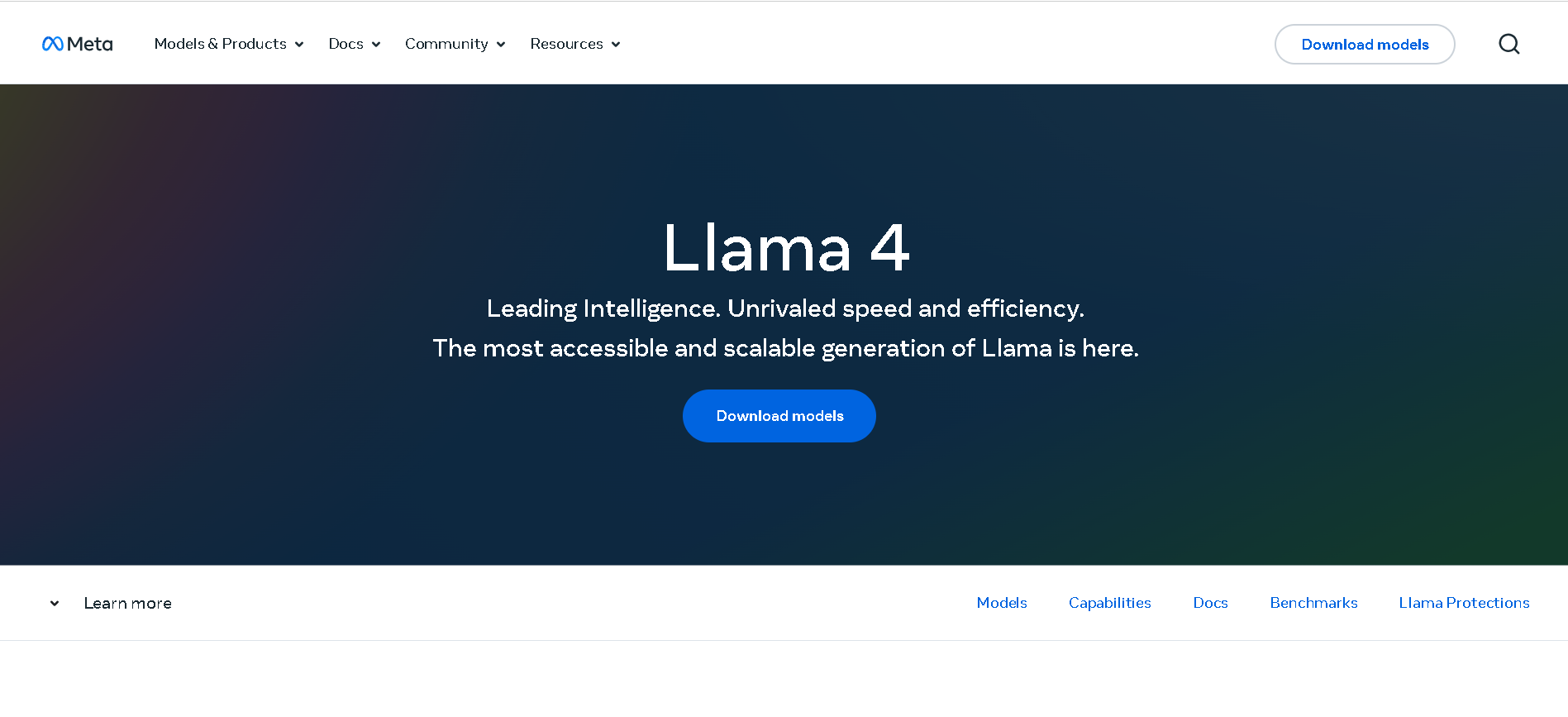
Llama 4 Maverick is Meta’s powerful mid-sized model in the Llama 4 series, released April 5, 2025. Built with a mixture-of-experts (MoE) architecture featuring 17 B active parameters (out of 400 B total) and 128 experts, it supports a 1 million-token context window and native multimodality for text and image inputs. It ranks near the top of competitive benchmarks—surpassing GPT‑4o and Gemini 2.0 Flash in reasoning, coding, and visual tasks.
Llama 4 Maverick is Meta’s powerful mid-sized model in the Llama 4 series, released April 5, 2025. Built with a mixture-of-experts (MoE) architecture featuring 17 B active parameters (out of 400 B total) and 128 experts, it supports a 1 million-token context window and native multimodality for text and image inputs. It ranks near the top of competitive benchmarks—surpassing GPT‑4o and Gemini 2.0 Flash in reasoning, coding, and visual tasks.
Llama 4 Maverick is Meta’s powerful mid-sized model in the Llama 4 series, released April 5, 2025. Built with a mixture-of-experts (MoE) architecture featuring 17 B active parameters (out of 400 B total) and 128 experts, it supports a 1 million-token context window and native multimodality for text and image inputs. It ranks near the top of competitive benchmarks—surpassing GPT‑4o and Gemini 2.0 Flash in reasoning, coding, and visual tasks.
Llama 4 Behemoth is Meta’s ultimate “teacher” model within the Llama 4 series, currently in preview and training. Featuring an enormous 2 trillion total parameters with 288 billion active in a Mixture-of-Experts architecture (16 experts), it's designed to push the limits of multimodal reasoning, STEM, and long-context tasks. Initially slated for April 2025, its release has been postponed to fall 2025 or later due to internal performance and alignment concerns.
Llama 4 Behemoth is Meta’s ultimate “teacher” model within the Llama 4 series, currently in preview and training. Featuring an enormous 2 trillion total parameters with 288 billion active in a Mixture-of-Experts architecture (16 experts), it's designed to push the limits of multimodal reasoning, STEM, and long-context tasks. Initially slated for April 2025, its release has been postponed to fall 2025 or later due to internal performance and alignment concerns.
Llama 4 Behemoth is Meta’s ultimate “teacher” model within the Llama 4 series, currently in preview and training. Featuring an enormous 2 trillion total parameters with 288 billion active in a Mixture-of-Experts architecture (16 experts), it's designed to push the limits of multimodal reasoning, STEM, and long-context tasks. Initially slated for April 2025, its release has been postponed to fall 2025 or later due to internal performance and alignment concerns.

Meta Llama 3.1
Llama 3.1 is Meta’s most advanced open-source Llama 3 model, released on July 23, 2024. It comes in three sizes—8B, 70B, and 405B parameters—with an expanded 128K-token context window and improved multilingual and multimodal capabilities. It significantly outperforms Llama 3 and rivals proprietary models across benchmarks like GSM8K, MMLU, HumanEval, ARC, and tool-augmented reasoning tasks.
Meta Llama 3.1
Llama 3.1 is Meta’s most advanced open-source Llama 3 model, released on July 23, 2024. It comes in three sizes—8B, 70B, and 405B parameters—with an expanded 128K-token context window and improved multilingual and multimodal capabilities. It significantly outperforms Llama 3 and rivals proprietary models across benchmarks like GSM8K, MMLU, HumanEval, ARC, and tool-augmented reasoning tasks.
Meta Llama 3.1
Llama 3.1 is Meta’s most advanced open-source Llama 3 model, released on July 23, 2024. It comes in three sizes—8B, 70B, and 405B parameters—with an expanded 128K-token context window and improved multilingual and multimodal capabilities. It significantly outperforms Llama 3 and rivals proprietary models across benchmarks like GSM8K, MMLU, HumanEval, ARC, and tool-augmented reasoning tasks.

Meta Llama 3.3
Llama 3.3 is Meta’s instruction-tuned, text-only large language model released on December 6, 2024, available in a 70B-parameter size. It matches the performance of much larger models using significantly fewer parameters, is multilingual across eight key languages, and supports a massive 128,000-token context window—ideal for handling long-form documents, codebases, and detailed reasoning tasks.
Meta Llama 3.3
Llama 3.3 is Meta’s instruction-tuned, text-only large language model released on December 6, 2024, available in a 70B-parameter size. It matches the performance of much larger models using significantly fewer parameters, is multilingual across eight key languages, and supports a massive 128,000-token context window—ideal for handling long-form documents, codebases, and detailed reasoning tasks.
Meta Llama 3.3
Llama 3.3 is Meta’s instruction-tuned, text-only large language model released on December 6, 2024, available in a 70B-parameter size. It matches the performance of much larger models using significantly fewer parameters, is multilingual across eight key languages, and supports a massive 128,000-token context window—ideal for handling long-form documents, codebases, and detailed reasoning tasks.

Mistral Large 2
Mistral Large 2 is the second-generation flagship model from Mistral AI, released in July 2024. Also referenced as mistral-large-2407, it’s a 123 B-parameter dense LLM with a 128 K-token context window, supporting dozens of languages and 80+ coding languages. It excels in reasoning, code generation, mathematics, instruction-following, and function calling—designed for high throughput on single-node setups.
Mistral Large 2
Mistral Large 2 is the second-generation flagship model from Mistral AI, released in July 2024. Also referenced as mistral-large-2407, it’s a 123 B-parameter dense LLM with a 128 K-token context window, supporting dozens of languages and 80+ coding languages. It excels in reasoning, code generation, mathematics, instruction-following, and function calling—designed for high throughput on single-node setups.
Mistral Large 2
Mistral Large 2 is the second-generation flagship model from Mistral AI, released in July 2024. Also referenced as mistral-large-2407, it’s a 123 B-parameter dense LLM with a 128 K-token context window, supporting dozens of languages and 80+ coding languages. It excels in reasoning, code generation, mathematics, instruction-following, and function calling—designed for high throughput on single-node setups.
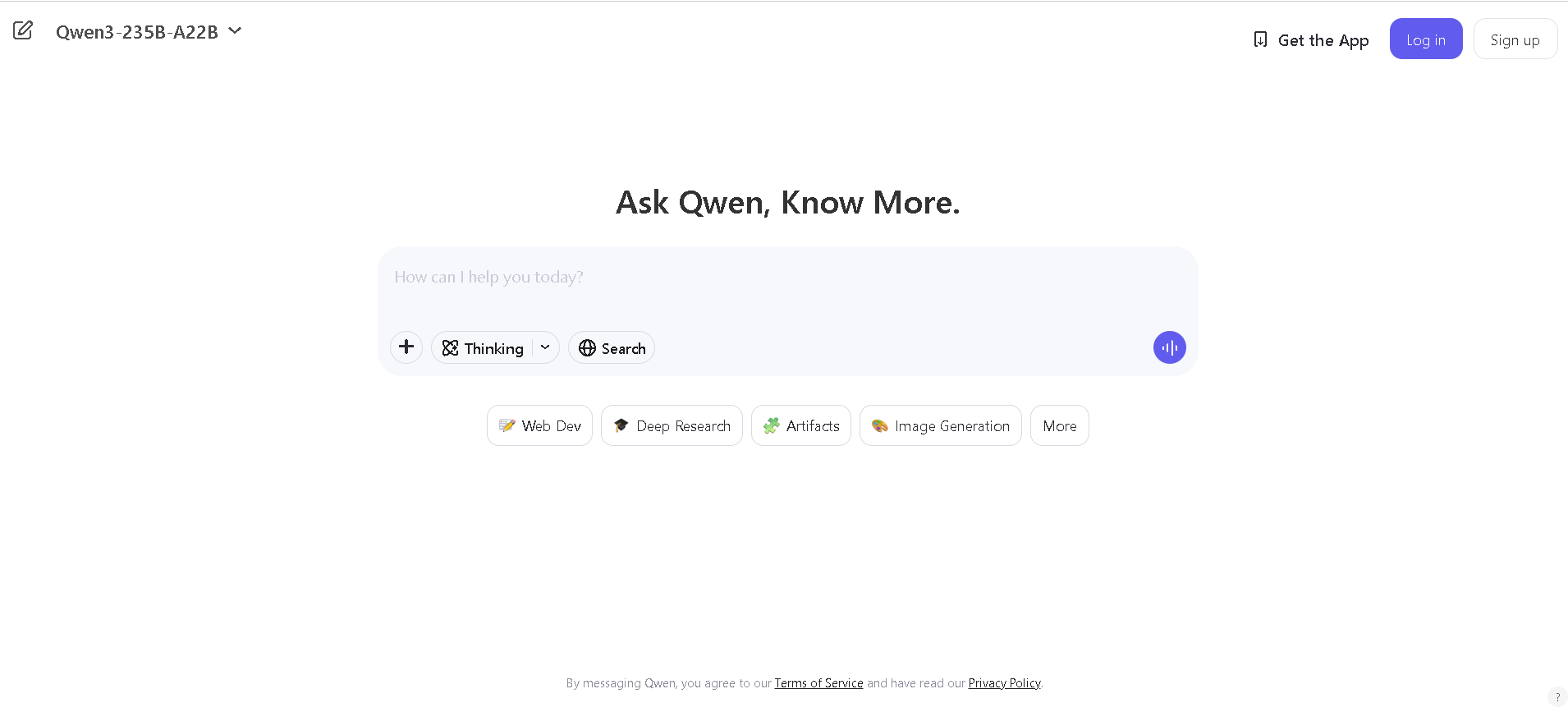

Qwen Chat
Qwen Chat is Alibaba Cloud’s conversational AI assistant built on the Qwen series (e.g., Qwen‑7B‑Chat, Qwen1.5‑7B‑Chat, Qwen‑VL, Qwen‑Audio, and Qwen2.5‑Omni). It supports text, vision, audio, and video understanding, plus image and document processing, web search integration, and image generation—all through a unified chat interface.
Qwen Chat
Qwen Chat is Alibaba Cloud’s conversational AI assistant built on the Qwen series (e.g., Qwen‑7B‑Chat, Qwen1.5‑7B‑Chat, Qwen‑VL, Qwen‑Audio, and Qwen2.5‑Omni). It supports text, vision, audio, and video understanding, plus image and document processing, web search integration, and image generation—all through a unified chat interface.
Qwen Chat
Qwen Chat is Alibaba Cloud’s conversational AI assistant built on the Qwen series (e.g., Qwen‑7B‑Chat, Qwen1.5‑7B‑Chat, Qwen‑VL, Qwen‑Audio, and Qwen2.5‑Omni). It supports text, vision, audio, and video understanding, plus image and document processing, web search integration, and image generation—all through a unified chat interface.
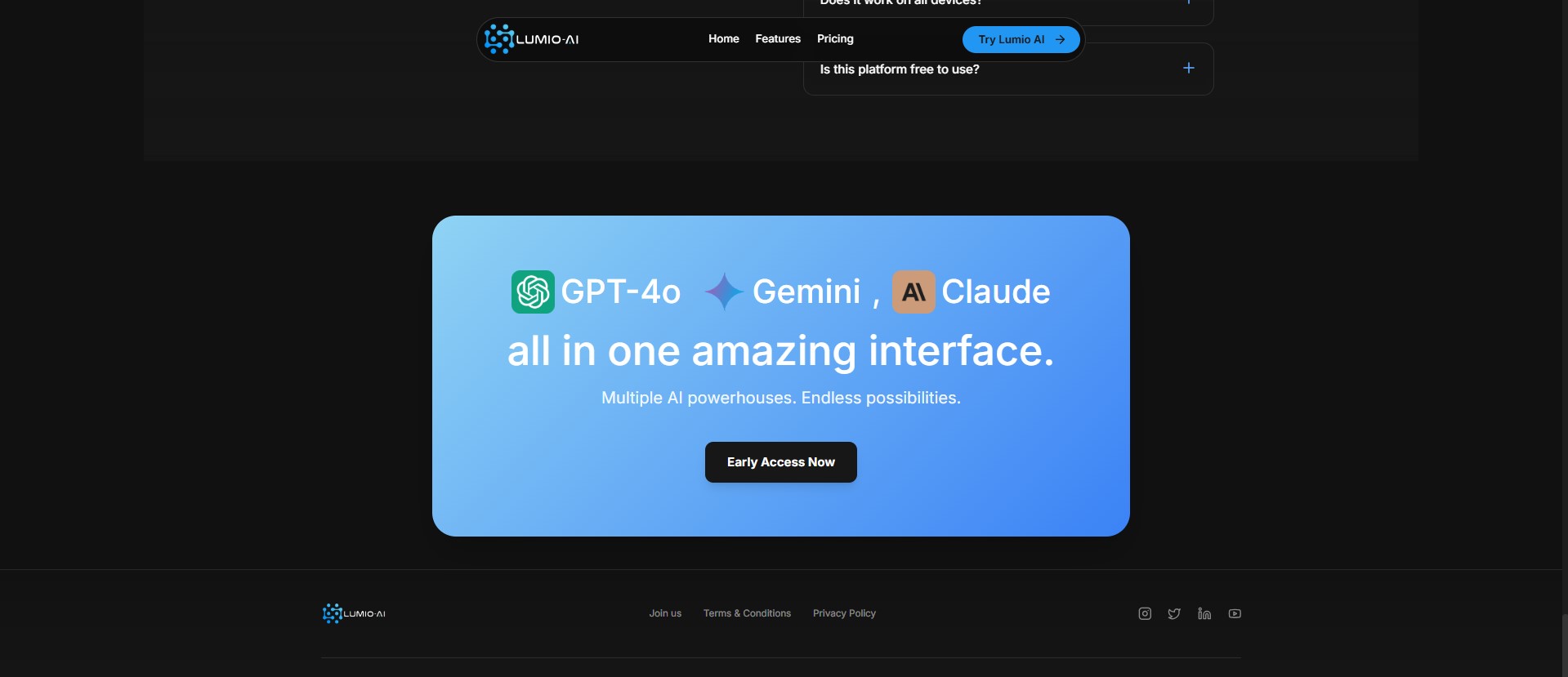

Lumio AI
Lumio AI is a multi-model artificial intelligence platform that brings access to multiple top AI models like ChatGPT, Claude, Gemini, Grok, DeepSeek, and more into one unified workspace, enabling users to interact with the best AI for each task through a single interface. Why settle for one perspective when you can have many? With the Multi-LLM system, researchers, developers, and business professionals gain access to multiple AI models delivering sharper insights, faster solutions, and smarter decisions, all in one powerful platform.
Lumio AI
Lumio AI is a multi-model artificial intelligence platform that brings access to multiple top AI models like ChatGPT, Claude, Gemini, Grok, DeepSeek, and more into one unified workspace, enabling users to interact with the best AI for each task through a single interface. Why settle for one perspective when you can have many? With the Multi-LLM system, researchers, developers, and business professionals gain access to multiple AI models delivering sharper insights, faster solutions, and smarter decisions, all in one powerful platform.
Lumio AI
Lumio AI is a multi-model artificial intelligence platform that brings access to multiple top AI models like ChatGPT, Claude, Gemini, Grok, DeepSeek, and more into one unified workspace, enabling users to interact with the best AI for each task through a single interface. Why settle for one perspective when you can have many? With the Multi-LLM system, researchers, developers, and business professionals gain access to multiple AI models delivering sharper insights, faster solutions, and smarter decisions, all in one powerful platform.
Editorial Note
This page was researched and written by the ATB Editorial Team. Our team researches each AI tool by reviewing its official website, testing features, exploring real use cases, and considering user feedback. Every page is fact-checked and regularly updated to ensure the information stays accurate, neutral, and useful for our readers.
If you have any suggestions or questions, email us at hello@aitoolbook.ai