
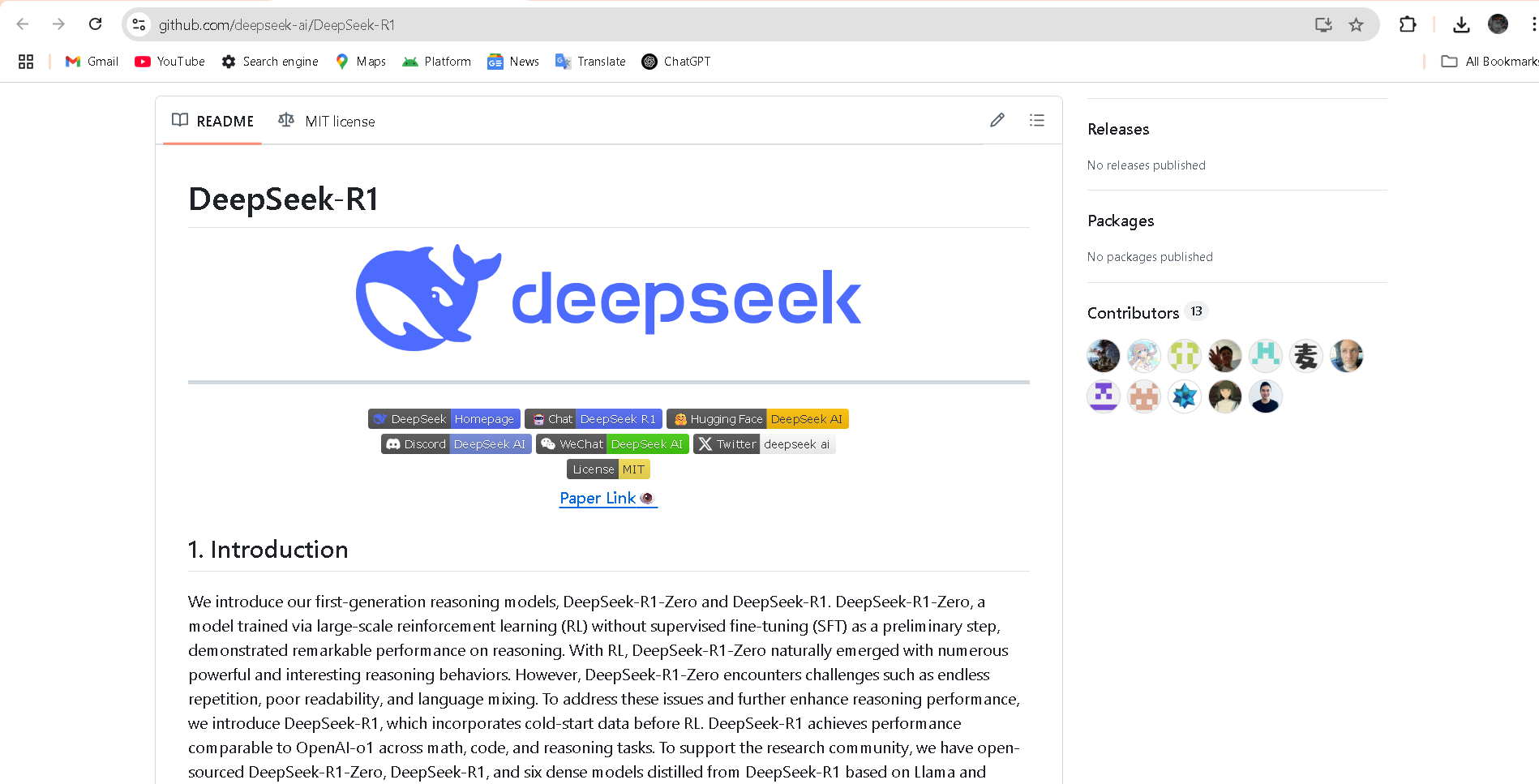
- Researchers & Academics: Explore RL-driven reasoning architectures without SFT bias.
- Developers & Experimenters: Examine pure RL patterns like self-verification and long-form logic.
- Open-Source Enthusiasts: Leverage MIT-licensed weights for building or fine-tuning advanced models.
- Benchmarkers: Study model behavior in reasoning-heavy tasks, especially with chain-of-thought.
- Tooling & Safety Teams: Investigate RL-induced behaviors, repetition, language mixing, and safety implications.
How to Use DeepSeek R1 Zero?
- Load Model Weights: Available via Hugging Face (`deepseek-ai/DeepSeek-R1-Zero`).
- Provide Prompts: Supply up to 128K tokens for chain-of-thought tasks—e.g., math proofs, code debugging.
- Run and Observe: Expect reasoning paths, but note issues: longer text repetition, mixed-language outputs.
- Use for Research: Compare against DeepSeek R1 (which adds SFT) to evaluate RL-only reasoning behaviors.
- Quantify Issues: Common failure modes include readability degradation and language switching.
- RL-Only Chain-of-Thought: First open model trained by pure RL, generating reasoning traces without SFT seeding.
- High Performance: Activates 37B params at inference; rivals GPT-4-o1 in reasoning tasks.
- Open-Source & MIT License: Freely inspect or fine-tune its weights and outputs.
- Large Context Window: 128K tokens support extended logic flows, math proofs, document analysis.
- Baseline for Comparison: Acts as a research benchmark to evaluate effects of RL vs SFT in reasoning.
- Pure RL strategy highlights capability to learn chain-of-thought autonomously
- Open-weight and permissive licensing spur community innovation
- Large context is useful for complex reasoning tasks
- Self-verification and reflection emerge naturally
- Enables study of reasoning without supervised data biases
- Outputs may loop, switch languages, and degrade readability
- Less polished than RL+SFT variant (DeepSeek R1) in clarity and format
- Lacks distilled-menu smaller models—large size may be heavy for many users
Custom
Custom
Proud of the love you're getting? Show off your AI Toolbook reviews—then invite more fans to share the love and build your credibility.
Add an AI Toolbook badge to your site—an easy way to drive followers, showcase updates, and collect reviews. It's like a mini 24/7 billboard for your AI.
Reviews
Rating Distribution
Average score
Popular Mention
FAQs
Similar AI Tools

GPT-4.1 Mini is a lightweight version of OpenAI’s advanced GPT-4.1 model, designed for efficiency, speed, and affordability without compromising much on performance. Tailored for developers and teams who need capable AI reasoning and natural language processing in smaller-scale or cost-sensitive applications, GPT-4.1 Mini brings the power of GPT-4.1 into a more accessible form factor. Perfect for chatbots, content suggestions, productivity tools, and streamlined AI experiences, this compact model still delivers impressive accuracy, fast responses, and a reliable understanding of nuanced prompts—all while using fewer resources.
GPT-4.1 Mini is a lightweight version of OpenAI’s advanced GPT-4.1 model, designed for efficiency, speed, and affordability without compromising much on performance. Tailored for developers and teams who need capable AI reasoning and natural language processing in smaller-scale or cost-sensitive applications, GPT-4.1 Mini brings the power of GPT-4.1 into a more accessible form factor. Perfect for chatbots, content suggestions, productivity tools, and streamlined AI experiences, this compact model still delivers impressive accuracy, fast responses, and a reliable understanding of nuanced prompts—all while using fewer resources.
GPT-4.1 Mini is a lightweight version of OpenAI’s advanced GPT-4.1 model, designed for efficiency, speed, and affordability without compromising much on performance. Tailored for developers and teams who need capable AI reasoning and natural language processing in smaller-scale or cost-sensitive applications, GPT-4.1 Mini brings the power of GPT-4.1 into a more accessible form factor. Perfect for chatbots, content suggestions, productivity tools, and streamlined AI experiences, this compact model still delivers impressive accuracy, fast responses, and a reliable understanding of nuanced prompts—all while using fewer resources.
Grok 3
Grok 3 is the latest flagship chatbot by Elon Musk’s xAI, described as "the world’s smartest AI." It was trained on a massive 200,000‑GPU supercomputer and offers tenfold more computing power than Grok 2. Equipped with two reasoning modes—Think and Big Brain—and featuring DeepSearch (a contextual web-and-X research tool), Grok 3 excels in math, science, coding, and truth-seeking tasks—all while offering fast, lively conversational style.
Grok 3
Grok 3 is the latest flagship chatbot by Elon Musk’s xAI, described as "the world’s smartest AI." It was trained on a massive 200,000‑GPU supercomputer and offers tenfold more computing power than Grok 2. Equipped with two reasoning modes—Think and Big Brain—and featuring DeepSearch (a contextual web-and-X research tool), Grok 3 excels in math, science, coding, and truth-seeking tasks—all while offering fast, lively conversational style.
Grok 3
Grok 3 is the latest flagship chatbot by Elon Musk’s xAI, described as "the world’s smartest AI." It was trained on a massive 200,000‑GPU supercomputer and offers tenfold more computing power than Grok 2. Equipped with two reasoning modes—Think and Big Brain—and featuring DeepSearch (a contextual web-and-X research tool), Grok 3 excels in math, science, coding, and truth-seeking tasks—all while offering fast, lively conversational style.

Janus-Pro-7B
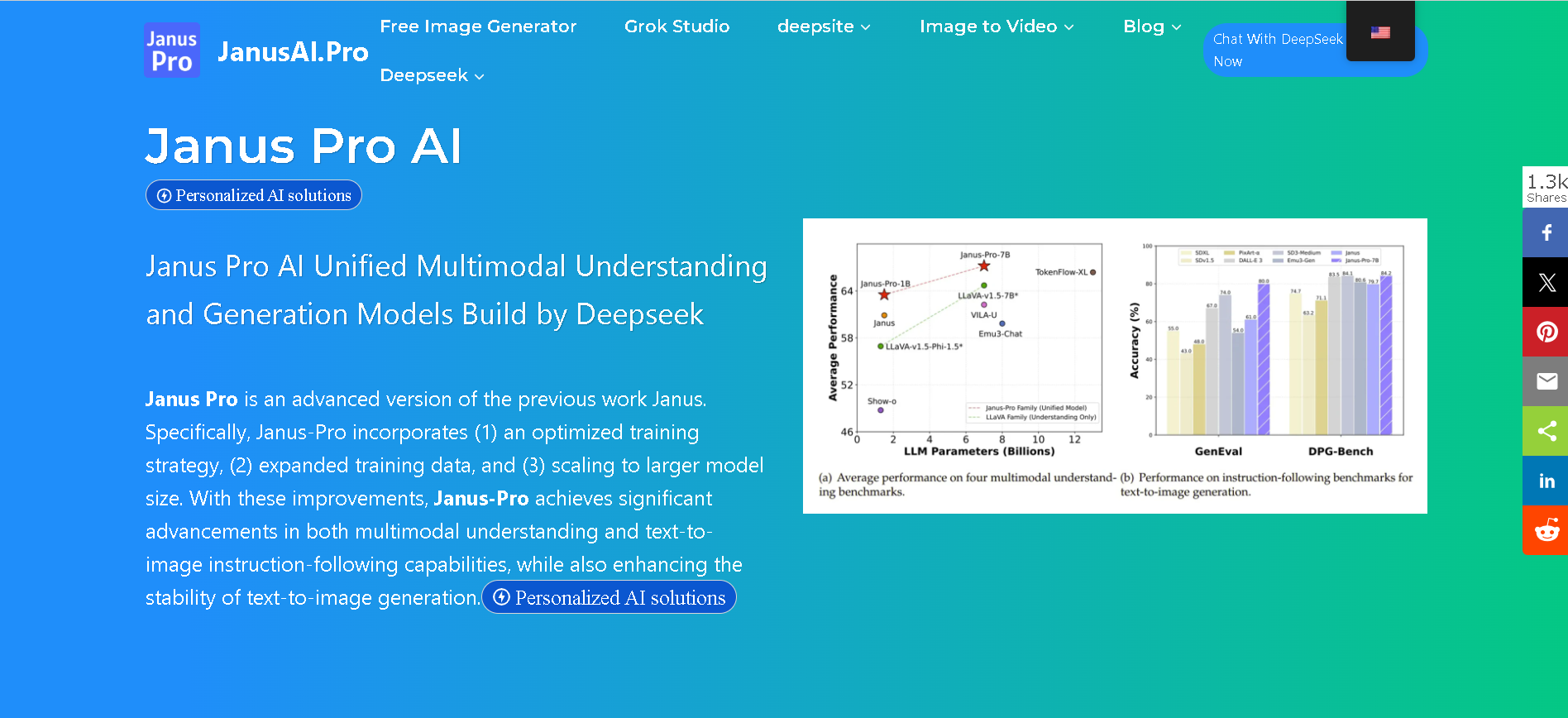
anus Pro 7B is DeepSeek’s flagship open-source multimodal AI model, unifying vision understanding and text-to-image generation within a single transformer architecture. Built on DeepSeek‑LLM‑7B, it uses a decoupled visual encoding approach paired with SigLIP‑L and VQ tokenizer, delivering superior visual fidelity, prompt alignment, and stability across tasks—benchmarked ahead of OpenAI’s DALL‑E 3 and Stable Diffusion variants.
Janus-Pro-7B
anus Pro 7B is DeepSeek’s flagship open-source multimodal AI model, unifying vision understanding and text-to-image generation within a single transformer architecture. Built on DeepSeek‑LLM‑7B, it uses a decoupled visual encoding approach paired with SigLIP‑L and VQ tokenizer, delivering superior visual fidelity, prompt alignment, and stability across tasks—benchmarked ahead of OpenAI’s DALL‑E 3 and Stable Diffusion variants.
Janus-Pro-7B
anus Pro 7B is DeepSeek’s flagship open-source multimodal AI model, unifying vision understanding and text-to-image generation within a single transformer architecture. Built on DeepSeek‑LLM‑7B, it uses a decoupled visual encoding approach paired with SigLIP‑L and VQ tokenizer, delivering superior visual fidelity, prompt alignment, and stability across tasks—benchmarked ahead of OpenAI’s DALL‑E 3 and Stable Diffusion variants.
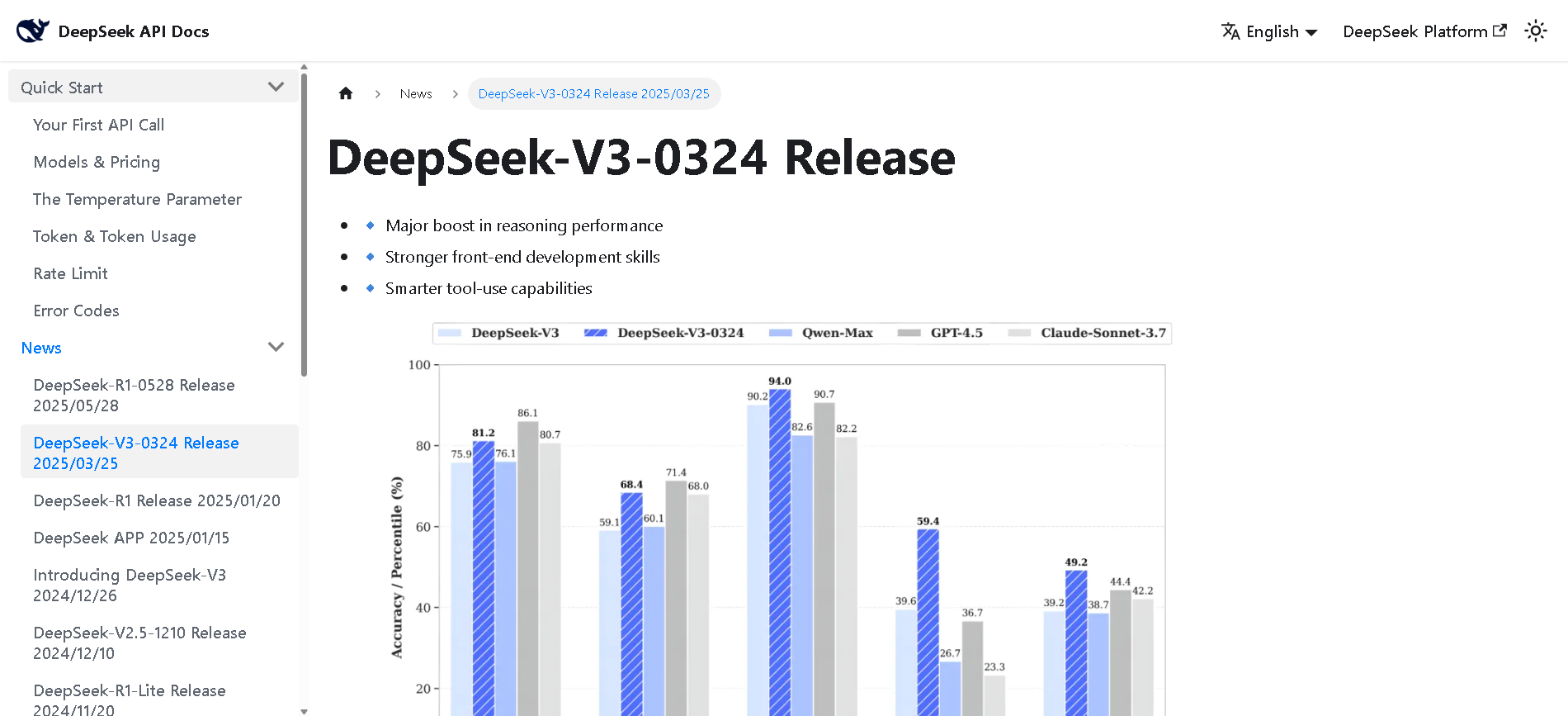

DeepSeek-V3-0324
DeepSeek V3 (0324) is the latest open-source Mixture-of-Experts (MoE) language model from DeepSeek, featuring 671B parameters (37B active per token). Released in March 2025 under the MIT license, it builds on DeepSeek V3 with major enhancements in reasoning, coding, front-end generation, and Chinese proficiency. It maintains cost-efficiency and function-calling support.
DeepSeek-V3-0324
DeepSeek V3 (0324) is the latest open-source Mixture-of-Experts (MoE) language model from DeepSeek, featuring 671B parameters (37B active per token). Released in March 2025 under the MIT license, it builds on DeepSeek V3 with major enhancements in reasoning, coding, front-end generation, and Chinese proficiency. It maintains cost-efficiency and function-calling support.
DeepSeek-V3-0324
DeepSeek V3 (0324) is the latest open-source Mixture-of-Experts (MoE) language model from DeepSeek, featuring 671B parameters (37B active per token). Released in March 2025 under the MIT license, it builds on DeepSeek V3 with major enhancements in reasoning, coding, front-end generation, and Chinese proficiency. It maintains cost-efficiency and function-calling support.
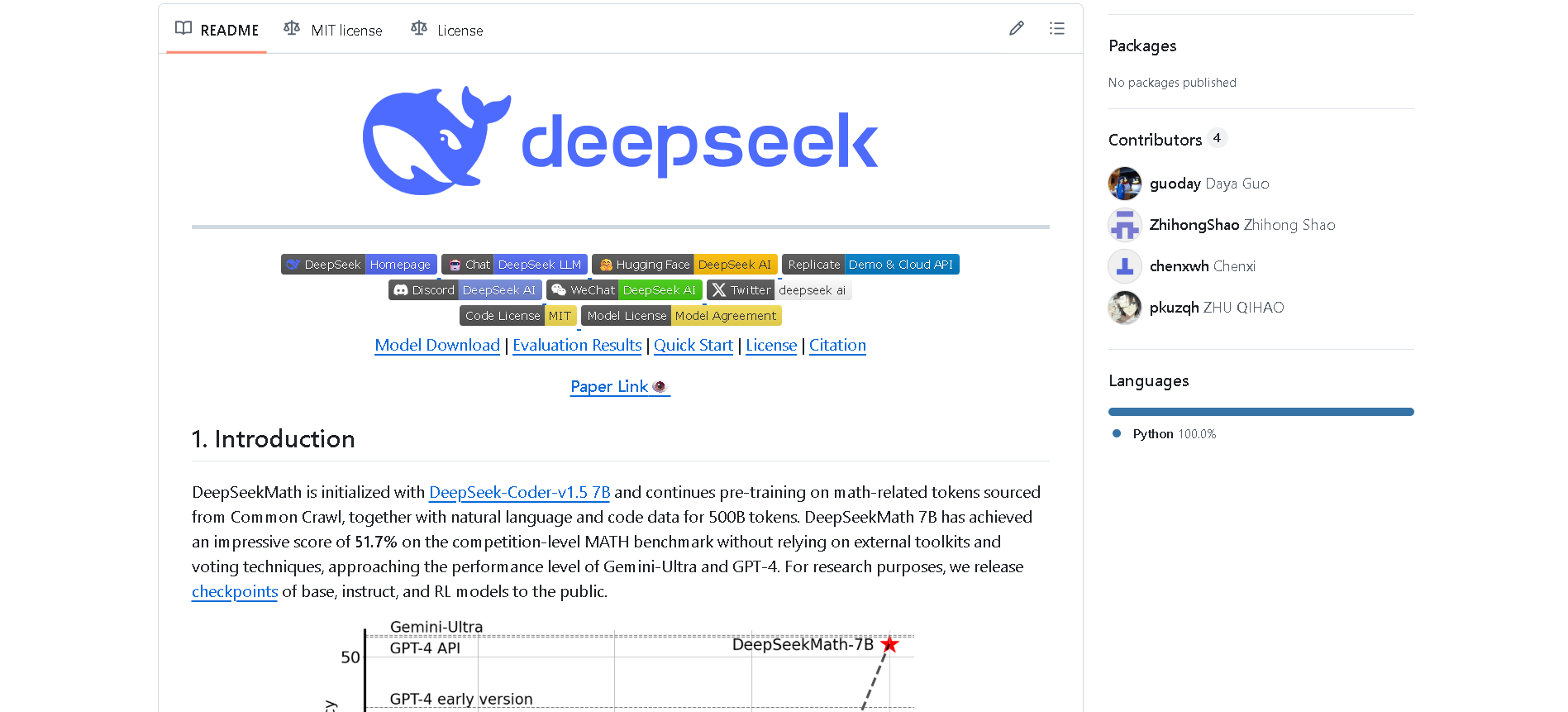

DeepSeek-Math
DeepSeek Math (also called DeepSeekMath) is DeepSeek’s specialized, open-source, math-centric large language model. Built on DeepSeek‑Coder‑Base‑7B and further pre-trained on ~500B tokens—including 120B from its own math-focused corpus—it excels at competition-level reasoning, achieving 51.7 % on the MATH benchmark and ~64.2 % on GSM8K, rivaling models like GPT‑4 and Gemini‑Ultra—all without external toolkits or voting methods .
DeepSeek-Math
DeepSeek Math (also called DeepSeekMath) is DeepSeek’s specialized, open-source, math-centric large language model. Built on DeepSeek‑Coder‑Base‑7B and further pre-trained on ~500B tokens—including 120B from its own math-focused corpus—it excels at competition-level reasoning, achieving 51.7 % on the MATH benchmark and ~64.2 % on GSM8K, rivaling models like GPT‑4 and Gemini‑Ultra—all without external toolkits or voting methods .
DeepSeek-Math
DeepSeek Math (also called DeepSeekMath) is DeepSeek’s specialized, open-source, math-centric large language model. Built on DeepSeek‑Coder‑Base‑7B and further pre-trained on ~500B tokens—including 120B from its own math-focused corpus—it excels at competition-level reasoning, achieving 51.7 % on the MATH benchmark and ~64.2 % on GSM8K, rivaling models like GPT‑4 and Gemini‑Ultra—all without external toolkits or voting methods .
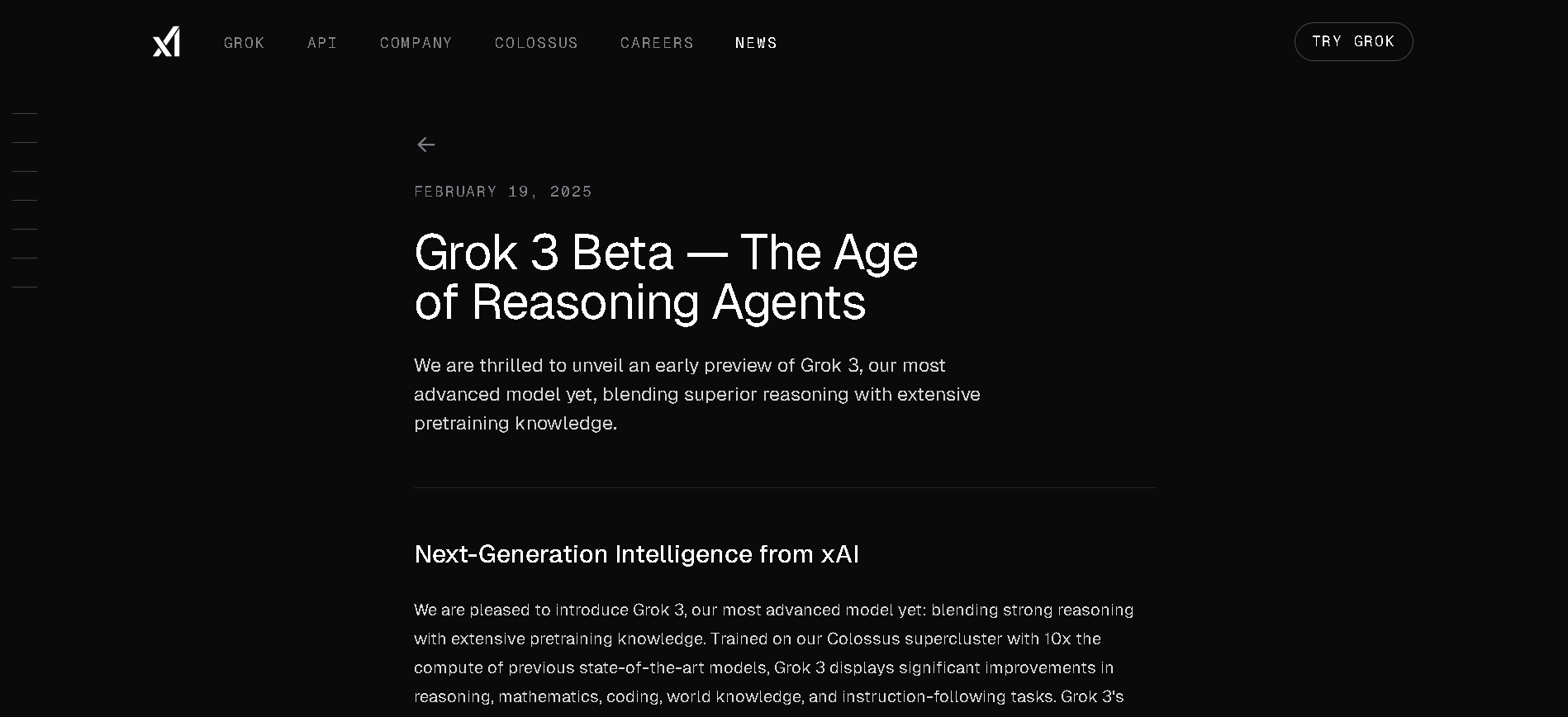
Grok 3 Latest
Grok 3 is xAI’s newest flagship AI chatbot, released on February 17, 2025, running on the massive Colossus supercluster (~200,000 GPUs). It offers elite-level reasoning, chain-of-thought transparency (“Think” mode), advanced “Big Brain” deeper reasoning, multimodal support (text, images), and integrated real-time DeepSearch—positioning it as a top-tier competitor to GPT‑4o, Gemini, Claude, and DeepSeek V3 on benchmarks.
Grok 3 Latest
Grok 3 is xAI’s newest flagship AI chatbot, released on February 17, 2025, running on the massive Colossus supercluster (~200,000 GPUs). It offers elite-level reasoning, chain-of-thought transparency (“Think” mode), advanced “Big Brain” deeper reasoning, multimodal support (text, images), and integrated real-time DeepSearch—positioning it as a top-tier competitor to GPT‑4o, Gemini, Claude, and DeepSeek V3 on benchmarks.
Grok 3 Latest
Grok 3 is xAI’s newest flagship AI chatbot, released on February 17, 2025, running on the massive Colossus supercluster (~200,000 GPUs). It offers elite-level reasoning, chain-of-thought transparency (“Think” mode), advanced “Big Brain” deeper reasoning, multimodal support (text, images), and integrated real-time DeepSearch—positioning it as a top-tier competitor to GPT‑4o, Gemini, Claude, and DeepSeek V3 on benchmarks.
grok-2-1212
Grok 2 – 1212 is xAI’s enhanced version of Grok 2, released December 12, 2024. It’s designed to be faster—up to 3× speed boost—with sharper accuracy, improved instruction-following, and stronger multilingual support. It includes web search, citations, and the Aurora image-generation feature. Now available to all users on X, with Premium tiers getting higher usage limits.
grok-2-1212
Grok 2 – 1212 is xAI’s enhanced version of Grok 2, released December 12, 2024. It’s designed to be faster—up to 3× speed boost—with sharper accuracy, improved instruction-following, and stronger multilingual support. It includes web search, citations, and the Aurora image-generation feature. Now available to all users on X, with Premium tiers getting higher usage limits.
grok-2-1212
Grok 2 – 1212 is xAI’s enhanced version of Grok 2, released December 12, 2024. It’s designed to be faster—up to 3× speed boost—with sharper accuracy, improved instruction-following, and stronger multilingual support. It includes web search, citations, and the Aurora image-generation feature. Now available to all users on X, with Premium tiers getting higher usage limits.

Meta Llama 3.2
Llama 3.2 is Meta’s multimodal and lightweight update to its Llama 3 line, released on September 25, 2024. The family includes 1B and 3B text-only models optimized for edge devices, as well as 11B and 90B Vision models capable of image understanding. It offers a 128K-token context window, Grouped-Query Attention for efficient inference, and opens up on-device, private AI with strong multilingual (e.g. Hindi, Spanish) support.
Meta Llama 3.2
Llama 3.2 is Meta’s multimodal and lightweight update to its Llama 3 line, released on September 25, 2024. The family includes 1B and 3B text-only models optimized for edge devices, as well as 11B and 90B Vision models capable of image understanding. It offers a 128K-token context window, Grouped-Query Attention for efficient inference, and opens up on-device, private AI with strong multilingual (e.g. Hindi, Spanish) support.
Meta Llama 3.2
Llama 3.2 is Meta’s multimodal and lightweight update to its Llama 3 line, released on September 25, 2024. The family includes 1B and 3B text-only models optimized for edge devices, as well as 11B and 90B Vision models capable of image understanding. It offers a 128K-token context window, Grouped-Query Attention for efficient inference, and opens up on-device, private AI with strong multilingual (e.g. Hindi, Spanish) support.
Mistral Saba
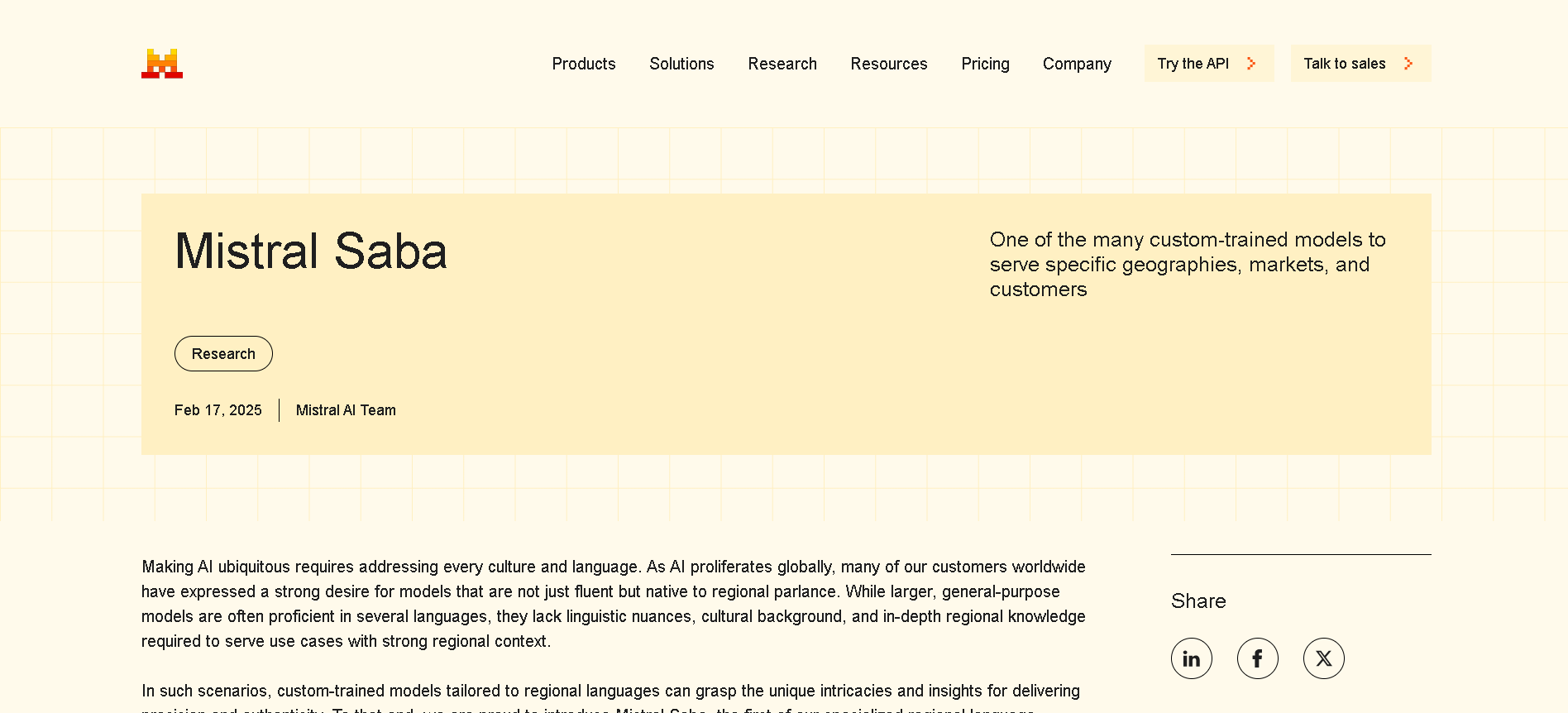
Mistral Saba is a 24 billion‑parameter regional language model launched by Mistral AI on February 17, 2025. Designed for native fluency in Arabic and South Asian languages (like Tamil, Malayalam, and Urdu), it delivers culturally-aware responses on single‑GPU systems—faster and more precise than much larger general models.
Mistral Saba
Mistral Saba is a 24 billion‑parameter regional language model launched by Mistral AI on February 17, 2025. Designed for native fluency in Arabic and South Asian languages (like Tamil, Malayalam, and Urdu), it delivers culturally-aware responses on single‑GPU systems—faster and more precise than much larger general models.
Mistral Saba
Mistral Saba is a 24 billion‑parameter regional language model launched by Mistral AI on February 17, 2025. Designed for native fluency in Arabic and South Asian languages (like Tamil, Malayalam, and Urdu), it delivers culturally-aware responses on single‑GPU systems—faster and more precise than much larger general models.

Qwen Chat
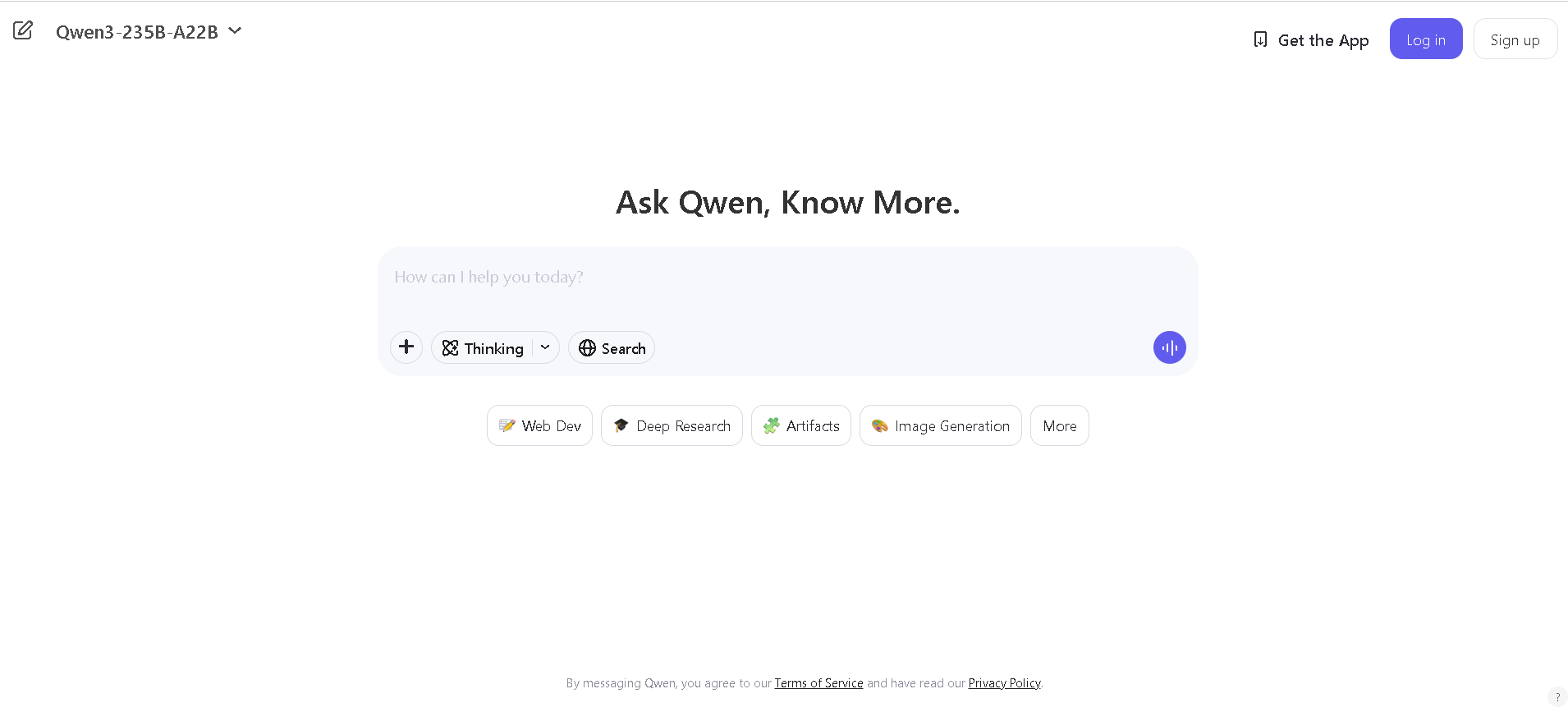
Qwen Chat is Alibaba Cloud’s conversational AI assistant built on the Qwen series (e.g., Qwen‑7B‑Chat, Qwen1.5‑7B‑Chat, Qwen‑VL, Qwen‑Audio, and Qwen2.5‑Omni). It supports text, vision, audio, and video understanding, plus image and document processing, web search integration, and image generation—all through a unified chat interface.
Qwen Chat
Qwen Chat is Alibaba Cloud’s conversational AI assistant built on the Qwen series (e.g., Qwen‑7B‑Chat, Qwen1.5‑7B‑Chat, Qwen‑VL, Qwen‑Audio, and Qwen2.5‑Omni). It supports text, vision, audio, and video understanding, plus image and document processing, web search integration, and image generation—all through a unified chat interface.
Qwen Chat
Qwen Chat is Alibaba Cloud’s conversational AI assistant built on the Qwen series (e.g., Qwen‑7B‑Chat, Qwen1.5‑7B‑Chat, Qwen‑VL, Qwen‑Audio, and Qwen2.5‑Omni). It supports text, vision, audio, and video understanding, plus image and document processing, web search integration, and image generation—all through a unified chat interface.
Ask Any Model
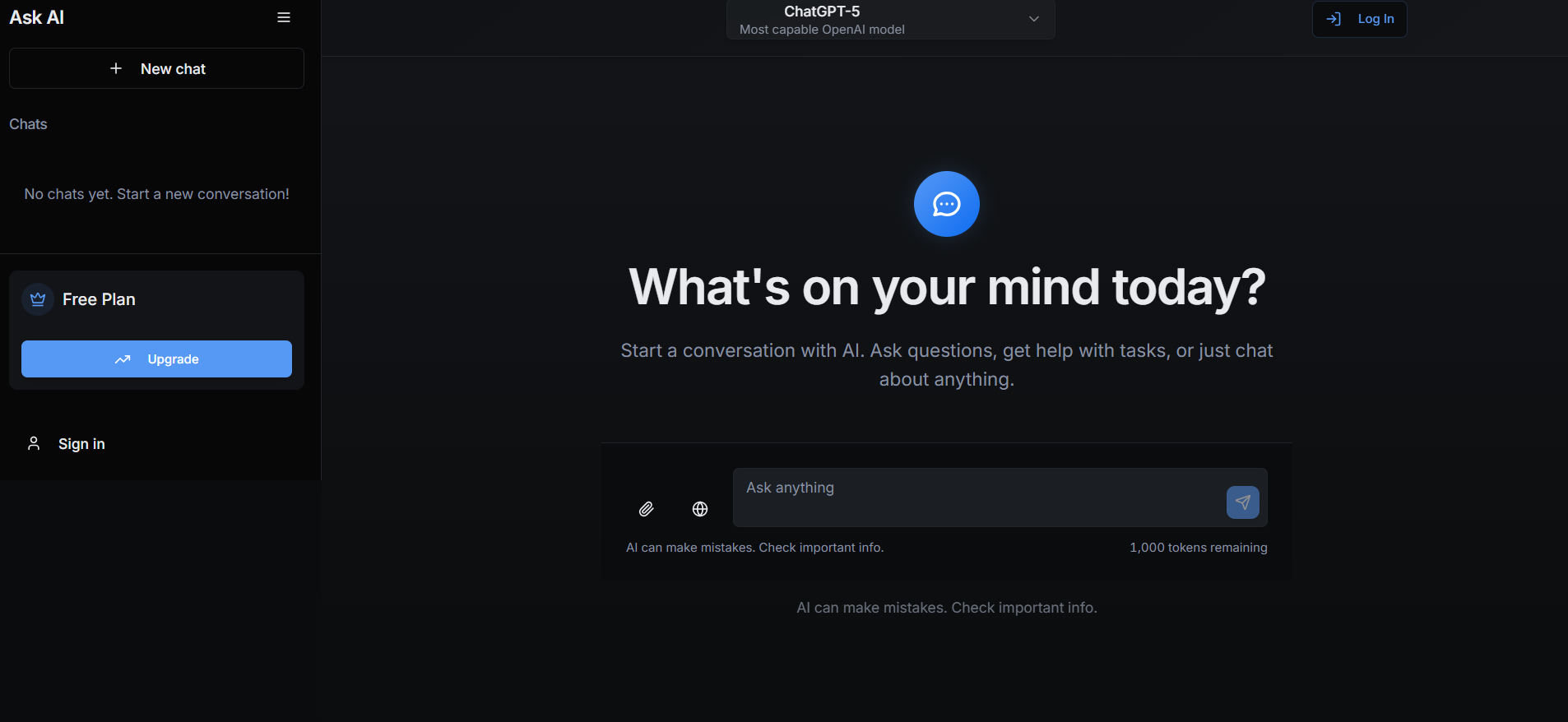
AskAnyModel is a unified AI interface that allows users to interact with multiple leading AI models — such as GPT, Claude, Gemini, and Mistral — from a single platform. It eliminates the need for multiple subscriptions and interfaces by bringing top AI models into one streamlined environment. Users can compare responses, analyze outputs, and select the best AI model for specific tasks like content creation, coding, data analysis, or research. AskAnyModel empowers individuals and teams to harness AI diversity efficiently, offering advanced tools for prompt testing, model benchmarking, and workflow integration.
Ask Any Model
AskAnyModel is a unified AI interface that allows users to interact with multiple leading AI models — such as GPT, Claude, Gemini, and Mistral — from a single platform. It eliminates the need for multiple subscriptions and interfaces by bringing top AI models into one streamlined environment. Users can compare responses, analyze outputs, and select the best AI model for specific tasks like content creation, coding, data analysis, or research. AskAnyModel empowers individuals and teams to harness AI diversity efficiently, offering advanced tools for prompt testing, model benchmarking, and workflow integration.
Ask Any Model
AskAnyModel is a unified AI interface that allows users to interact with multiple leading AI models — such as GPT, Claude, Gemini, and Mistral — from a single platform. It eliminates the need for multiple subscriptions and interfaces by bringing top AI models into one streamlined environment. Users can compare responses, analyze outputs, and select the best AI model for specific tasks like content creation, coding, data analysis, or research. AskAnyModel empowers individuals and teams to harness AI diversity efficiently, offering advanced tools for prompt testing, model benchmarking, and workflow integration.

polychat
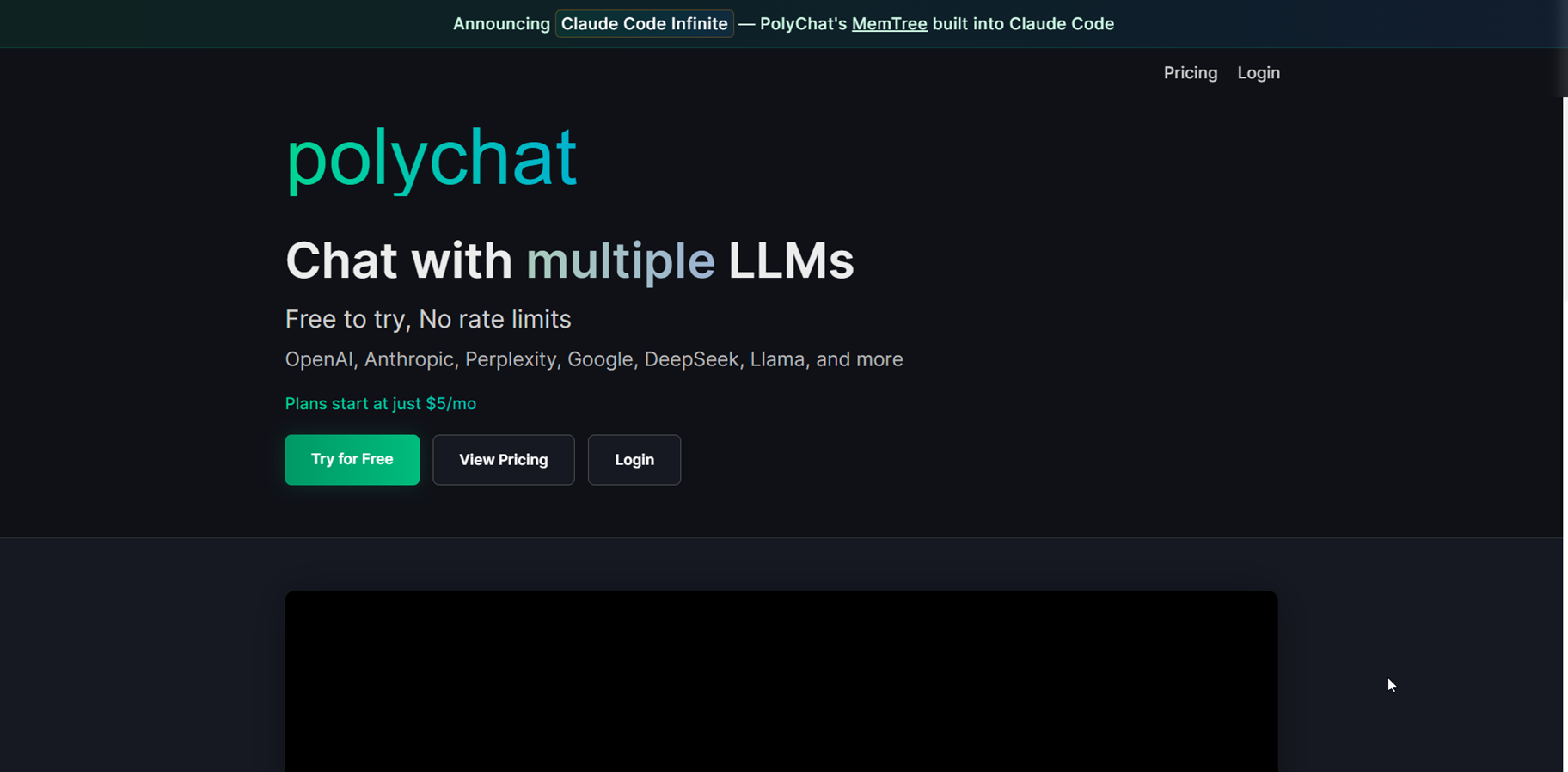
polychat is a multi-LLM chat platform that lets you interact with numerous AI models like OpenAI, Anthropic, Perplexity, Google, DeepSeek, Llama, and others in one interface, with free trials and no rate limits. Switch between models seamlessly for the best responses to your queries, whether coding, writing, or research, all at affordable plans starting $5/month. It's designed for power users wanting flexibility without juggling multiple apps or hitting usage caps quickly.
polychat
polychat is a multi-LLM chat platform that lets you interact with numerous AI models like OpenAI, Anthropic, Perplexity, Google, DeepSeek, Llama, and others in one interface, with free trials and no rate limits. Switch between models seamlessly for the best responses to your queries, whether coding, writing, or research, all at affordable plans starting $5/month. It's designed for power users wanting flexibility without juggling multiple apps or hitting usage caps quickly.
polychat
polychat is a multi-LLM chat platform that lets you interact with numerous AI models like OpenAI, Anthropic, Perplexity, Google, DeepSeek, Llama, and others in one interface, with free trials and no rate limits. Switch between models seamlessly for the best responses to your queries, whether coding, writing, or research, all at affordable plans starting $5/month. It's designed for power users wanting flexibility without juggling multiple apps or hitting usage caps quickly.
Editorial Note
This page was researched and written by the ATB Editorial Team. Our team researches each AI tool by reviewing its official website, testing features, exploring real use cases, and considering user feedback. Every page is fact-checked and regularly updated to ensure the information stays accurate, neutral, and useful for our readers.
If you have any suggestions or questions, email us at hello@aitoolbook.ai