

- Developers & Engineers: Enhance coding tasks—debugging, refactoring, test generation—with high reliability.
- Data Scientists & Analysts: Interpret charts, generate visualizations, extract insights from data.
- Content Creators & Writers: Improve nuance, humor, and narrative quality in long-form text.
- Productivity-Focused Teams: Use Artifacts for interactive outputs—code previews, SVGs, reports—within chat.
- Enterprises & API Builders: Integrate via Anthropic API, AWS Bedrock, or Google Vertex AI for scalable, safe LLM-powered applications.
How to Use It?
- Access & Subscription: Available for free on Claude.ai and mobile; Pro/Team plans unlock higher rate limits. API access via Anthropic, AWS, Vertex AI.
- Enable Artifacts: Turn on the feature in your settings to view structured outputs—skip copying and pasting.
- Choose Context Mode: Use text or image inputs—Sonnet excels at visual tasks like chart interpretation.
- Deploy in Apps: Incorporate into products via API for chatbots, agent workflows, or analytic tools.
- Frontier Intelligence, Mid-Tier Cost: Matches or exceeds Claude 3 Opus and GPT‑4o in reasoning and coding benchmarks—at half the cost and double the speed.
- First-Class Code & Debugging: Significant gains in coding tasks—bug fixes, multi-file generation—with independent problem-solving abilities.
- Advanced Visual Reasoning: State-of-the-art at interpreting charts, graphs, and textual images—opening new data workflows.
- Artifact Workspace: Unique UI for editable outputs—SVGs, graphs, code blocks directly in chat.
- Beta Computer Use: Experimental ability to navigate desktop interfaces automatically in public beta via API.
- Safety & Transparency: Subject to external safety reviews by UK/US AI institutes; maintains Safety Level 2.
- Speed + capability: Fast responses with near-top-tier performance.
- Multimodal strength: Handles text and visuals seamlessly.
- Artifacts interface: Makes outputs actionable and interactive.
- Strong code proficiency: Particularly robust for software tasks.
- Safety-first approach: Thorough external audits ensure responsible deployment.
- No real-time web browsing or image generation like GPT‑4o.
- Artifacts and computer use are premium/API-exclusive features.
- In-browser free tier has rate limits—Pro subscription may be necessary for heavy users.
Free Tier
$ 0.00
- Chat on web, iOS, and Android
- Generate code and visualize data
- Write, edit, and create content
- Analyze text and images
- Ability to search the web
Pro Mode
$20/month
Connect Google Workspace: email, calendar, and docs
Connect any context or tool through Integrations with remote MCP
Extended thinking for complex work
Ability to use more Claude models
Max
$100/month
- Choose 5x or 20x more usage than Pro
- Higher output limits for all tasks
- Early access to advanced Claude features
- Priority access at high traffic times
API Usage
$3/$15 per 1M tokens
- $3 per million input tokens & $15 per million output tokens
- 200K token context window
Proud of the love you're getting? Show off your AI Toolbook reviews—then invite more fans to share the love and build your credibility.
Add an AI Toolbook badge to your site—an easy way to drive followers, showcase updates, and collect reviews. It's like a mini 24/7 billboard for your AI.
Reviews
Rating Distribution
Average score
Popular Mention
FAQs
Similar AI Tools
Meta Llama 3
Meta Llama 3 is Meta’s third-generation open-weight large language model family, released in April 2024 and enhanced in July 2024 with the 3.1 update. It spans three sizes—8B, 70B, and 405B parameters—each offering a 128K‑token context window. Llama 3 excels at reasoning, code generation, multilingual text, and instruction-following, and introduces multimodal vision (image understanding) capabilities in its 3.2 series. Robust safety mechanisms like Llama Guard 3, Code Shield, and CyberSec Eval 2 ensure responsible output.
Meta Llama 3
Meta Llama 3 is Meta’s third-generation open-weight large language model family, released in April 2024 and enhanced in July 2024 with the 3.1 update. It spans three sizes—8B, 70B, and 405B parameters—each offering a 128K‑token context window. Llama 3 excels at reasoning, code generation, multilingual text, and instruction-following, and introduces multimodal vision (image understanding) capabilities in its 3.2 series. Robust safety mechanisms like Llama Guard 3, Code Shield, and CyberSec Eval 2 ensure responsible output.
Meta Llama 3
Meta Llama 3 is Meta’s third-generation open-weight large language model family, released in April 2024 and enhanced in July 2024 with the 3.1 update. It spans three sizes—8B, 70B, and 405B parameters—each offering a 128K‑token context window. Llama 3 excels at reasoning, code generation, multilingual text, and instruction-following, and introduces multimodal vision (image understanding) capabilities in its 3.2 series. Robust safety mechanisms like Llama Guard 3, Code Shield, and CyberSec Eval 2 ensure responsible output.

DeepSeek-V3
DeepSeek V3 is the latest flagship Mixture‑of‑Experts (MoE) open‑source AI model from DeepSeek. It features 671 billion total parameters (with ~37 billion activated per token), supports up to 128K context length, and excels across reasoning, code generation, language, and multimodal tasks. On standard benchmarks, it rivals or exceeds proprietary models—including GPT‑4o and Claude 3.5—as a high-performance, cost-efficient alternative.
DeepSeek-V3
DeepSeek V3 is the latest flagship Mixture‑of‑Experts (MoE) open‑source AI model from DeepSeek. It features 671 billion total parameters (with ~37 billion activated per token), supports up to 128K context length, and excels across reasoning, code generation, language, and multimodal tasks. On standard benchmarks, it rivals or exceeds proprietary models—including GPT‑4o and Claude 3.5—as a high-performance, cost-efficient alternative.
DeepSeek-V3
DeepSeek V3 is the latest flagship Mixture‑of‑Experts (MoE) open‑source AI model from DeepSeek. It features 671 billion total parameters (with ~37 billion activated per token), supports up to 128K context length, and excels across reasoning, code generation, language, and multimodal tasks. On standard benchmarks, it rivals or exceeds proprietary models—including GPT‑4o and Claude 3.5—as a high-performance, cost-efficient alternative.
grok-2-latest
Grok 2 is xAI’s second-generation chatbot model, launched in August 2024 as a substantial upgrade over Grok 1.5. It delivers frontier-level performance in chat, coding, reasoning, vision tasks, and image generation via the FLUX.1 system. On leaderboards, it outscored Claude 3.5 Sonnet and GPT‑4 Turbo, with strong results in GPQA (56%), MMLU (87.5%), MATH (76.1%), HumanEval (88.4%), MathVista, and DocVQA benchmarks.
grok-2-latest
Grok 2 is xAI’s second-generation chatbot model, launched in August 2024 as a substantial upgrade over Grok 1.5. It delivers frontier-level performance in chat, coding, reasoning, vision tasks, and image generation via the FLUX.1 system. On leaderboards, it outscored Claude 3.5 Sonnet and GPT‑4 Turbo, with strong results in GPQA (56%), MMLU (87.5%), MATH (76.1%), HumanEval (88.4%), MathVista, and DocVQA benchmarks.
grok-2-latest
Grok 2 is xAI’s second-generation chatbot model, launched in August 2024 as a substantial upgrade over Grok 1.5. It delivers frontier-level performance in chat, coding, reasoning, vision tasks, and image generation via the FLUX.1 system. On leaderboards, it outscored Claude 3.5 Sonnet and GPT‑4 Turbo, with strong results in GPQA (56%), MMLU (87.5%), MATH (76.1%), HumanEval (88.4%), MathVista, and DocVQA benchmarks.

Meta Llama 3.3
Llama 3.3 is Meta’s instruction-tuned, text-only large language model released on December 6, 2024, available in a 70B-parameter size. It matches the performance of much larger models using significantly fewer parameters, is multilingual across eight key languages, and supports a massive 128,000-token context window—ideal for handling long-form documents, codebases, and detailed reasoning tasks.
Meta Llama 3.3
Llama 3.3 is Meta’s instruction-tuned, text-only large language model released on December 6, 2024, available in a 70B-parameter size. It matches the performance of much larger models using significantly fewer parameters, is multilingual across eight key languages, and supports a massive 128,000-token context window—ideal for handling long-form documents, codebases, and detailed reasoning tasks.
Meta Llama 3.3
Llama 3.3 is Meta’s instruction-tuned, text-only large language model released on December 6, 2024, available in a 70B-parameter size. It matches the performance of much larger models using significantly fewer parameters, is multilingual across eight key languages, and supports a massive 128,000-token context window—ideal for handling long-form documents, codebases, and detailed reasoning tasks.
Mistral Medium 3
Mistral Medium 3 is Mistral AI’s new frontier-class multimodal dense model, released May 7, 2025, designed for enterprise use. It delivers state-of-the-art performance—matching or exceeding 90 % of models like Claude Sonnet 3.7—while costing 8× less and offering simplified deployment for coding, STEM reasoning, vision understanding, and long-context workflows up to 128 K tokens.
Mistral Medium 3
Mistral Medium 3 is Mistral AI’s new frontier-class multimodal dense model, released May 7, 2025, designed for enterprise use. It delivers state-of-the-art performance—matching or exceeding 90 % of models like Claude Sonnet 3.7—while costing 8× less and offering simplified deployment for coding, STEM reasoning, vision understanding, and long-context workflows up to 128 K tokens.
Mistral Medium 3
Mistral Medium 3 is Mistral AI’s new frontier-class multimodal dense model, released May 7, 2025, designed for enterprise use. It delivers state-of-the-art performance—matching or exceeding 90 % of models like Claude Sonnet 3.7—while costing 8× less and offering simplified deployment for coding, STEM reasoning, vision understanding, and long-context workflows up to 128 K tokens.
Mistral Small 3.1
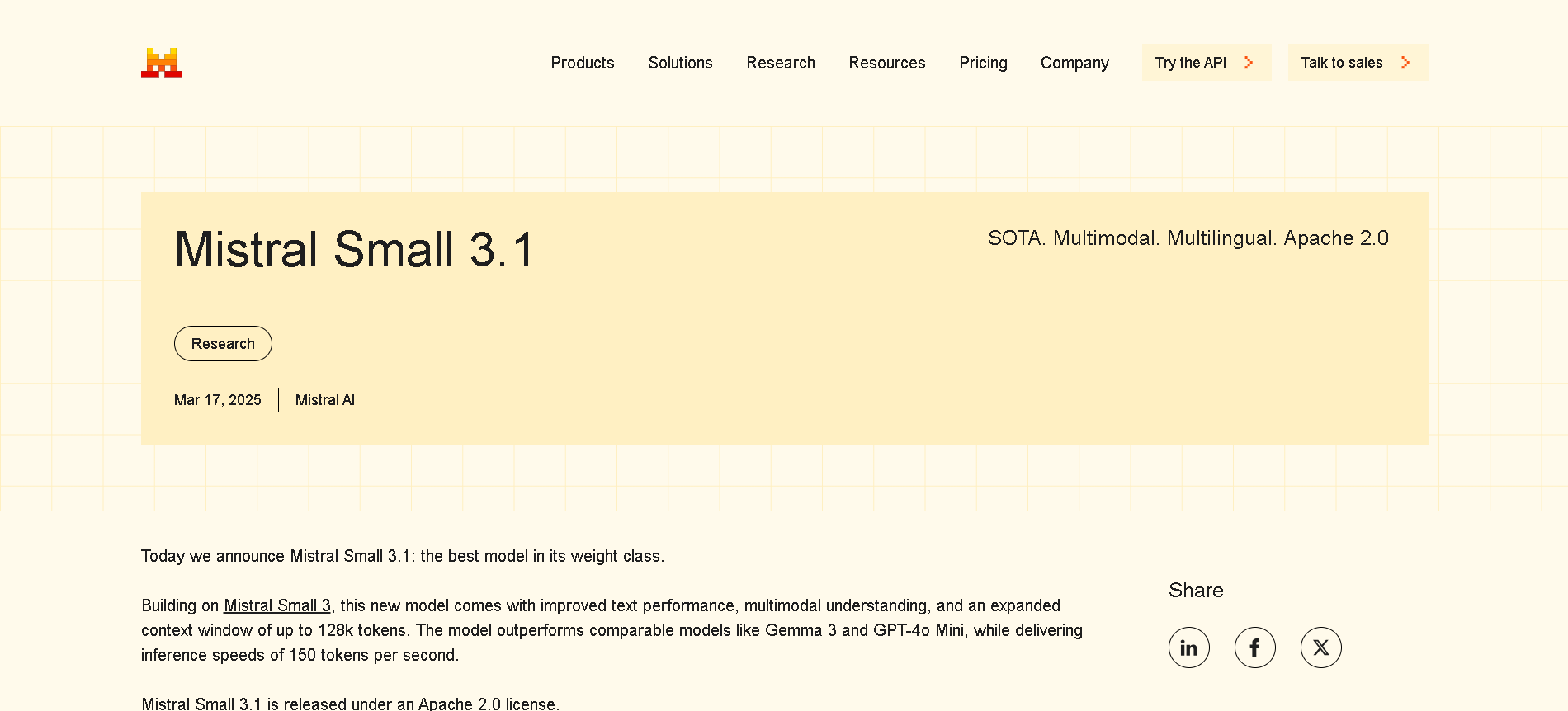
Mistral Small 3.1 is the March 17, 2025 update to Mistral AI's open-source 24B-parameter small model. It offers instruction-following, multimodal vision understanding, and an expanded 128K-token context window, delivering performance on par with or better than GPT‑4o Mini, Gemma 3, and Claude 3.5 Haiku—all while maintaining fast inference speeds (~150 tokens/sec) and running on devices like an RTX 4090 or a 32 GB Mac.
Mistral Small 3.1
Mistral Small 3.1 is the March 17, 2025 update to Mistral AI's open-source 24B-parameter small model. It offers instruction-following, multimodal vision understanding, and an expanded 128K-token context window, delivering performance on par with or better than GPT‑4o Mini, Gemma 3, and Claude 3.5 Haiku—all while maintaining fast inference speeds (~150 tokens/sec) and running on devices like an RTX 4090 or a 32 GB Mac.
Mistral Small 3.1
Mistral Small 3.1 is the March 17, 2025 update to Mistral AI's open-source 24B-parameter small model. It offers instruction-following, multimodal vision understanding, and an expanded 128K-token context window, delivering performance on par with or better than GPT‑4o Mini, Gemma 3, and Claude 3.5 Haiku—all while maintaining fast inference speeds (~150 tokens/sec) and running on devices like an RTX 4090 or a 32 GB Mac.

Qwen Chat
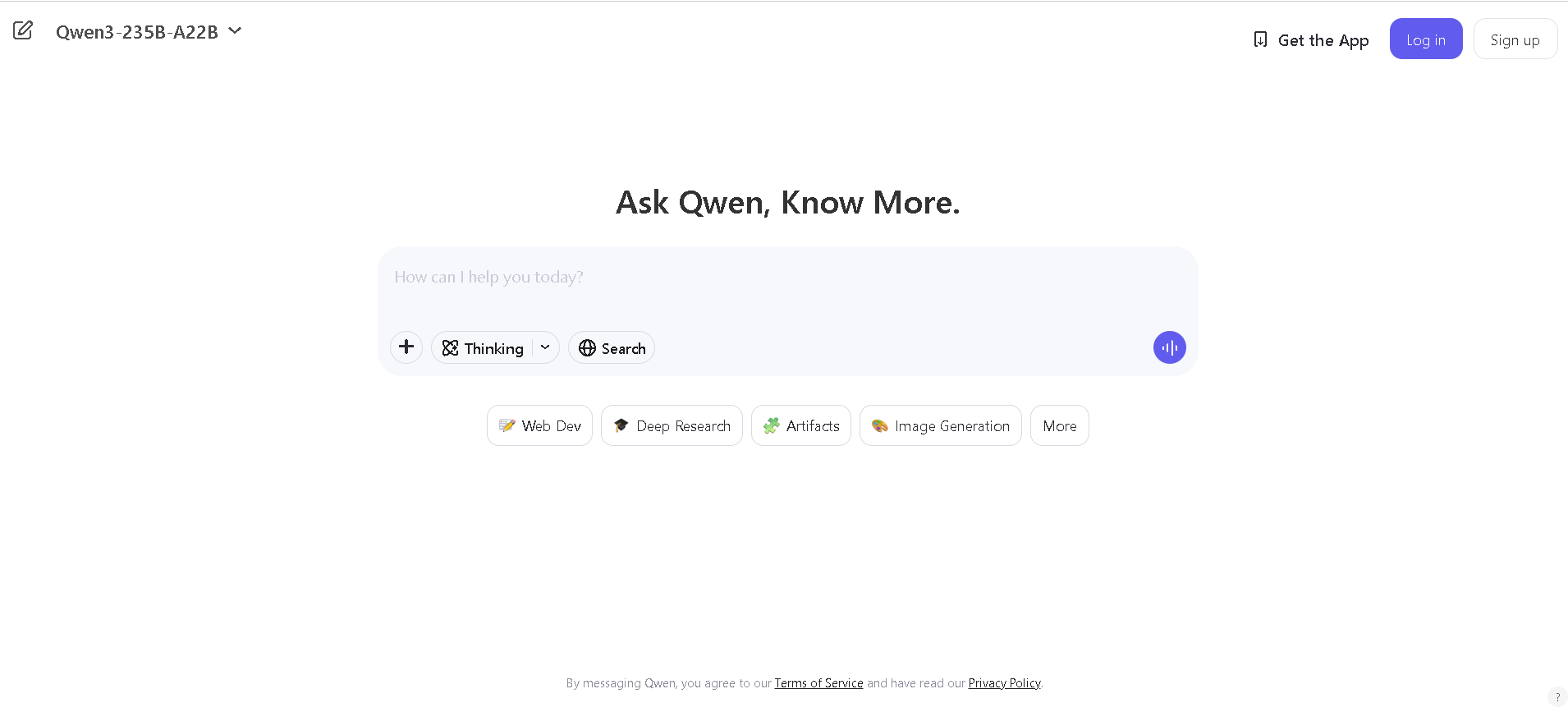
Qwen Chat is Alibaba Cloud’s conversational AI assistant built on the Qwen series (e.g., Qwen‑7B‑Chat, Qwen1.5‑7B‑Chat, Qwen‑VL, Qwen‑Audio, and Qwen2.5‑Omni). It supports text, vision, audio, and video understanding, plus image and document processing, web search integration, and image generation—all through a unified chat interface.
Qwen Chat
Qwen Chat is Alibaba Cloud’s conversational AI assistant built on the Qwen series (e.g., Qwen‑7B‑Chat, Qwen1.5‑7B‑Chat, Qwen‑VL, Qwen‑Audio, and Qwen2.5‑Omni). It supports text, vision, audio, and video understanding, plus image and document processing, web search integration, and image generation—all through a unified chat interface.
Qwen Chat
Qwen Chat is Alibaba Cloud’s conversational AI assistant built on the Qwen series (e.g., Qwen‑7B‑Chat, Qwen1.5‑7B‑Chat, Qwen‑VL, Qwen‑Audio, and Qwen2.5‑Omni). It supports text, vision, audio, and video understanding, plus image and document processing, web search integration, and image generation—all through a unified chat interface.

DeepClaude
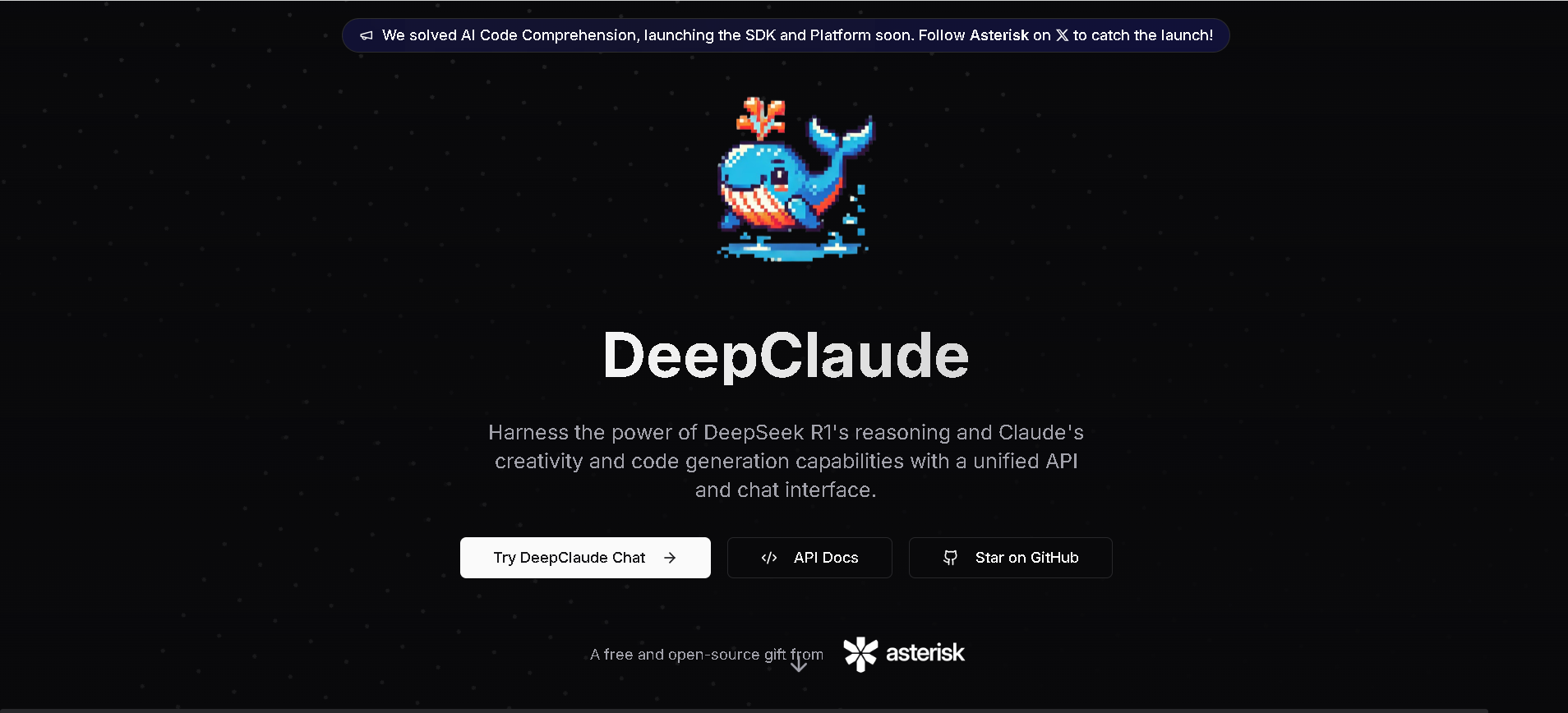
DeepClaude is a high-performance, open-source platform that combines DeepSeek R1’s chain-of-thought reasoning with Claude 3.5 Sonnet’s creative and code-generation capabilities. It offers zero-latency streaming responses via a Rust-based API and supports self-hosted or managed deployment.
DeepClaude
DeepClaude is a high-performance, open-source platform that combines DeepSeek R1’s chain-of-thought reasoning with Claude 3.5 Sonnet’s creative and code-generation capabilities. It offers zero-latency streaming responses via a Rust-based API and supports self-hosted or managed deployment.
DeepClaude
DeepClaude is a high-performance, open-source platform that combines DeepSeek R1’s chain-of-thought reasoning with Claude 3.5 Sonnet’s creative and code-generation capabilities. It offers zero-latency streaming responses via a Rust-based API and supports self-hosted or managed deployment.
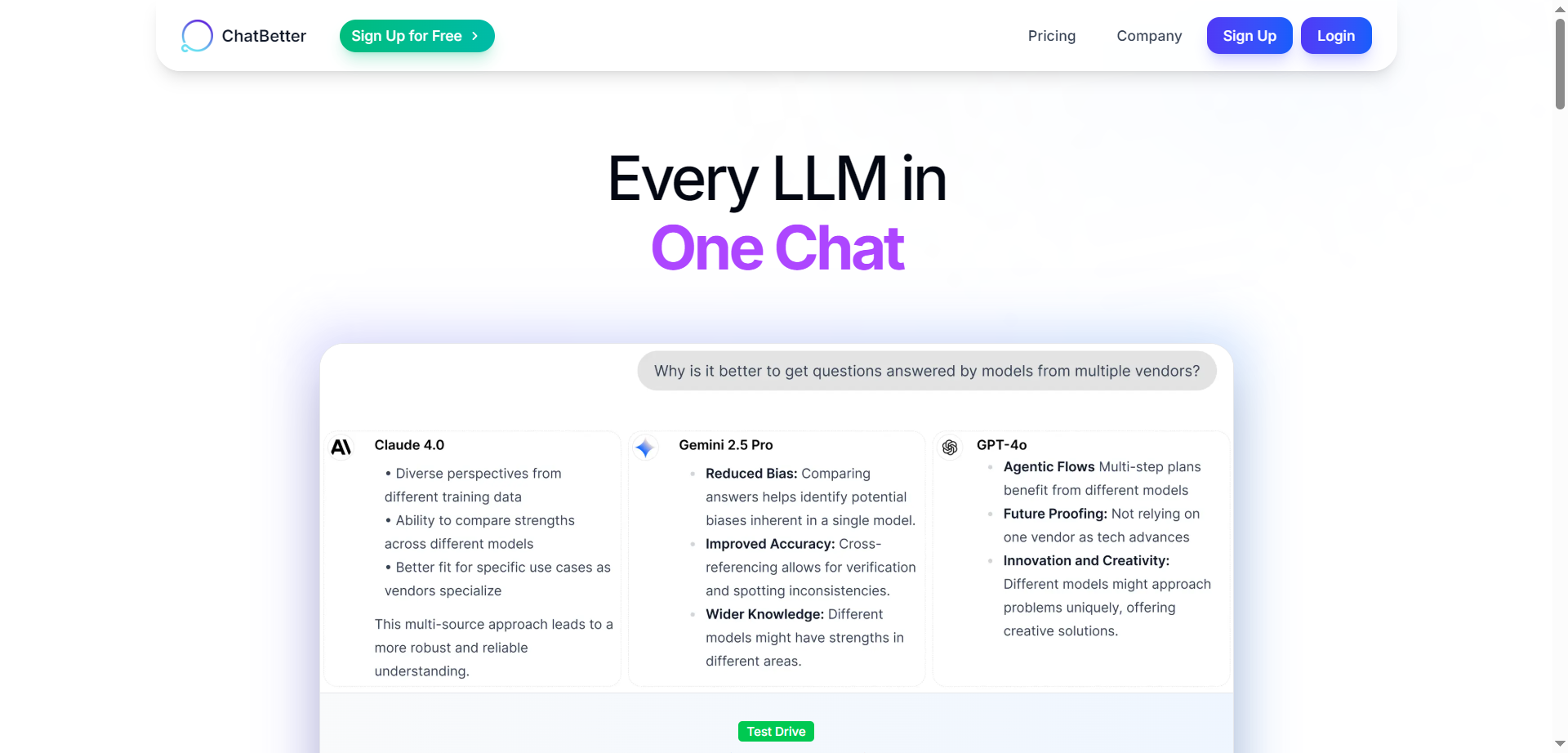

ChatBetter
ChatBetter is an AI platform designed to unify access to all major large language models (LLMs) within a single chat interface. Built for productivity and accuracy, ChatBetter leverages automatic model selection to route every query to the most capable AI—eliminating guesswork about which model to use. Users can directly compare responses from OpenAI, Anthropic, Google, Meta, DeepSeek, Perplexity, Mistral, xAI, and Cohere models side by side, or merge answers for comprehensive insights. The system is crafted for teams and individuals alike, enabling complex research, planning, and writing tasks to be accomplished efficiently in one place.
ChatBetter
ChatBetter is an AI platform designed to unify access to all major large language models (LLMs) within a single chat interface. Built for productivity and accuracy, ChatBetter leverages automatic model selection to route every query to the most capable AI—eliminating guesswork about which model to use. Users can directly compare responses from OpenAI, Anthropic, Google, Meta, DeepSeek, Perplexity, Mistral, xAI, and Cohere models side by side, or merge answers for comprehensive insights. The system is crafted for teams and individuals alike, enabling complex research, planning, and writing tasks to be accomplished efficiently in one place.
ChatBetter
ChatBetter is an AI platform designed to unify access to all major large language models (LLMs) within a single chat interface. Built for productivity and accuracy, ChatBetter leverages automatic model selection to route every query to the most capable AI—eliminating guesswork about which model to use. Users can directly compare responses from OpenAI, Anthropic, Google, Meta, DeepSeek, Perplexity, Mistral, xAI, and Cohere models side by side, or merge answers for comprehensive insights. The system is crafted for teams and individuals alike, enabling complex research, planning, and writing tasks to be accomplished efficiently in one place.


GlobalGPT
GlobalGPT is an all-in-one AI platform that unifies leading models for writing, coding, research, image generation, and video creation—accessible through a single account and subscription. It brings together top models like GPT-5, GPT-4.1, GPT-4o, GPT-o3, Claude Opus 4.1, Claude Sonnet 4, Gemini 2.5 Pro, DeepSeek V3, Unikorn (MJ-like) V7, Flux, Ideogram, and Google Veo 3 so you can chat, draft content, analyze documents, generate images, and produce cinematic videos without switching tools. Designed for over 2 million users worldwide, GlobalGPT also includes advanced research agents powered by GPT-4o and perplexity for deep web analysis, PDF summarization, and market insights, all wrapped in a clean interface with flexible credit-based plans.
GlobalGPT
GlobalGPT is an all-in-one AI platform that unifies leading models for writing, coding, research, image generation, and video creation—accessible through a single account and subscription. It brings together top models like GPT-5, GPT-4.1, GPT-4o, GPT-o3, Claude Opus 4.1, Claude Sonnet 4, Gemini 2.5 Pro, DeepSeek V3, Unikorn (MJ-like) V7, Flux, Ideogram, and Google Veo 3 so you can chat, draft content, analyze documents, generate images, and produce cinematic videos without switching tools. Designed for over 2 million users worldwide, GlobalGPT also includes advanced research agents powered by GPT-4o and perplexity for deep web analysis, PDF summarization, and market insights, all wrapped in a clean interface with flexible credit-based plans.
GlobalGPT
GlobalGPT is an all-in-one AI platform that unifies leading models for writing, coding, research, image generation, and video creation—accessible through a single account and subscription. It brings together top models like GPT-5, GPT-4.1, GPT-4o, GPT-o3, Claude Opus 4.1, Claude Sonnet 4, Gemini 2.5 Pro, DeepSeek V3, Unikorn (MJ-like) V7, Flux, Ideogram, and Google Veo 3 so you can chat, draft content, analyze documents, generate images, and produce cinematic videos without switching tools. Designed for over 2 million users worldwide, GlobalGPT also includes advanced research agents powered by GPT-4o and perplexity for deep web analysis, PDF summarization, and market insights, all wrapped in a clean interface with flexible credit-based plans.
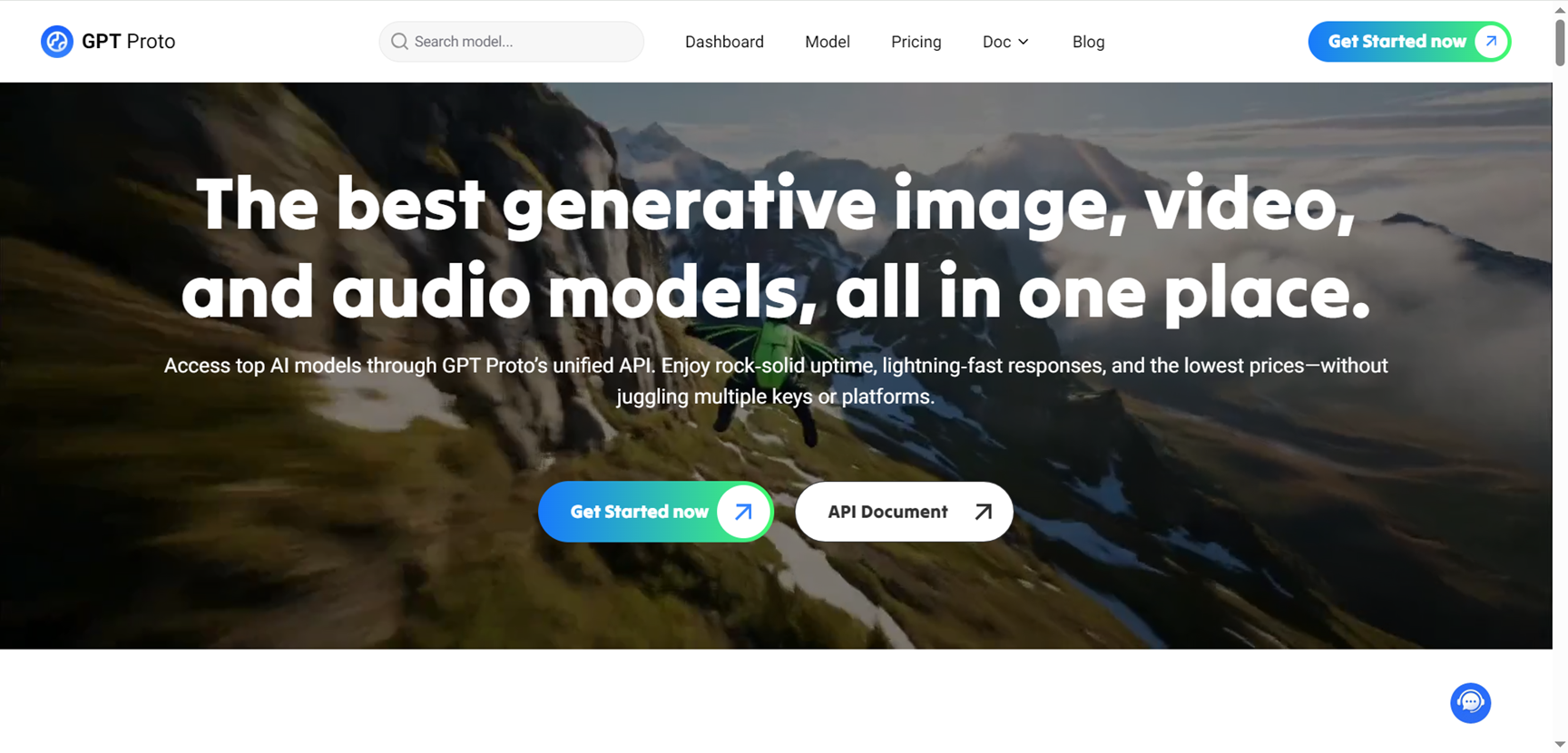

GPT Proto
GPT Proto provides developers with a unified API to access top AI models for text, image, video, and audio generation, offering rock-solid uptime, lightning-fast responses, and the lowest prices without managing multiple keys or platforms. It aggregates leading models like GPT-5 series, Claude Opus/Sonnet/Haiku, Gemini variants, Grok, and specialized tools for creators, with significant discounts such as 40% off market rates on many. From solo projects to enterprise scale, it ensures 95% of requests respond within 20 seconds, half in just 6 seconds, via robust infrastructure and failover. Quick setup lets you sign up, add credits, generate one API key, and integrate seamlessly into apps, agents, or workflows for prototyping or production.
GPT Proto
GPT Proto provides developers with a unified API to access top AI models for text, image, video, and audio generation, offering rock-solid uptime, lightning-fast responses, and the lowest prices without managing multiple keys or platforms. It aggregates leading models like GPT-5 series, Claude Opus/Sonnet/Haiku, Gemini variants, Grok, and specialized tools for creators, with significant discounts such as 40% off market rates on many. From solo projects to enterprise scale, it ensures 95% of requests respond within 20 seconds, half in just 6 seconds, via robust infrastructure and failover. Quick setup lets you sign up, add credits, generate one API key, and integrate seamlessly into apps, agents, or workflows for prototyping or production.
GPT Proto
GPT Proto provides developers with a unified API to access top AI models for text, image, video, and audio generation, offering rock-solid uptime, lightning-fast responses, and the lowest prices without managing multiple keys or platforms. It aggregates leading models like GPT-5 series, Claude Opus/Sonnet/Haiku, Gemini variants, Grok, and specialized tools for creators, with significant discounts such as 40% off market rates on many. From solo projects to enterprise scale, it ensures 95% of requests respond within 20 seconds, half in just 6 seconds, via robust infrastructure and failover. Quick setup lets you sign up, add credits, generate one API key, and integrate seamlessly into apps, agents, or workflows for prototyping or production.
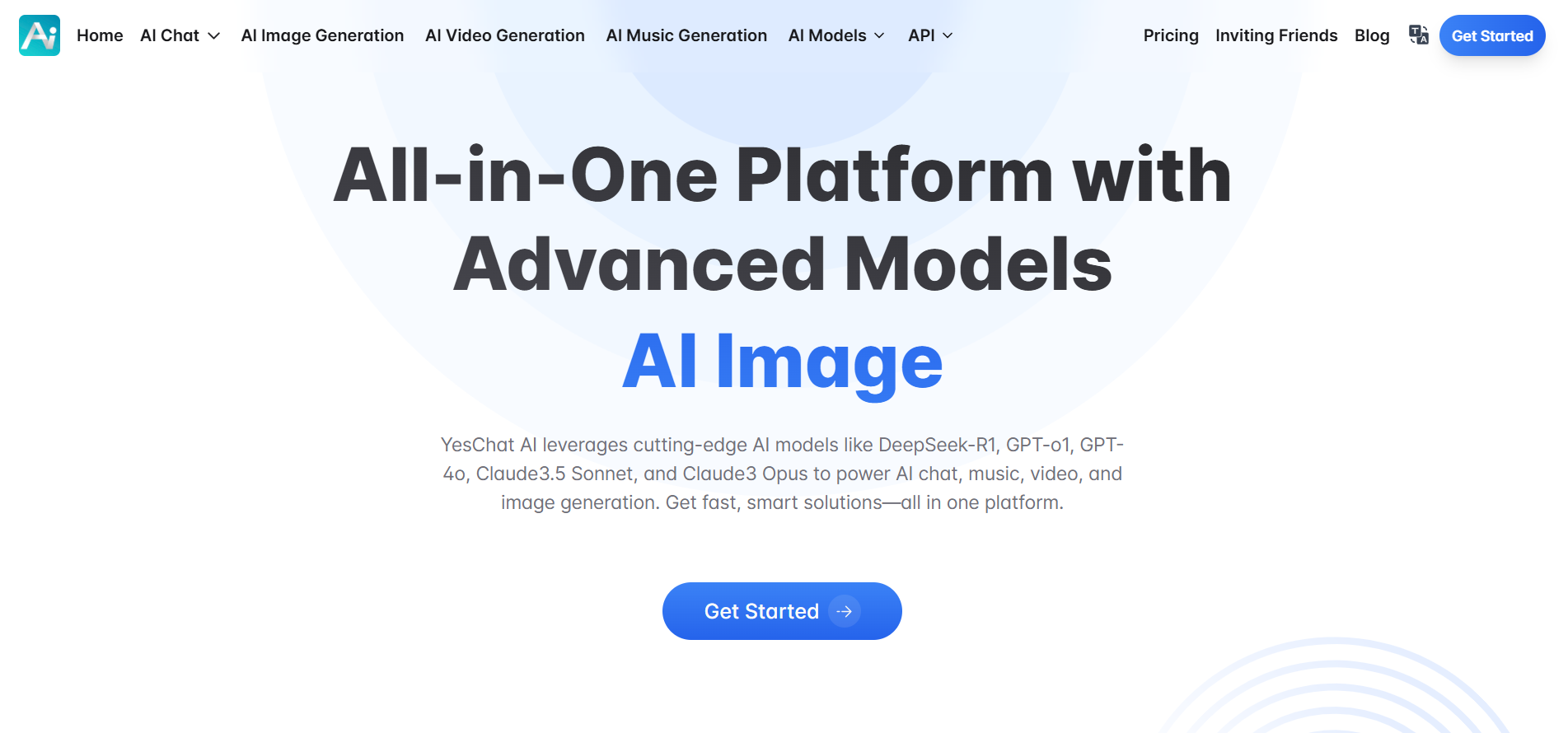

Yes Chat
YesChat AI is an all-in-one AI platform powered by advanced models such as DeepSeek-R1, GPT-o1, GPT-4o, Claude 3.5 Sonnet, and Claude 3 Opus. It offers AI chat, music generation, video creation, and image generation within one environment. The platform gives users ultra-fast, intelligent responses while enabling creative and multimedia capabilities through multiple high-performance models. By combining several leading AI engines, YesChat AI provides flexibility for writing, research, creativity, and content generation without requiring different subscriptions or tools.
Yes Chat
YesChat AI is an all-in-one AI platform powered by advanced models such as DeepSeek-R1, GPT-o1, GPT-4o, Claude 3.5 Sonnet, and Claude 3 Opus. It offers AI chat, music generation, video creation, and image generation within one environment. The platform gives users ultra-fast, intelligent responses while enabling creative and multimedia capabilities through multiple high-performance models. By combining several leading AI engines, YesChat AI provides flexibility for writing, research, creativity, and content generation without requiring different subscriptions or tools.
Yes Chat
YesChat AI is an all-in-one AI platform powered by advanced models such as DeepSeek-R1, GPT-o1, GPT-4o, Claude 3.5 Sonnet, and Claude 3 Opus. It offers AI chat, music generation, video creation, and image generation within one environment. The platform gives users ultra-fast, intelligent responses while enabling creative and multimedia capabilities through multiple high-performance models. By combining several leading AI engines, YesChat AI provides flexibility for writing, research, creativity, and content generation without requiring different subscriptions or tools.
Editorial Note
This page was researched and written by the ATB Editorial Team. Our team researches each AI tool by reviewing its official website, testing features, exploring real use cases, and considering user feedback. Every page is fact-checked and regularly updated to ensure the information stays accurate, neutral, and useful for our readers.
If you have any suggestions or questions, email us at hello@aitoolbook.ai