
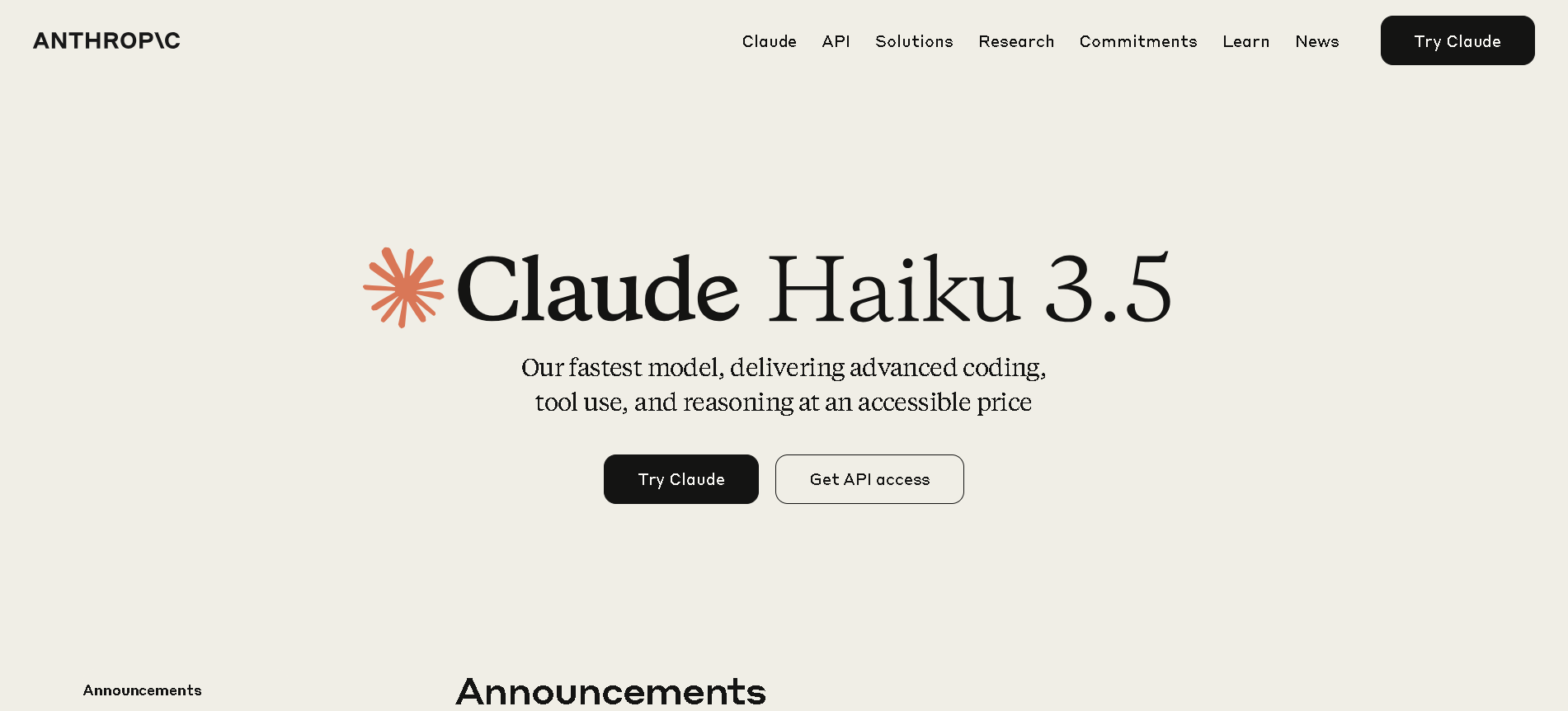
- Developers & Engineers: Get rapid code suggestions, completions, and CLI interactions.
- Customer Support & Bot Builders: Power highly responsive chatbots, live support, and moderation tools.
- Data Teams: Automate data labeling, extraction, and document parsing from text or images.
- Enterprise App Builders: Use its speed for high-throughput insight extraction in sensitive environments.
- Researchers & Analysts: Quickly analyze large datasets or documents with instant results.
How to Use Claude 3.5 Haiku?
- Access the Model: Available via Claude.ai free tier (with limits), Claude Pro, Anthropic API, Amazon Bedrock, and Google Vertex AI.
- Select Haiku: Choose the Haiku model when launching a chat session or via API invocation.
- Send Prompts: Quickly process input—for code, charts, moderation, or data extraction tasks.
- Use Vision & Artifacts: Supports image understanding and works with Claude’s Artifacts interface for real-time output refinement.
- Scale & Save: Benefit from prompt caching (up to 90% savings) and message batching (50% savings) to optimize cost.
- Lightning-Fast: Three times faster than similar models, processing ~21K tokens/sec.
- Best-in-Class Speed/Accuracy Trade-off: Outperforms Claude 3 Opus on several benchmarks despite smaller size.
- Multimodal Vision: Understands charts, images, and document layouts at speed.
- Cost-Efficient Pricing: Only $0.80/input & $4/output per million tokens; even cheaper with caching and batching.
- Safe & Secure: Enterprise-grade safeguards, rigorous safety evaluation, and robust guardrails.
- Extreme speed—ideal for real-time applications and high throughput.
- Efficient cost—drives cheap usage via batching and caching.
- Vision-ready—handles charts, images, documents without delay.
- Artifact-compatible—easily refine outputs in Claude’s interactive sidebar.
- Enterprise-grade safety—reliable for sensitive use cases.
- Less capable on deep, multi-step reasoning compared to Sonnet/Opus.
- Limited context for extended reasoning tasks despite 200K token window.
- Free-tier quotas can be quickly exhausted due to popularity
Free Tier
$ 0.00
- Chat on web, iOS, and Android
- Generate code and visualize data
- Write, edit, and create content
- Analyze text and images
- Ability to search the web
Pro Mode
$20/month
Connect Google Workspace: email, calendar, and docs
Connect any context or tool through Integrations with remote MCP
Extended thinking for complex work
Ability to use more Claude models
Max
$100/month
- Choose 5x or 20x more usage than Pro
- Higher output limits for all tasks
- Early access to advanced Claude features
- Priority access at high traffic times
API Usage
$0.8/$4 per 1M tokens
- $0.8 per million input tokens & $4 per million output tokens
- Prompt Cachinr rewrite - $1 / MTok
- Prompt caching read - $0.08 / MTok
Proud of the love you're getting? Show off your AI Toolbook reviews—then invite more fans to share the love and build your credibility.
Add an AI Toolbook badge to your site—an easy way to drive followers, showcase updates, and collect reviews. It's like a mini 24/7 billboard for your AI.
Reviews
Rating Distribution
Average score
Popular Mention
FAQs
Similar AI Tools
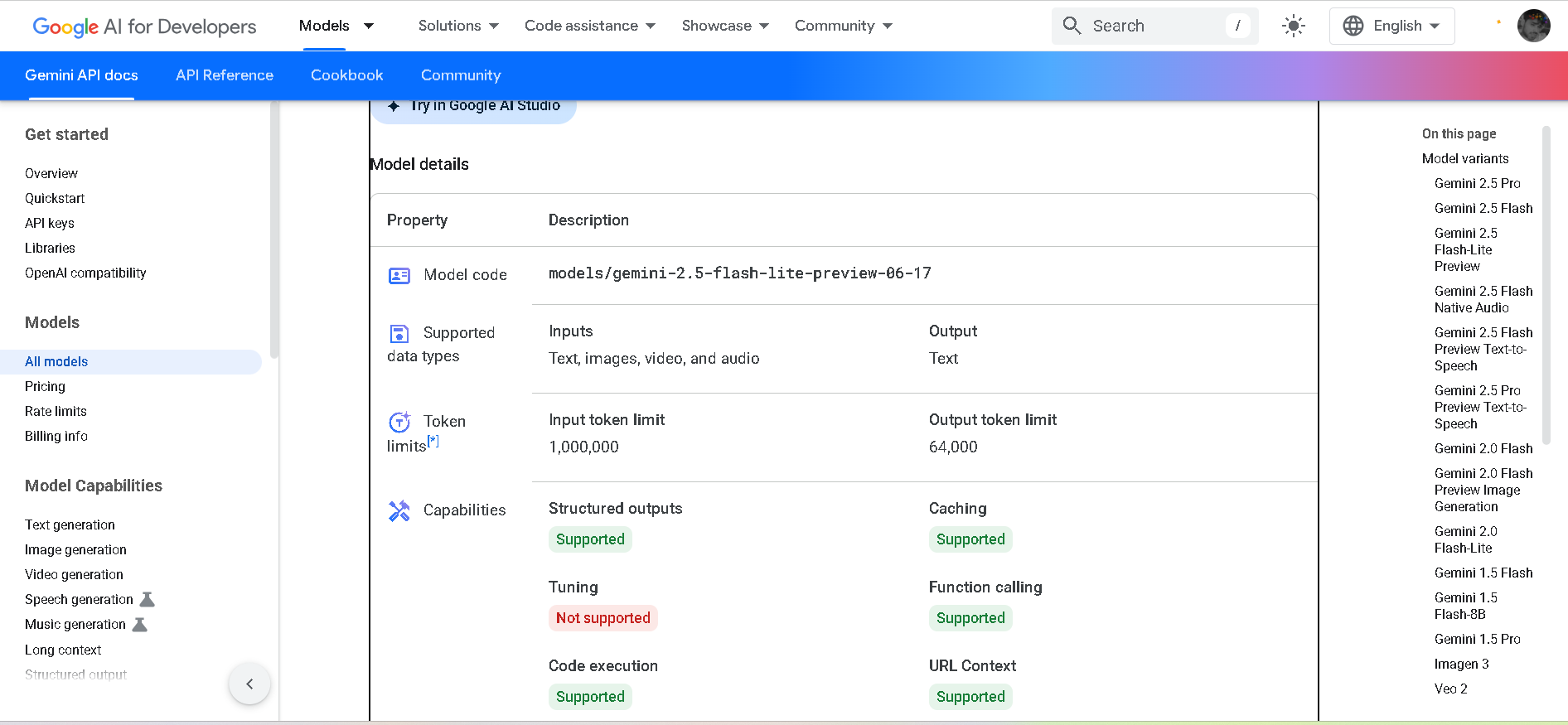
Gemini 2.5 Flash‑Lite is Google's most cost-efficient and lowest-latency variant in the Gemini 2.5 family, currently available in preview. It’s designed for high-throughput tasks like classification, summarization, and translation, delivering exceptional performance—better than former Flash‑Lite versions—while offering developer control over reasoning depth via a “thinking budget” toggle .
Gemini 2.5 Flash‑Lite is Google's most cost-efficient and lowest-latency variant in the Gemini 2.5 family, currently available in preview. It’s designed for high-throughput tasks like classification, summarization, and translation, delivering exceptional performance—better than former Flash‑Lite versions—while offering developer control over reasoning depth via a “thinking budget” toggle .
Gemini 2.5 Flash‑Lite is Google's most cost-efficient and lowest-latency variant in the Gemini 2.5 family, currently available in preview. It’s designed for high-throughput tasks like classification, summarization, and translation, delivering exceptional performance—better than former Flash‑Lite versions—while offering developer control over reasoning depth via a “thinking budget” toggle .

Meta Llama 3
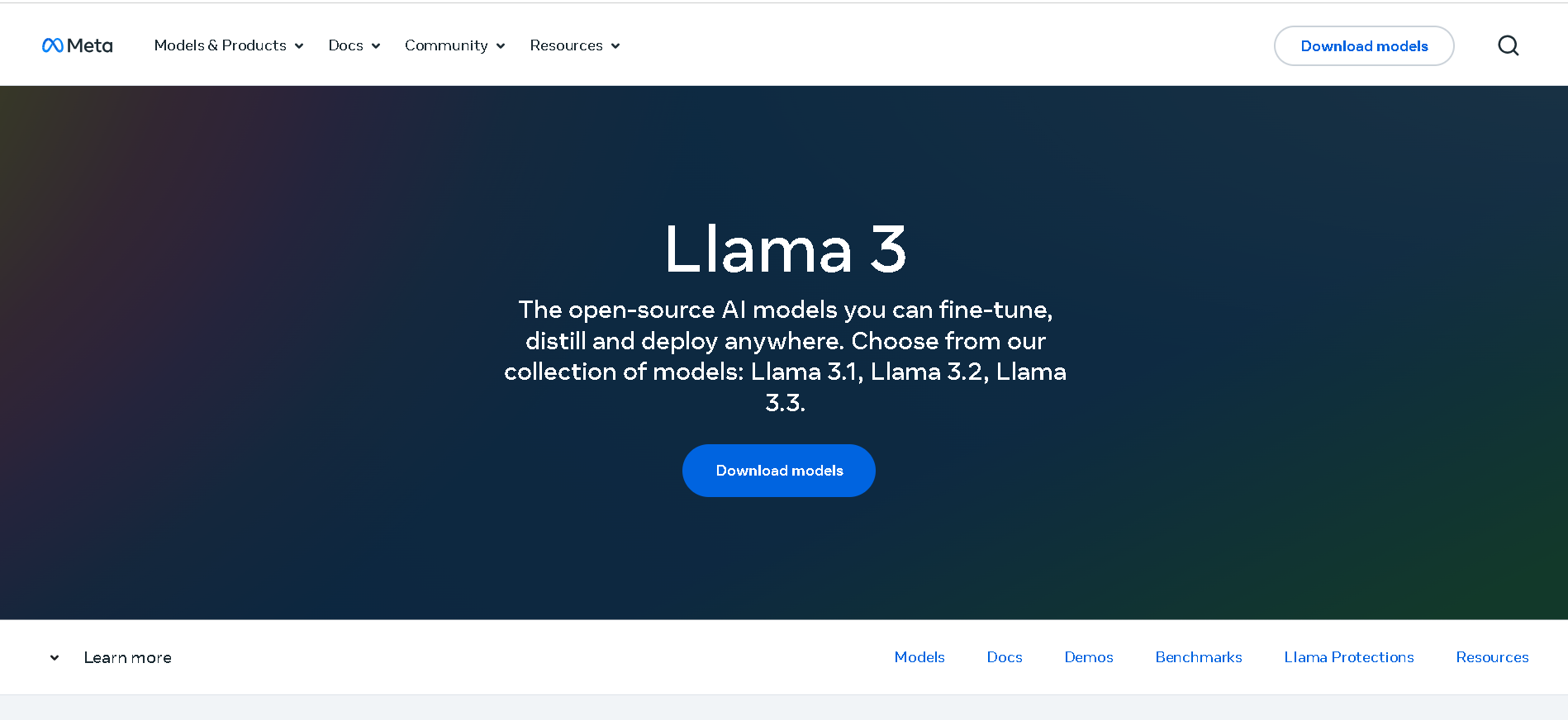
Meta Llama 3 is Meta’s third-generation open-weight large language model family, released in April 2024 and enhanced in July 2024 with the 3.1 update. It spans three sizes—8B, 70B, and 405B parameters—each offering a 128K‑token context window. Llama 3 excels at reasoning, code generation, multilingual text, and instruction-following, and introduces multimodal vision (image understanding) capabilities in its 3.2 series. Robust safety mechanisms like Llama Guard 3, Code Shield, and CyberSec Eval 2 ensure responsible output.
Meta Llama 3
Meta Llama 3 is Meta’s third-generation open-weight large language model family, released in April 2024 and enhanced in July 2024 with the 3.1 update. It spans three sizes—8B, 70B, and 405B parameters—each offering a 128K‑token context window. Llama 3 excels at reasoning, code generation, multilingual text, and instruction-following, and introduces multimodal vision (image understanding) capabilities in its 3.2 series. Robust safety mechanisms like Llama Guard 3, Code Shield, and CyberSec Eval 2 ensure responsible output.
Meta Llama 3
Meta Llama 3 is Meta’s third-generation open-weight large language model family, released in April 2024 and enhanced in July 2024 with the 3.1 update. It spans three sizes—8B, 70B, and 405B parameters—each offering a 128K‑token context window. Llama 3 excels at reasoning, code generation, multilingual text, and instruction-following, and introduces multimodal vision (image understanding) capabilities in its 3.2 series. Robust safety mechanisms like Llama Guard 3, Code Shield, and CyberSec Eval 2 ensure responsible output.
Grok 3 Latest
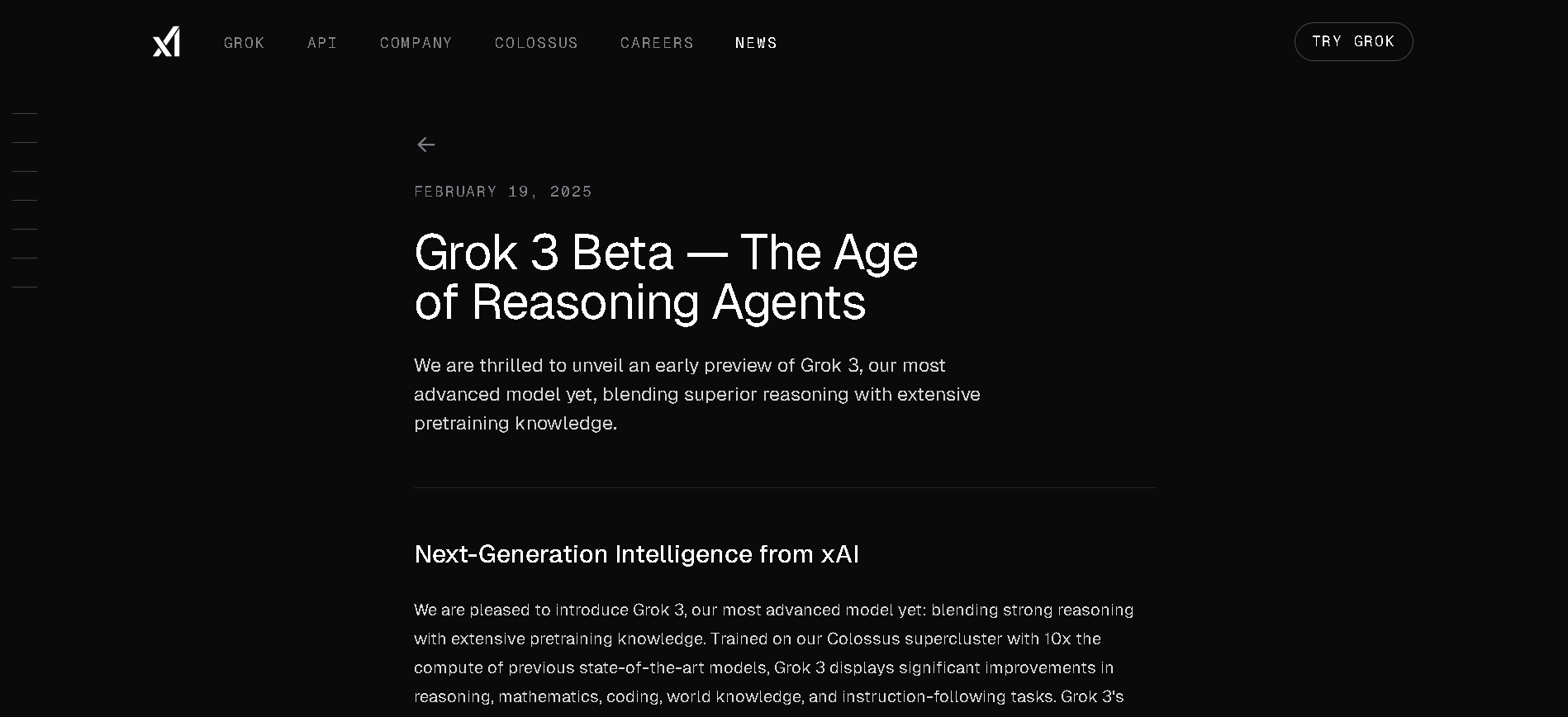
Grok 3 is xAI’s newest flagship AI chatbot, released on February 17, 2025, running on the massive Colossus supercluster (~200,000 GPUs). It offers elite-level reasoning, chain-of-thought transparency (“Think” mode), advanced “Big Brain” deeper reasoning, multimodal support (text, images), and integrated real-time DeepSearch—positioning it as a top-tier competitor to GPT‑4o, Gemini, Claude, and DeepSeek V3 on benchmarks.
Grok 3 Latest
Grok 3 is xAI’s newest flagship AI chatbot, released on February 17, 2025, running on the massive Colossus supercluster (~200,000 GPUs). It offers elite-level reasoning, chain-of-thought transparency (“Think” mode), advanced “Big Brain” deeper reasoning, multimodal support (text, images), and integrated real-time DeepSearch—positioning it as a top-tier competitor to GPT‑4o, Gemini, Claude, and DeepSeek V3 on benchmarks.
Grok 3 Latest
Grok 3 is xAI’s newest flagship AI chatbot, released on February 17, 2025, running on the massive Colossus supercluster (~200,000 GPUs). It offers elite-level reasoning, chain-of-thought transparency (“Think” mode), advanced “Big Brain” deeper reasoning, multimodal support (text, images), and integrated real-time DeepSearch—positioning it as a top-tier competitor to GPT‑4o, Gemini, Claude, and DeepSeek V3 on benchmarks.
grok-3-fast
Grok 3 Fast is xAI’s low-latency variant of their flagship Grok 3 model. It delivers identical output quality but responds faster by leveraging optimized serving infrastructure—ideal for real-time, speed-sensitive applications. It inherits the same multimodal, reasoning, and chain-of-thought capabilities as Grok 3, with a large context window of ~131K tokens.
grok-3-fast
Grok 3 Fast is xAI’s low-latency variant of their flagship Grok 3 model. It delivers identical output quality but responds faster by leveraging optimized serving infrastructure—ideal for real-time, speed-sensitive applications. It inherits the same multimodal, reasoning, and chain-of-thought capabilities as Grok 3, with a large context window of ~131K tokens.
grok-3-fast
Grok 3 Fast is xAI’s low-latency variant of their flagship Grok 3 model. It delivers identical output quality but responds faster by leveraging optimized serving infrastructure—ideal for real-time, speed-sensitive applications. It inherits the same multimodal, reasoning, and chain-of-thought capabilities as Grok 3, with a large context window of ~131K tokens.

Meta Llama 3.1
Llama 3.1 is Meta’s most advanced open-source Llama 3 model, released on July 23, 2024. It comes in three sizes—8B, 70B, and 405B parameters—with an expanded 128K-token context window and improved multilingual and multimodal capabilities. It significantly outperforms Llama 3 and rivals proprietary models across benchmarks like GSM8K, MMLU, HumanEval, ARC, and tool-augmented reasoning tasks.
Meta Llama 3.1
Llama 3.1 is Meta’s most advanced open-source Llama 3 model, released on July 23, 2024. It comes in three sizes—8B, 70B, and 405B parameters—with an expanded 128K-token context window and improved multilingual and multimodal capabilities. It significantly outperforms Llama 3 and rivals proprietary models across benchmarks like GSM8K, MMLU, HumanEval, ARC, and tool-augmented reasoning tasks.
Meta Llama 3.1
Llama 3.1 is Meta’s most advanced open-source Llama 3 model, released on July 23, 2024. It comes in three sizes—8B, 70B, and 405B parameters—with an expanded 128K-token context window and improved multilingual and multimodal capabilities. It significantly outperforms Llama 3 and rivals proprietary models across benchmarks like GSM8K, MMLU, HumanEval, ARC, and tool-augmented reasoning tasks.

Meta Llama 3.3
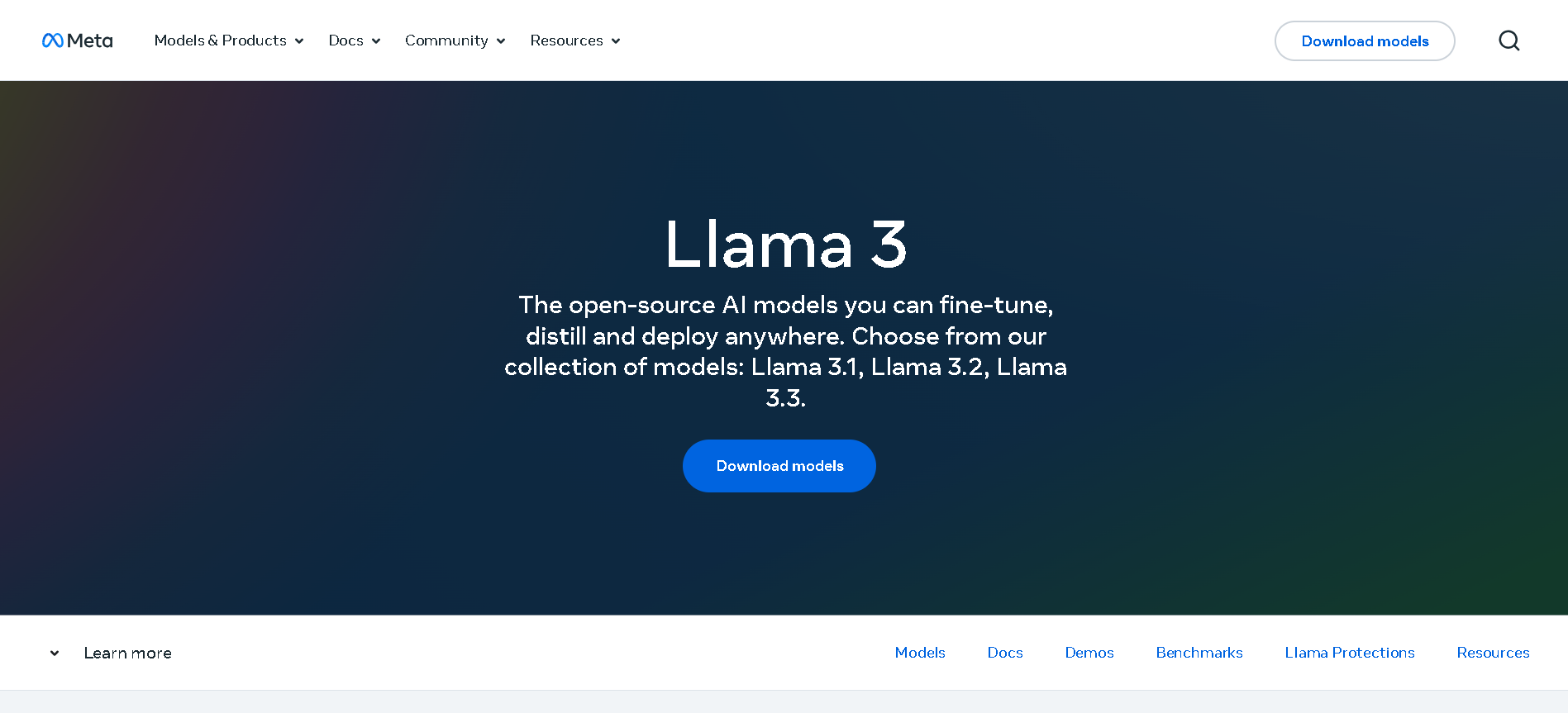
Llama 3.3 is Meta’s instruction-tuned, text-only large language model released on December 6, 2024, available in a 70B-parameter size. It matches the performance of much larger models using significantly fewer parameters, is multilingual across eight key languages, and supports a massive 128,000-token context window—ideal for handling long-form documents, codebases, and detailed reasoning tasks.
Meta Llama 3.3
Llama 3.3 is Meta’s instruction-tuned, text-only large language model released on December 6, 2024, available in a 70B-parameter size. It matches the performance of much larger models using significantly fewer parameters, is multilingual across eight key languages, and supports a massive 128,000-token context window—ideal for handling long-form documents, codebases, and detailed reasoning tasks.
Meta Llama 3.3
Llama 3.3 is Meta’s instruction-tuned, text-only large language model released on December 6, 2024, available in a 70B-parameter size. It matches the performance of much larger models using significantly fewer parameters, is multilingual across eight key languages, and supports a massive 128,000-token context window—ideal for handling long-form documents, codebases, and detailed reasoning tasks.
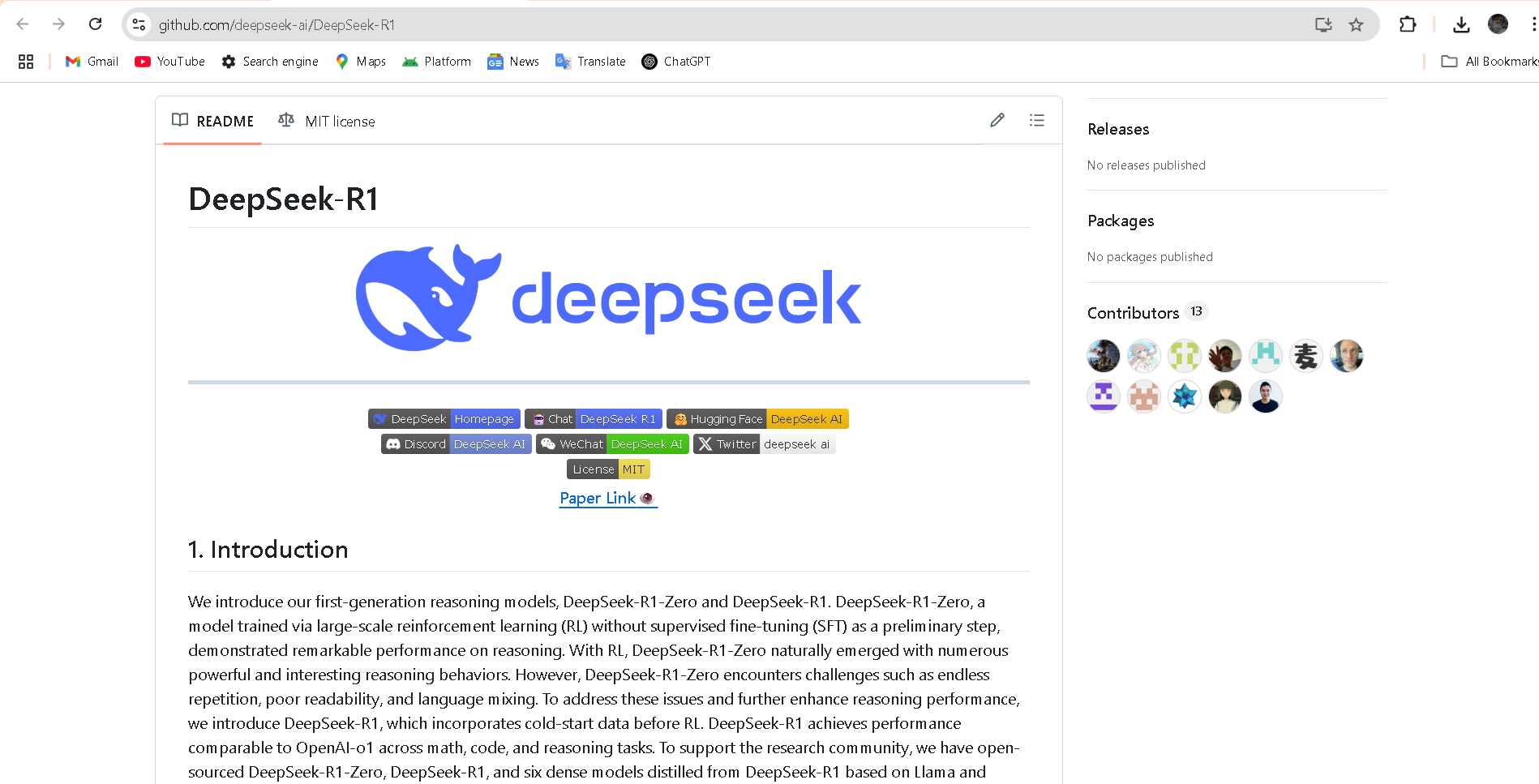
DeepSeek R1 0528 – Qwen3 ‑ 8B is an 8 B-parameter dense model distilled from DeepSeek‑R1‑0528 using Qwen3‑8B as its base. Released in May 2025, it transfers high-depth chain-of-thought reasoning into a compact architecture while achieving benchmark-leading results close to much larger models.
DeepSeek R1 0528 – Qwen3 ‑ 8B is an 8 B-parameter dense model distilled from DeepSeek‑R1‑0528 using Qwen3‑8B as its base. Released in May 2025, it transfers high-depth chain-of-thought reasoning into a compact architecture while achieving benchmark-leading results close to much larger models.
DeepSeek R1 0528 – Qwen3 ‑ 8B is an 8 B-parameter dense model distilled from DeepSeek‑R1‑0528 using Qwen3‑8B as its base. Released in May 2025, it transfers high-depth chain-of-thought reasoning into a compact architecture while achieving benchmark-leading results close to much larger models.

Mistral Large 2
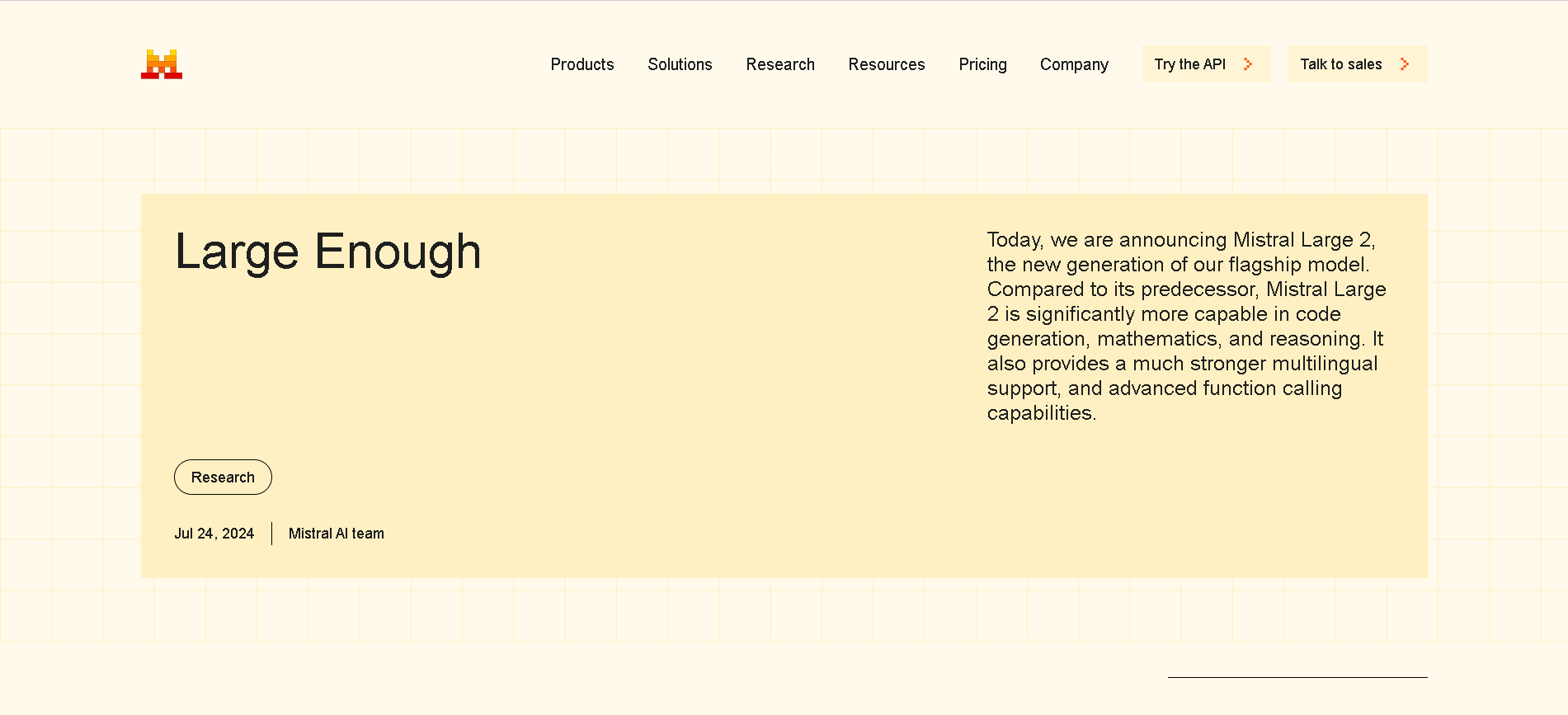
Mistral Large 2 is the second-generation flagship model from Mistral AI, released in July 2024. Also referenced as mistral-large-2407, it’s a 123 B-parameter dense LLM with a 128 K-token context window, supporting dozens of languages and 80+ coding languages. It excels in reasoning, code generation, mathematics, instruction-following, and function calling—designed for high throughput on single-node setups.
Mistral Large 2
Mistral Large 2 is the second-generation flagship model from Mistral AI, released in July 2024. Also referenced as mistral-large-2407, it’s a 123 B-parameter dense LLM with a 128 K-token context window, supporting dozens of languages and 80+ coding languages. It excels in reasoning, code generation, mathematics, instruction-following, and function calling—designed for high throughput on single-node setups.
Mistral Large 2
Mistral Large 2 is the second-generation flagship model from Mistral AI, released in July 2024. Also referenced as mistral-large-2407, it’s a 123 B-parameter dense LLM with a 128 K-token context window, supporting dozens of languages and 80+ coding languages. It excels in reasoning, code generation, mathematics, instruction-following, and function calling—designed for high throughput on single-node setups.

Mistral Small 3.1
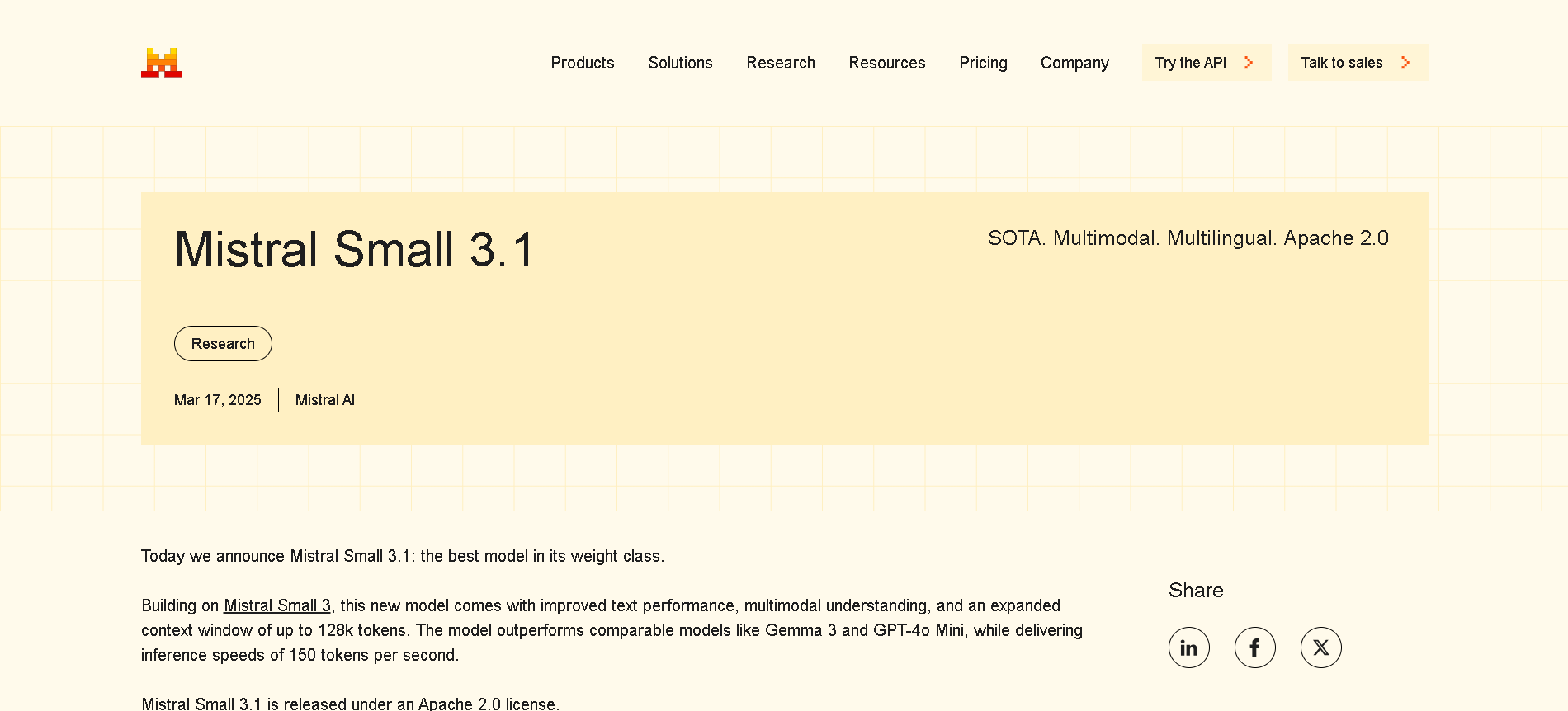
Mistral Small 3.1 is the March 17, 2025 update to Mistral AI's open-source 24B-parameter small model. It offers instruction-following, multimodal vision understanding, and an expanded 128K-token context window, delivering performance on par with or better than GPT‑4o Mini, Gemma 3, and Claude 3.5 Haiku—all while maintaining fast inference speeds (~150 tokens/sec) and running on devices like an RTX 4090 or a 32 GB Mac.
Mistral Small 3.1
Mistral Small 3.1 is the March 17, 2025 update to Mistral AI's open-source 24B-parameter small model. It offers instruction-following, multimodal vision understanding, and an expanded 128K-token context window, delivering performance on par with or better than GPT‑4o Mini, Gemma 3, and Claude 3.5 Haiku—all while maintaining fast inference speeds (~150 tokens/sec) and running on devices like an RTX 4090 or a 32 GB Mac.
Mistral Small 3.1
Mistral Small 3.1 is the March 17, 2025 update to Mistral AI's open-source 24B-parameter small model. It offers instruction-following, multimodal vision understanding, and an expanded 128K-token context window, delivering performance on par with or better than GPT‑4o Mini, Gemma 3, and Claude 3.5 Haiku—all while maintaining fast inference speeds (~150 tokens/sec) and running on devices like an RTX 4090 or a 32 GB Mac.
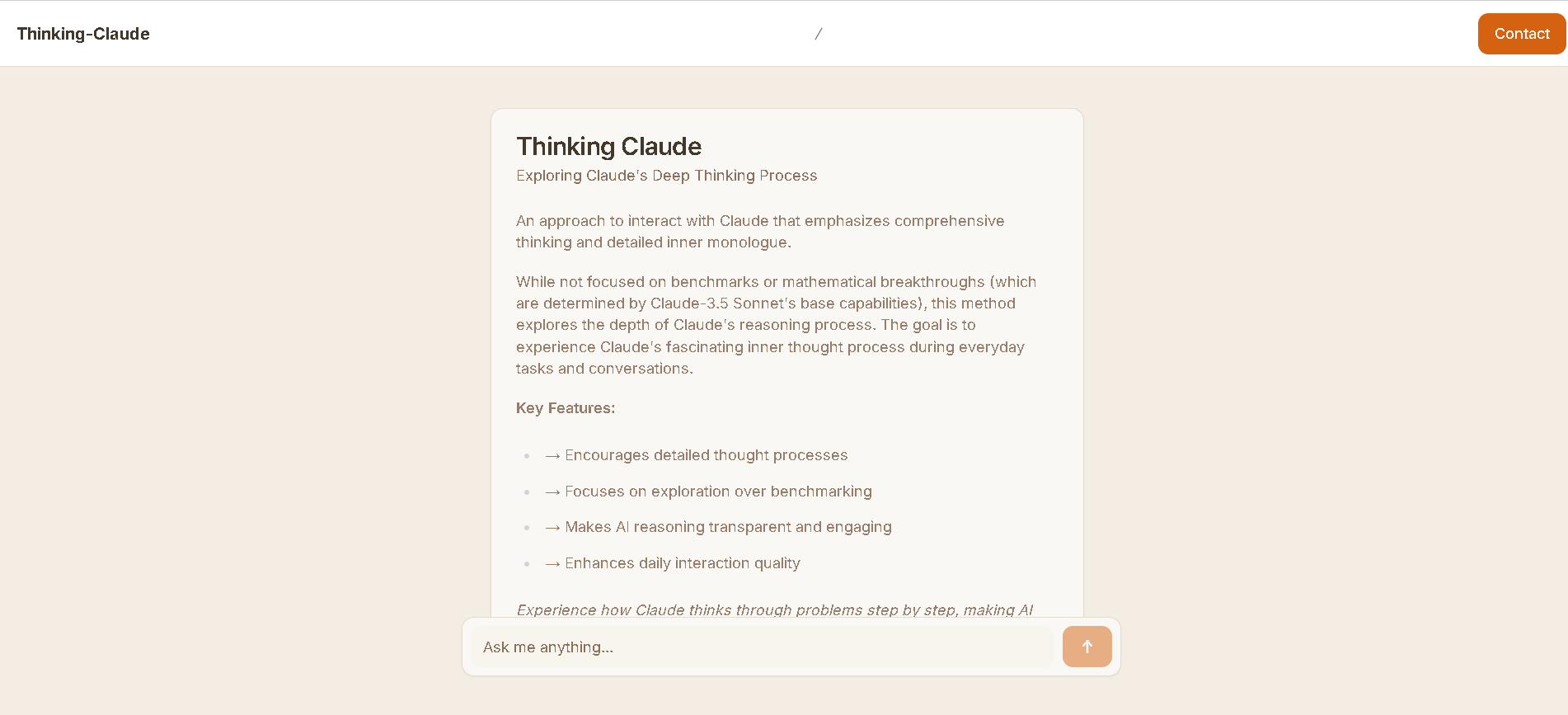
Thinking-Claude
"Thinking-Claude" is an innovative approach or methodology for interacting with the Claude AI. It emphasizes encouraging and revealing Claude's comprehensive thinking process and detailed inner monologue during everyday tasks and conversations. It's not a separate software tool or a new AI model, but rather a specific way of engaging with the existing Claude AI to gain deeper insights into its reasoning.
Thinking-Claude
"Thinking-Claude" is an innovative approach or methodology for interacting with the Claude AI. It emphasizes encouraging and revealing Claude's comprehensive thinking process and detailed inner monologue during everyday tasks and conversations. It's not a separate software tool or a new AI model, but rather a specific way of engaging with the existing Claude AI to gain deeper insights into its reasoning.
Thinking-Claude
"Thinking-Claude" is an innovative approach or methodology for interacting with the Claude AI. It emphasizes encouraging and revealing Claude's comprehensive thinking process and detailed inner monologue during everyday tasks and conversations. It's not a separate software tool or a new AI model, but rather a specific way of engaging with the existing Claude AI to gain deeper insights into its reasoning.


GlobalGPT
GlobalGPT is an all-in-one AI platform that unifies leading models for writing, coding, research, image generation, and video creation—accessible through a single account and subscription. It brings together top models like GPT-5, GPT-4.1, GPT-4o, GPT-o3, Claude Opus 4.1, Claude Sonnet 4, Gemini 2.5 Pro, DeepSeek V3, Unikorn (MJ-like) V7, Flux, Ideogram, and Google Veo 3 so you can chat, draft content, analyze documents, generate images, and produce cinematic videos without switching tools. Designed for over 2 million users worldwide, GlobalGPT also includes advanced research agents powered by GPT-4o and perplexity for deep web analysis, PDF summarization, and market insights, all wrapped in a clean interface with flexible credit-based plans.
GlobalGPT
GlobalGPT is an all-in-one AI platform that unifies leading models for writing, coding, research, image generation, and video creation—accessible through a single account and subscription. It brings together top models like GPT-5, GPT-4.1, GPT-4o, GPT-o3, Claude Opus 4.1, Claude Sonnet 4, Gemini 2.5 Pro, DeepSeek V3, Unikorn (MJ-like) V7, Flux, Ideogram, and Google Veo 3 so you can chat, draft content, analyze documents, generate images, and produce cinematic videos without switching tools. Designed for over 2 million users worldwide, GlobalGPT also includes advanced research agents powered by GPT-4o and perplexity for deep web analysis, PDF summarization, and market insights, all wrapped in a clean interface with flexible credit-based plans.
GlobalGPT
GlobalGPT is an all-in-one AI platform that unifies leading models for writing, coding, research, image generation, and video creation—accessible through a single account and subscription. It brings together top models like GPT-5, GPT-4.1, GPT-4o, GPT-o3, Claude Opus 4.1, Claude Sonnet 4, Gemini 2.5 Pro, DeepSeek V3, Unikorn (MJ-like) V7, Flux, Ideogram, and Google Veo 3 so you can chat, draft content, analyze documents, generate images, and produce cinematic videos without switching tools. Designed for over 2 million users worldwide, GlobalGPT also includes advanced research agents powered by GPT-4o and perplexity for deep web analysis, PDF summarization, and market insights, all wrapped in a clean interface with flexible credit-based plans.
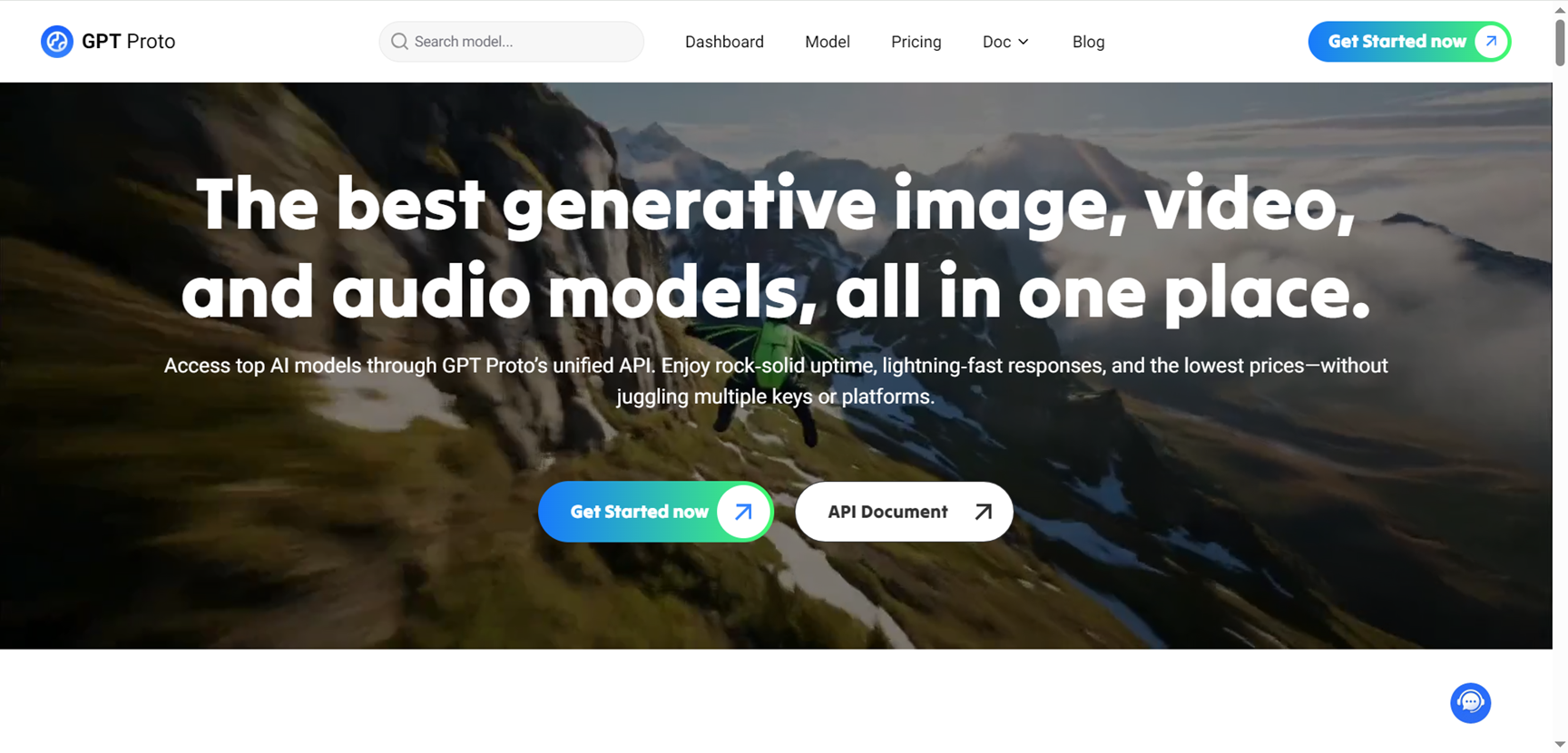

GPT Proto
GPT Proto provides developers with a unified API to access top AI models for text, image, video, and audio generation, offering rock-solid uptime, lightning-fast responses, and the lowest prices without managing multiple keys or platforms. It aggregates leading models like GPT-5 series, Claude Opus/Sonnet/Haiku, Gemini variants, Grok, and specialized tools for creators, with significant discounts such as 40% off market rates on many. From solo projects to enterprise scale, it ensures 95% of requests respond within 20 seconds, half in just 6 seconds, via robust infrastructure and failover. Quick setup lets you sign up, add credits, generate one API key, and integrate seamlessly into apps, agents, or workflows for prototyping or production.
GPT Proto
GPT Proto provides developers with a unified API to access top AI models for text, image, video, and audio generation, offering rock-solid uptime, lightning-fast responses, and the lowest prices without managing multiple keys or platforms. It aggregates leading models like GPT-5 series, Claude Opus/Sonnet/Haiku, Gemini variants, Grok, and specialized tools for creators, with significant discounts such as 40% off market rates on many. From solo projects to enterprise scale, it ensures 95% of requests respond within 20 seconds, half in just 6 seconds, via robust infrastructure and failover. Quick setup lets you sign up, add credits, generate one API key, and integrate seamlessly into apps, agents, or workflows for prototyping or production.
GPT Proto
GPT Proto provides developers with a unified API to access top AI models for text, image, video, and audio generation, offering rock-solid uptime, lightning-fast responses, and the lowest prices without managing multiple keys or platforms. It aggregates leading models like GPT-5 series, Claude Opus/Sonnet/Haiku, Gemini variants, Grok, and specialized tools for creators, with significant discounts such as 40% off market rates on many. From solo projects to enterprise scale, it ensures 95% of requests respond within 20 seconds, half in just 6 seconds, via robust infrastructure and failover. Quick setup lets you sign up, add credits, generate one API key, and integrate seamlessly into apps, agents, or workflows for prototyping or production.
Editorial Note
This page was researched and written by the ATB Editorial Team. Our team researches each AI tool by reviewing its official website, testing features, exploring real use cases, and considering user feedback. Every page is fact-checked and regularly updated to ensure the information stays accurate, neutral, and useful for our readers.
If you have any suggestions or questions, email us at hello@aitoolbook.ai