
- AI Researchers Experiment with and develop novel model fine-tuning techniques
- Developers Build and integrate custom-trained models into web, mobile, or enterprise applications
- Educators Teach AI concepts with practical, hands-on examples using real models
- Hobbyists Engage in AI model customization and experimentation without significant hardware investment
- Enterprises Deploy specialized AI models tailored to specific business or customer needs
- Data Scientists Optimize models for unique datasets and improve model performance
- Students Learn about model architecture, training, and deployment through a user-friendly platform
How to Use Unsloth.AI?
- Access the Platform Visit Unsloth.AI to explore resources, guides, and installation instructions
- Choose a Model Select from supported models such as Llama, Mistral, Gemma, BERT, or other compatible LLMs
- Prepare Your Dataset Format and clean your data according to Unsloth.AI’s recommended guidelines for effective fine-tuning
- Fine-Tune the Model Use Unsloth’s tools, scripts, and optimized GPU kernels to train the model on your custom dataset efficiently
- Evaluate Model Performance Analyze results using built-in metrics to ensure model accuracy and robustness
- Deploy the Model Integrate the fine-tuned model into applications, chatbots, or research projects
- Collaborate and Contribute Participate in the open-source community by sharing improvements, datasets, and scripts
- Extreme Training Speed Achieves up to 30x faster fine-tuning without compromising accuracy
- Open Source and Free Freely accessible and customizable for developers and researchers
- Wide Hardware Compatibility Works efficiently on NVIDIA, AMD, and Intel GPUs, including consumer-grade devices
- Supports Multiple Models Compatible with Llama, Mistral, Gemma, BERT, and other widely-used LLMs
- User-Friendly Simplifies the fine-tuning process with comprehensive documentation and tutorials
- Scalable and Flexible Allows both small-scale experiments and large enterprise-level model training
- Community-Driven Actively maintained by an open-source community contributing improvements and resources
- Free and open-source, no cost barriers to access advanced AI fine-tuning
- Extremely fast training speeds, saving time and resources
- Supports a broad range of GPUs, making it accessible to both hobbyists and professionals
- Compatible with multiple popular models, increasing flexibility
- Active community support and frequent updates
- Detailed documentation and tutorials make onboarding easy for beginners
- Scalable for both small and large datasets, suitable for research and commercial use
- Enables efficient experimentation and rapid prototyping of AI models
- Helps democratize AI by reducing the need for expensive computational resources
- Limited to fine-tuning; cannot train models completely from scratch
- Requires some familiarity with AI and machine learning concepts
- Performance varies depending on the GPU and hardware specifications
- Some advanced features may still be under development
- Limited support for non-LLM models
- Dependent on accurate dataset formatting for optimal results
- Not suitable for users seeking pre-packaged AI applications without customization
- Documentation may require technical background to fully understand advanced settings

Free
$ 0.00
Supports Mistral, Gemma
Supports LLama 1, 2, 3
MultiGPU - coming soon
Supports 4 bit, 16 bit LoRA
unsloth Pro
custom
20% less memory than OSS
Enhanced MultiGPU support
Up to 8 GPUS support
For any usecase
unsloth Enterprise
custom
up to +30% accuracy
5x faster inference
Supports full training
All Pro plan features
Multi-node support
Customer support
Proud of the love you're getting? Show off your AI Toolbook reviews—then invite more fans to share the love and build your credibility.
Add an AI Toolbook badge to your site—an easy way to drive followers, showcase updates, and collect reviews. It's like a mini 24/7 billboard for your AI.
Reviews
Rating Distribution
Average score
Popular Mention
FAQs
Similar AI Tools
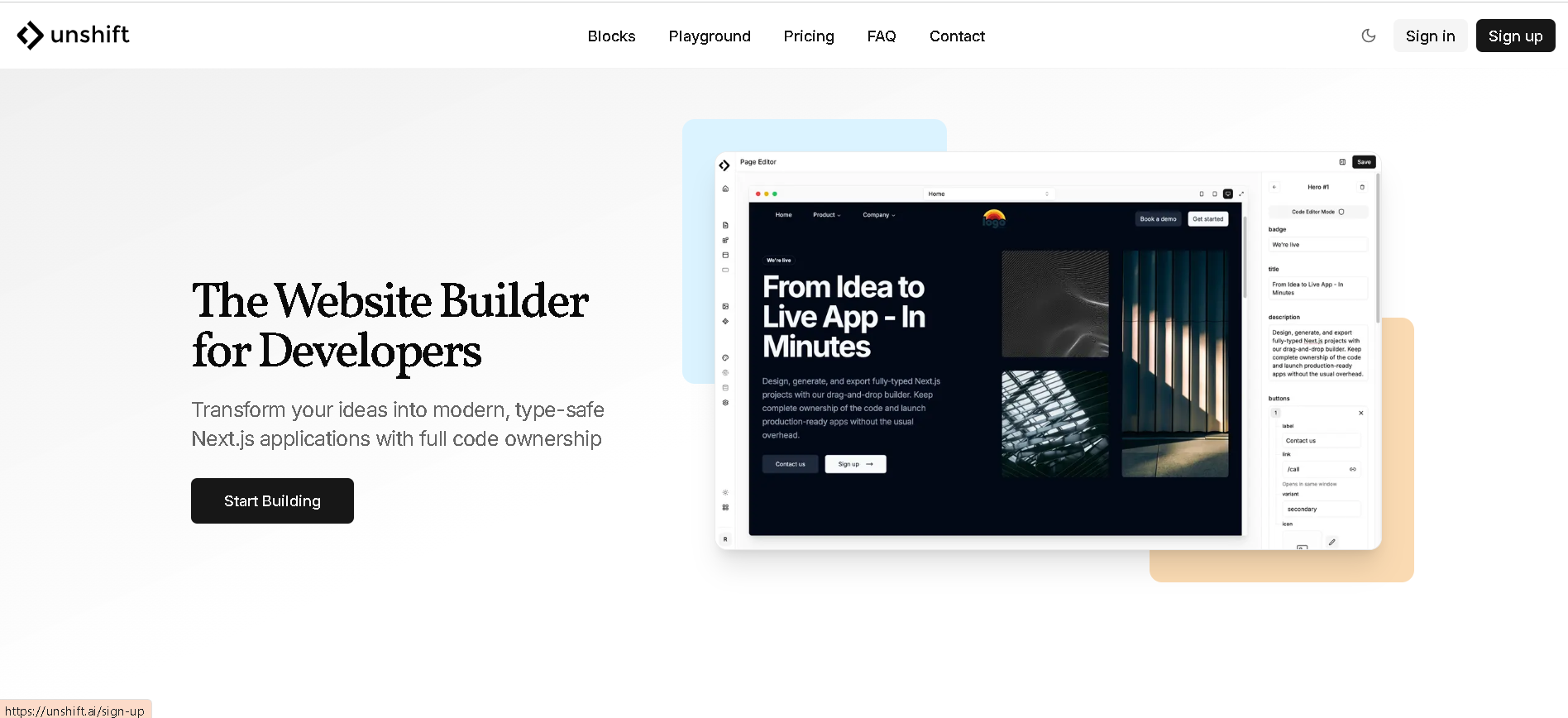
Unshift AI
Unshift AI is a web app generator for modern JavaScript frameworks like NextJS and Svelte. It is a visual builder that combines the simplicity of drag-and-drop platforms with the flexibility to export fully-typed, componentized, production-ready code.
Unshift AI
Unshift AI is a web app generator for modern JavaScript frameworks like NextJS and Svelte. It is a visual builder that combines the simplicity of drag-and-drop platforms with the flexibility to export fully-typed, componentized, production-ready code.
Unshift AI
Unshift AI is a web app generator for modern JavaScript frameworks like NextJS and Svelte. It is a visual builder that combines the simplicity of drag-and-drop platforms with the flexibility to export fully-typed, componentized, production-ready code.
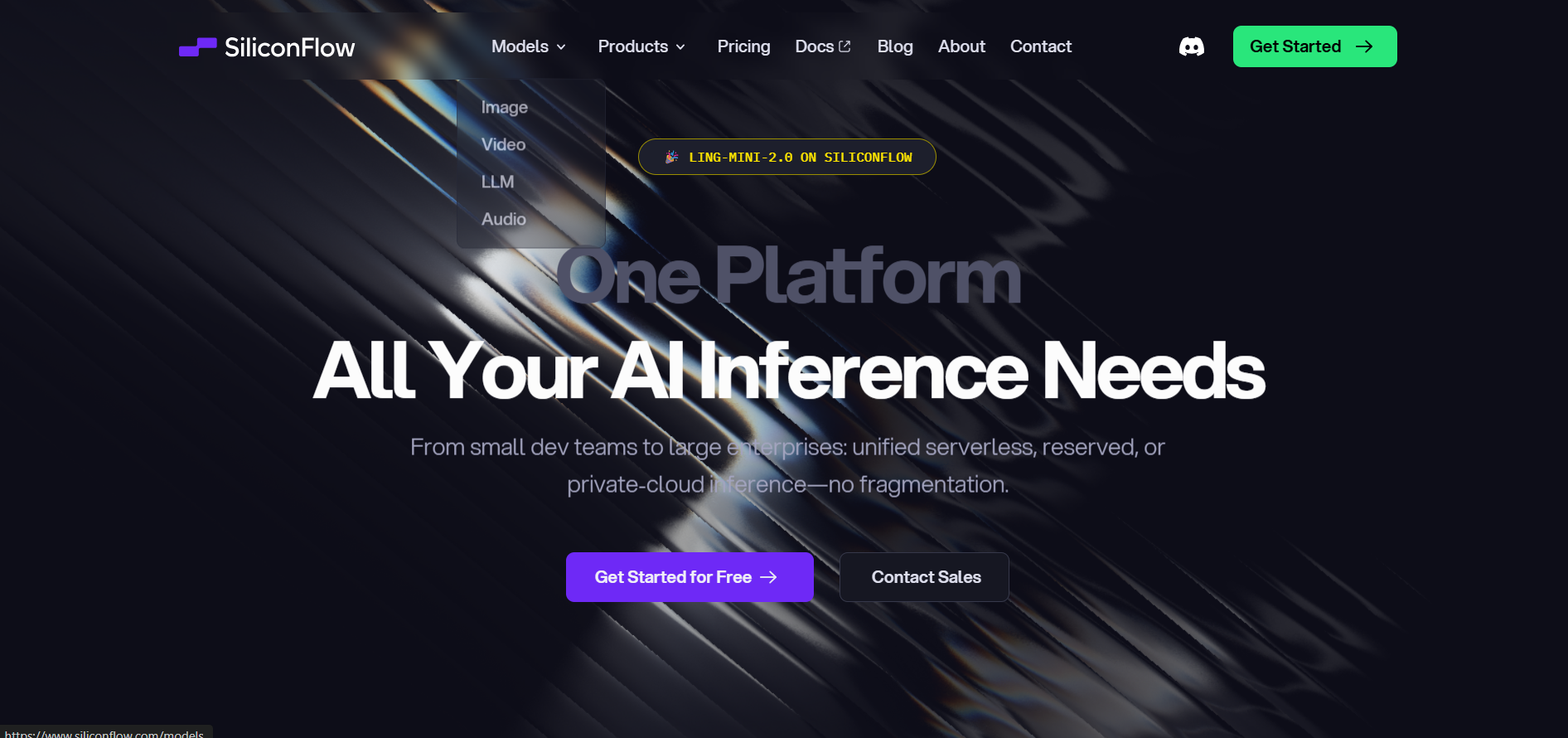

SiliconFlow
SiliconFlow is an AI infrastructure platform built for developers and enterprises who want to deploy, run, and fine-tune large language models (LLMs) and multimodal models efficiently. It offers a unified stack for inference, model hosting, and acceleration so that you don’t have to manage all the infrastructure yourself. The platform supports many open source and commercial models, high throughput, low latency, autoscaling and flexible deployment (serverless, reserved GPUs, private cloud). It also emphasizes cost-effectiveness, data security, and feature-rich tooling such as APIs compatible with OpenAI style, fine-tuning, monitoring, and scalability.
SiliconFlow
SiliconFlow is an AI infrastructure platform built for developers and enterprises who want to deploy, run, and fine-tune large language models (LLMs) and multimodal models efficiently. It offers a unified stack for inference, model hosting, and acceleration so that you don’t have to manage all the infrastructure yourself. The platform supports many open source and commercial models, high throughput, low latency, autoscaling and flexible deployment (serverless, reserved GPUs, private cloud). It also emphasizes cost-effectiveness, data security, and feature-rich tooling such as APIs compatible with OpenAI style, fine-tuning, monitoring, and scalability.
SiliconFlow
SiliconFlow is an AI infrastructure platform built for developers and enterprises who want to deploy, run, and fine-tune large language models (LLMs) and multimodal models efficiently. It offers a unified stack for inference, model hosting, and acceleration so that you don’t have to manage all the infrastructure yourself. The platform supports many open source and commercial models, high throughput, low latency, autoscaling and flexible deployment (serverless, reserved GPUs, private cloud). It also emphasizes cost-effectiveness, data security, and feature-rich tooling such as APIs compatible with OpenAI style, fine-tuning, monitoring, and scalability.


Kiro AI
Kiro.dev is a powerful AI-powered code generation tool designed to accelerate the software development process. It leverages advanced machine learning models to help developers write code faster, more efficiently, and with fewer errors. Kiro.dev offers various features, including code completion, code generation from natural language prompts, and code explanation, making it a valuable asset for developers of all skill levels.
Kiro AI
Kiro.dev is a powerful AI-powered code generation tool designed to accelerate the software development process. It leverages advanced machine learning models to help developers write code faster, more efficiently, and with fewer errors. Kiro.dev offers various features, including code completion, code generation from natural language prompts, and code explanation, making it a valuable asset for developers of all skill levels.
Kiro AI
Kiro.dev is a powerful AI-powered code generation tool designed to accelerate the software development process. It leverages advanced machine learning models to help developers write code faster, more efficiently, and with fewer errors. Kiro.dev offers various features, including code completion, code generation from natural language prompts, and code explanation, making it a valuable asset for developers of all skill levels.

Sim Studio
Sim.AI is a cloud-native platform designed to streamline the development and deployment of AI agents. It offers a user-friendly, open-source environment that allows developers to create, connect, and automate workflows effortlessly. With seamless integrations and no-code setup, Sim.AI empowers teams to enhance productivity and innovation.
Sim Studio
Sim.AI is a cloud-native platform designed to streamline the development and deployment of AI agents. It offers a user-friendly, open-source environment that allows developers to create, connect, and automate workflows effortlessly. With seamless integrations and no-code setup, Sim.AI empowers teams to enhance productivity and innovation.
Sim Studio
Sim.AI is a cloud-native platform designed to streamline the development and deployment of AI agents. It offers a user-friendly, open-source environment that allows developers to create, connect, and automate workflows effortlessly. With seamless integrations and no-code setup, Sim.AI empowers teams to enhance productivity and innovation.
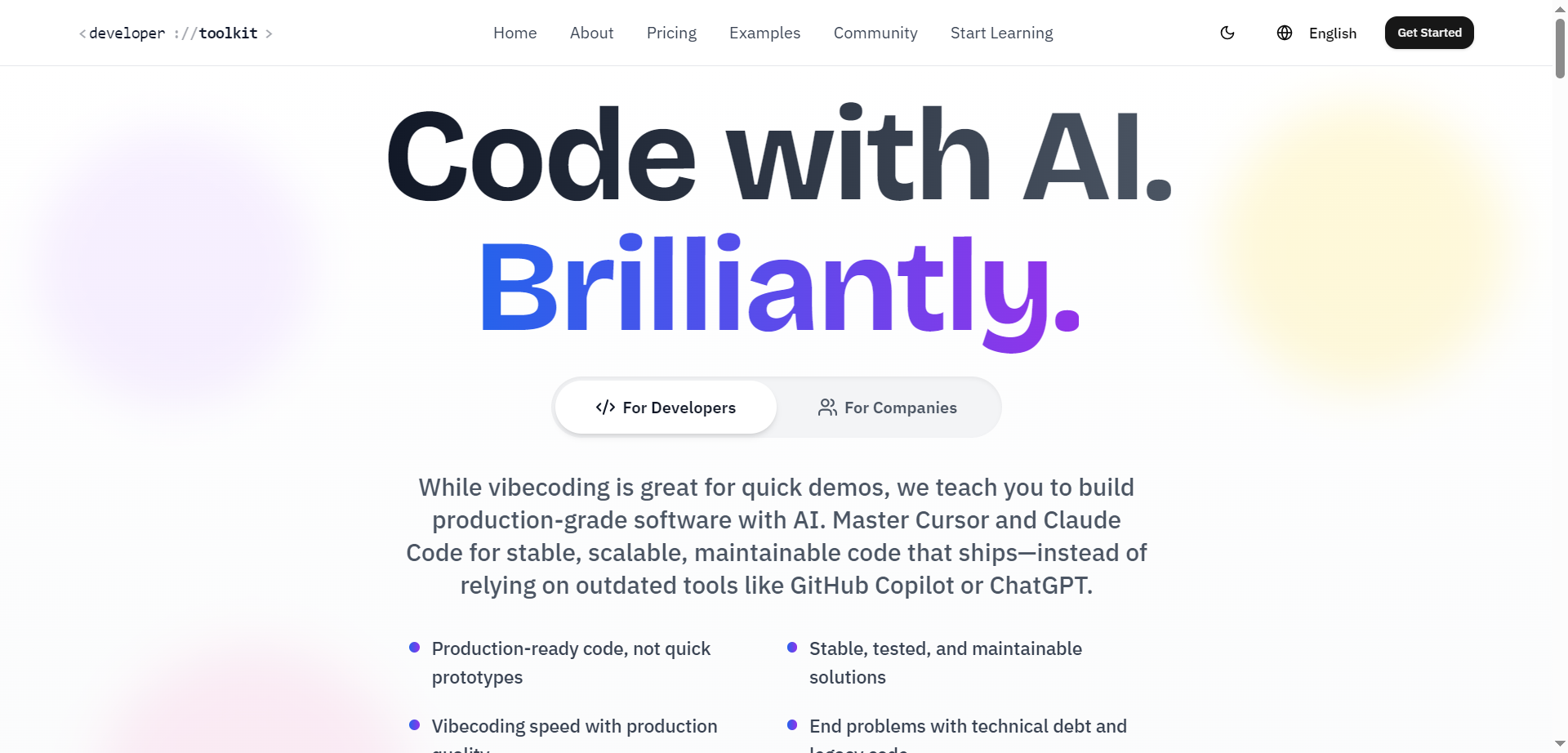

Developer Toolkit
DeveloperToolkit.ai is an advanced AI-assisted development platform designed to help developers build production-grade, scalable, and maintainable software. It leverages powerful models like Claude Code and Cursor to generate production-ready code that’s secure, tested, and optimized for real-world deployment. Unlike tools that stop at quick prototypes, DeveloperToolkit.ai focuses on long-term code quality, maintainability, and best practices. Whether writing API endpoints, components, or full-fledged systems, it accelerates the entire development process while ensuring cleaner architectures and stable results fit for teams that ship with confidence.
Developer Toolkit
DeveloperToolkit.ai is an advanced AI-assisted development platform designed to help developers build production-grade, scalable, and maintainable software. It leverages powerful models like Claude Code and Cursor to generate production-ready code that’s secure, tested, and optimized for real-world deployment. Unlike tools that stop at quick prototypes, DeveloperToolkit.ai focuses on long-term code quality, maintainability, and best practices. Whether writing API endpoints, components, or full-fledged systems, it accelerates the entire development process while ensuring cleaner architectures and stable results fit for teams that ship with confidence.
Developer Toolkit
DeveloperToolkit.ai is an advanced AI-assisted development platform designed to help developers build production-grade, scalable, and maintainable software. It leverages powerful models like Claude Code and Cursor to generate production-ready code that’s secure, tested, and optimized for real-world deployment. Unlike tools that stop at quick prototypes, DeveloperToolkit.ai focuses on long-term code quality, maintainability, and best practices. Whether writing API endpoints, components, or full-fledged systems, it accelerates the entire development process while ensuring cleaner architectures and stable results fit for teams that ship with confidence.
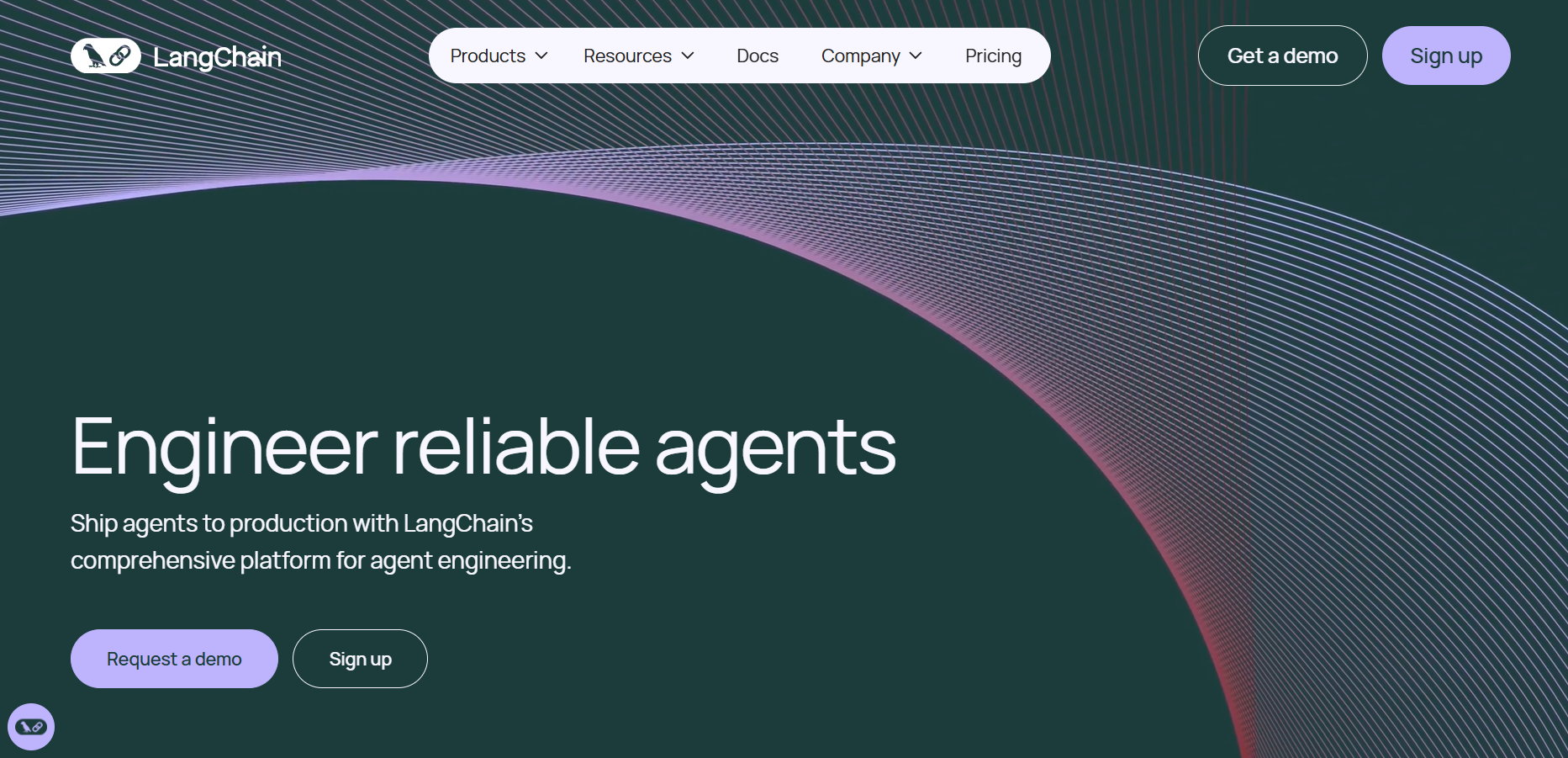

Langchain
LangChain is a powerful open-source framework designed to help developers build context-aware applications that leverage large language models (LLMs). It allows users to connect language models to various data sources, APIs, and memory components, enabling intelligent, multi-step reasoning and decision-making processes. LangChain supports both Python and JavaScript, providing modular building blocks for developers to create chatbots, AI assistants, retrieval-augmented generation (RAG) systems, and agent-based tools. The framework is widely adopted across industries for its flexibility in connecting structured and unstructured data with LLMs.
Langchain
LangChain is a powerful open-source framework designed to help developers build context-aware applications that leverage large language models (LLMs). It allows users to connect language models to various data sources, APIs, and memory components, enabling intelligent, multi-step reasoning and decision-making processes. LangChain supports both Python and JavaScript, providing modular building blocks for developers to create chatbots, AI assistants, retrieval-augmented generation (RAG) systems, and agent-based tools. The framework is widely adopted across industries for its flexibility in connecting structured and unstructured data with LLMs.
Langchain
LangChain is a powerful open-source framework designed to help developers build context-aware applications that leverage large language models (LLMs). It allows users to connect language models to various data sources, APIs, and memory components, enabling intelligent, multi-step reasoning and decision-making processes. LangChain supports both Python and JavaScript, providing modular building blocks for developers to create chatbots, AI assistants, retrieval-augmented generation (RAG) systems, and agent-based tools. The framework is widely adopted across industries for its flexibility in connecting structured and unstructured data with LLMs.

LLM Chat
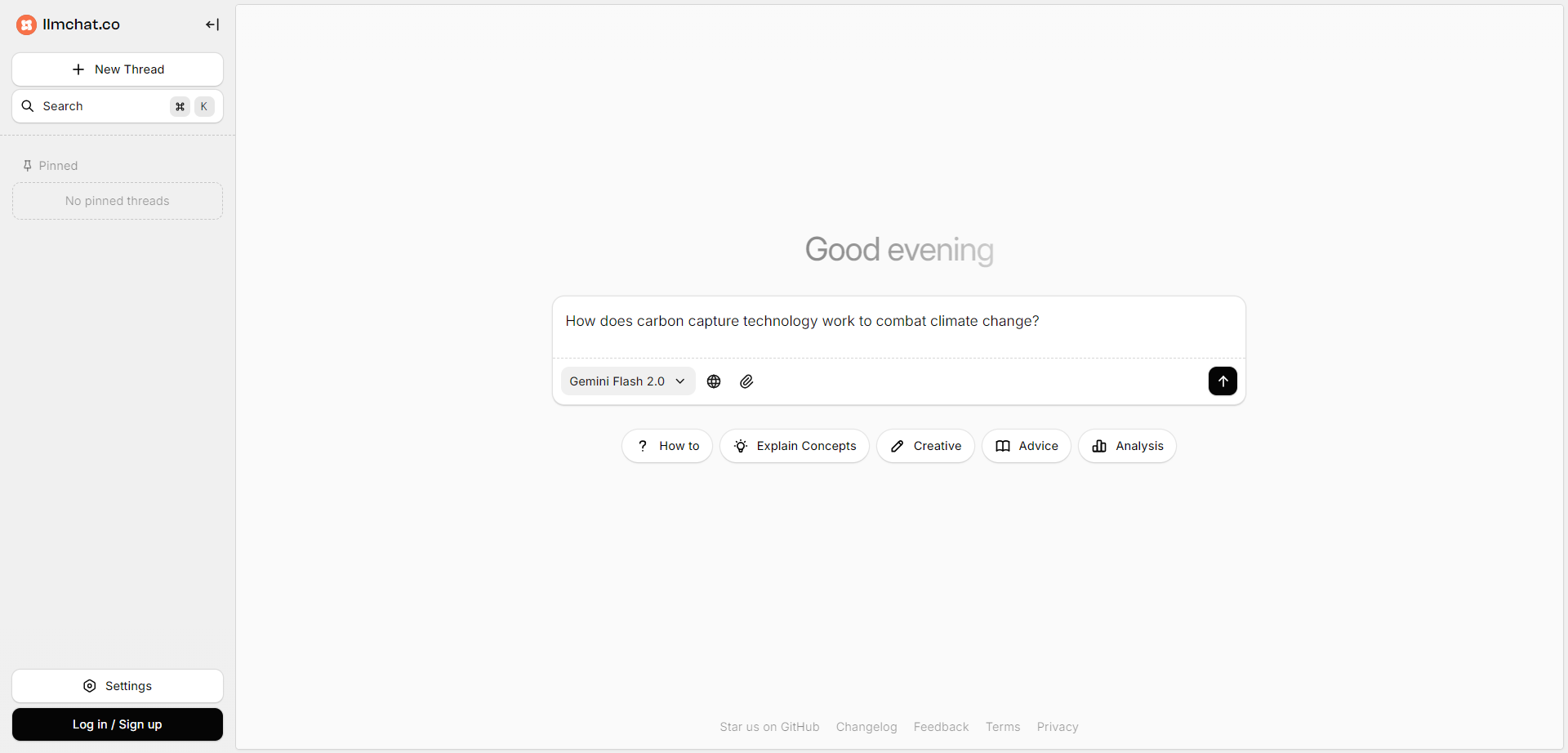
LLMChat is a privacy-focused, open-source AI chatbot platform designed for advanced research, agentic workflows, and seamless interaction with multiple large language models (LLMs). It offers users a minimalistic and intuitive interface enabling deep exploration of complex topics with modes like Deep Research and Pro Search, which incorporates real-time web integration for current data. The platform emphasizes user privacy by storing all chat history locally in the browser, ensuring conversations never leave the device. LLMChat supports many popular LLM providers such as OpenAI, Anthropic, Google, and more, allowing users to customize AI assistants with personalized instructions and knowledge bases for a wide variety of applications ranging from research to content generation and coding assistance.
LLM Chat
LLMChat is a privacy-focused, open-source AI chatbot platform designed for advanced research, agentic workflows, and seamless interaction with multiple large language models (LLMs). It offers users a minimalistic and intuitive interface enabling deep exploration of complex topics with modes like Deep Research and Pro Search, which incorporates real-time web integration for current data. The platform emphasizes user privacy by storing all chat history locally in the browser, ensuring conversations never leave the device. LLMChat supports many popular LLM providers such as OpenAI, Anthropic, Google, and more, allowing users to customize AI assistants with personalized instructions and knowledge bases for a wide variety of applications ranging from research to content generation and coding assistance.
LLM Chat
LLMChat is a privacy-focused, open-source AI chatbot platform designed for advanced research, agentic workflows, and seamless interaction with multiple large language models (LLMs). It offers users a minimalistic and intuitive interface enabling deep exploration of complex topics with modes like Deep Research and Pro Search, which incorporates real-time web integration for current data. The platform emphasizes user privacy by storing all chat history locally in the browser, ensuring conversations never leave the device. LLMChat supports many popular LLM providers such as OpenAI, Anthropic, Google, and more, allowing users to customize AI assistants with personalized instructions and knowledge bases for a wide variety of applications ranging from research to content generation and coding assistance.


Kurral
Kurral v3 is an open-source AI agent framework designed to help developers build, experiment with, and orchestrate autonomous or semi-autonomous AI agents. It provides a structured foundation for managing agent logic, task execution, memory, and tool usage in a modular way. Rather than being a finished end-user application, Kurral v3 serves as a development layer for engineers who want full control over how agents reason, act, and interact with external systems. Its architecture emphasizes flexibility, transparency, and extensibility, making it suitable for research, prototyping, and advanced AI system design. The framework supports iterative experimentation, allowing developers to define agent behaviors, integrate custom tools, and refine workflows over time. By keeping the system open and configurable, Kurral v3 enables builders to explore different agent patterns, coordination strategies, and execution flows without being locked into a proprietary platform.
Kurral
Kurral v3 is an open-source AI agent framework designed to help developers build, experiment with, and orchestrate autonomous or semi-autonomous AI agents. It provides a structured foundation for managing agent logic, task execution, memory, and tool usage in a modular way. Rather than being a finished end-user application, Kurral v3 serves as a development layer for engineers who want full control over how agents reason, act, and interact with external systems. Its architecture emphasizes flexibility, transparency, and extensibility, making it suitable for research, prototyping, and advanced AI system design. The framework supports iterative experimentation, allowing developers to define agent behaviors, integrate custom tools, and refine workflows over time. By keeping the system open and configurable, Kurral v3 enables builders to explore different agent patterns, coordination strategies, and execution flows without being locked into a proprietary platform.
Kurral
Kurral v3 is an open-source AI agent framework designed to help developers build, experiment with, and orchestrate autonomous or semi-autonomous AI agents. It provides a structured foundation for managing agent logic, task execution, memory, and tool usage in a modular way. Rather than being a finished end-user application, Kurral v3 serves as a development layer for engineers who want full control over how agents reason, act, and interact with external systems. Its architecture emphasizes flexibility, transparency, and extensibility, making it suitable for research, prototyping, and advanced AI system design. The framework supports iterative experimentation, allowing developers to define agent behaviors, integrate custom tools, and refine workflows over time. By keeping the system open and configurable, Kurral v3 enables builders to explore different agent patterns, coordination strategies, and execution flows without being locked into a proprietary platform.

GPTConsole
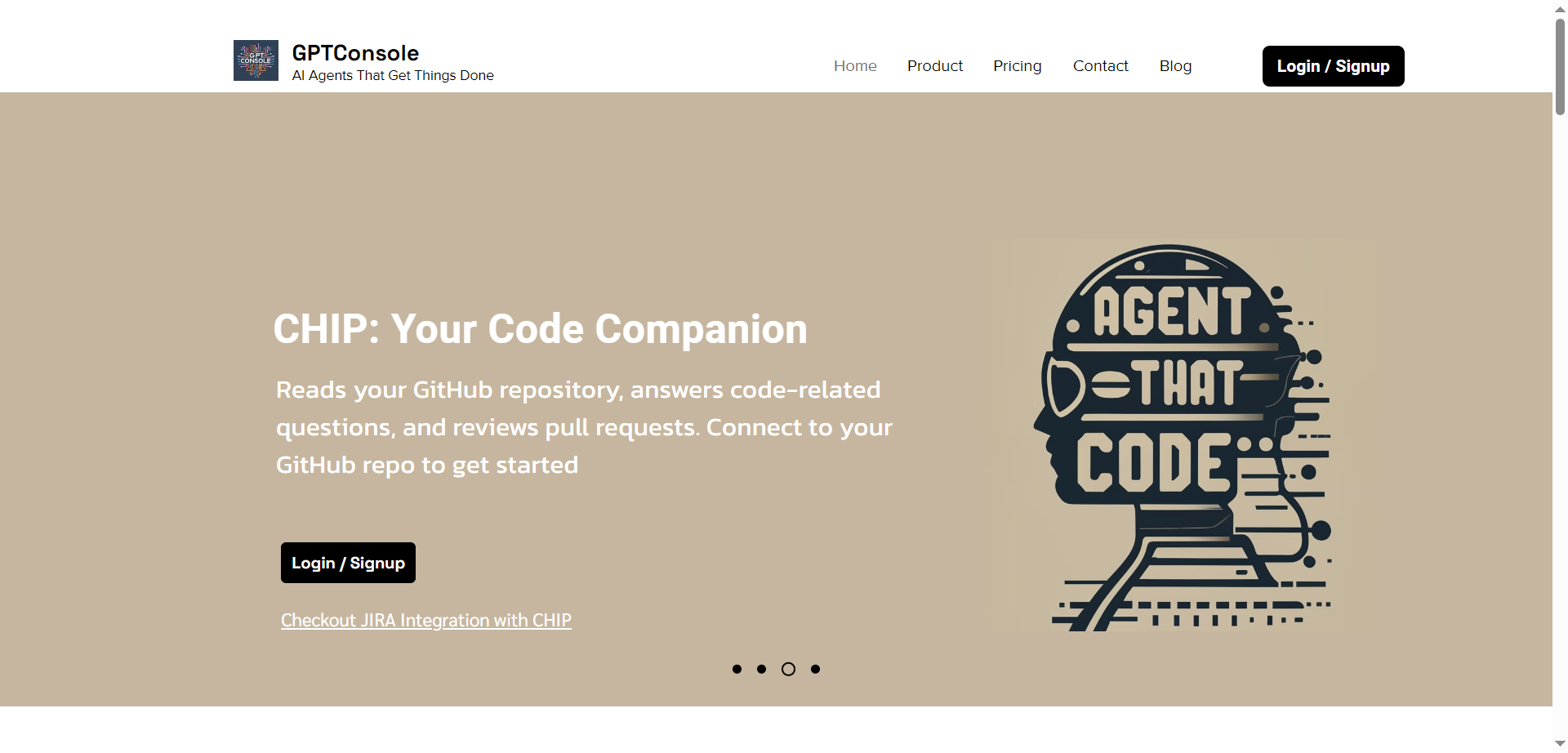
GPTConsole.ai is a developer-focused platform for creating, sharing, and monetizing autonomous AI agents that handle complex tasks beyond simple responses. It simplifies agent development through SDK, API, CLI tools, and data infrastructure managing event chaining, lifecycle, and memory, letting developers focus on objectives. Key agents include Pixie for building full web apps, dashboards, and landing pages from prompts; Chip for codebase analysis, Jira ticket generation, PR reviews; and Doodle for animated visuals. Install via npm for CLI access, generate production-ready code iteratively, and integrate with tools like GitHub or Jira. Trusted by 5000+ developers, it accelerates web/mobile app creation and automation efficiently.
GPTConsole
GPTConsole.ai is a developer-focused platform for creating, sharing, and monetizing autonomous AI agents that handle complex tasks beyond simple responses. It simplifies agent development through SDK, API, CLI tools, and data infrastructure managing event chaining, lifecycle, and memory, letting developers focus on objectives. Key agents include Pixie for building full web apps, dashboards, and landing pages from prompts; Chip for codebase analysis, Jira ticket generation, PR reviews; and Doodle for animated visuals. Install via npm for CLI access, generate production-ready code iteratively, and integrate with tools like GitHub or Jira. Trusted by 5000+ developers, it accelerates web/mobile app creation and automation efficiently.
GPTConsole
GPTConsole.ai is a developer-focused platform for creating, sharing, and monetizing autonomous AI agents that handle complex tasks beyond simple responses. It simplifies agent development through SDK, API, CLI tools, and data infrastructure managing event chaining, lifecycle, and memory, letting developers focus on objectives. Key agents include Pixie for building full web apps, dashboards, and landing pages from prompts; Chip for codebase analysis, Jira ticket generation, PR reviews; and Doodle for animated visuals. Install via npm for CLI access, generate production-ready code iteratively, and integrate with tools like GitHub or Jira. Trusted by 5000+ developers, it accelerates web/mobile app creation and automation efficiently.
Leanify
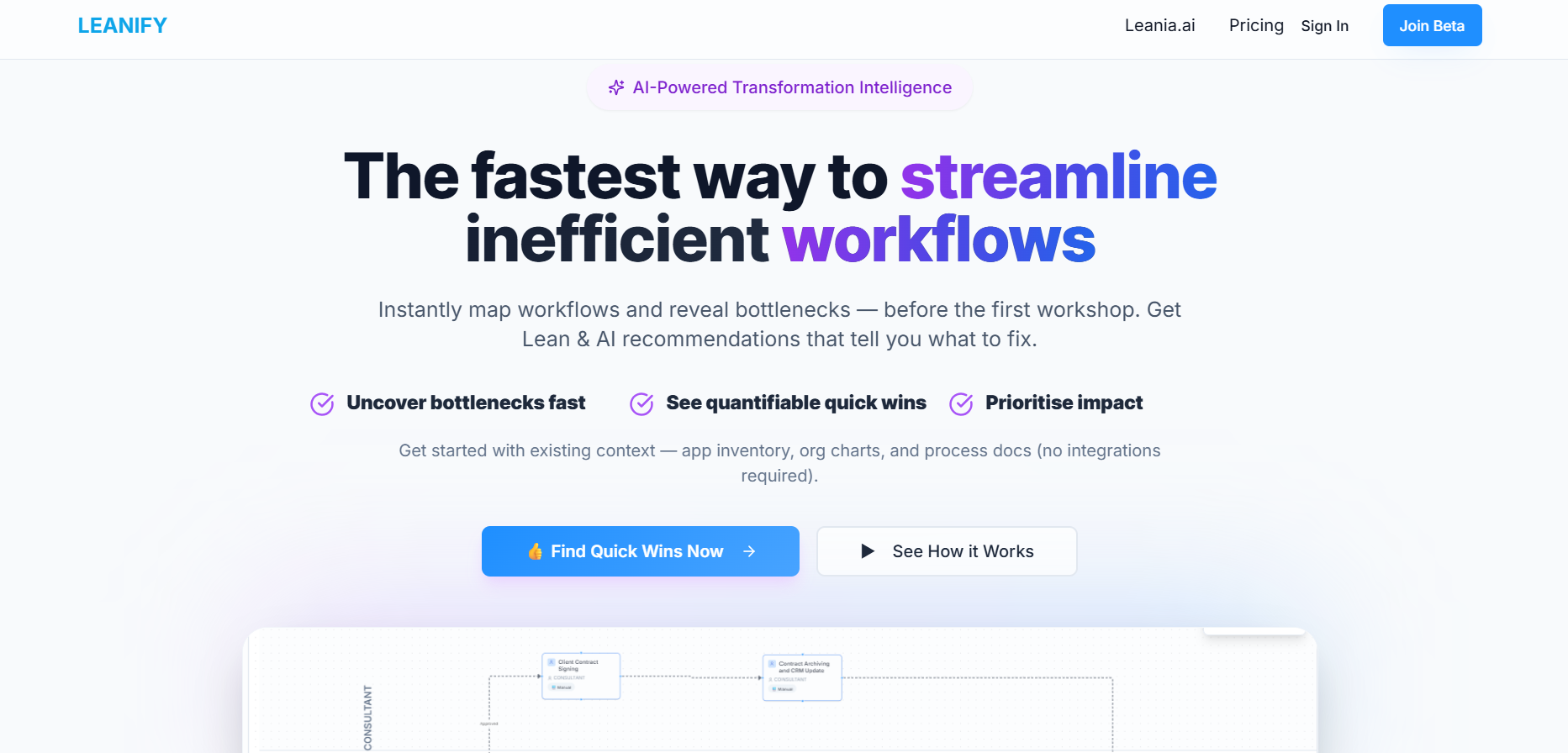
Leanify is an AI-driven workflow analysis platform designed to quickly map existing processes and identify inefficiencies before formal workshops or transformation initiatives. It enables teams to visualize workflows, uncover bottlenecks, and receive Lean-based and AI-supported recommendations for improvement. By accelerating early-stage process understanding, Leanify helps organizations streamline operations and focus improvement efforts on the areas with the highest impact.
Leanify
Leanify is an AI-driven workflow analysis platform designed to quickly map existing processes and identify inefficiencies before formal workshops or transformation initiatives. It enables teams to visualize workflows, uncover bottlenecks, and receive Lean-based and AI-supported recommendations for improvement. By accelerating early-stage process understanding, Leanify helps organizations streamline operations and focus improvement efforts on the areas with the highest impact.
Leanify
Leanify is an AI-driven workflow analysis platform designed to quickly map existing processes and identify inefficiencies before formal workshops or transformation initiatives. It enables teams to visualize workflows, uncover bottlenecks, and receive Lean-based and AI-supported recommendations for improvement. By accelerating early-stage process understanding, Leanify helps organizations streamline operations and focus improvement efforts on the areas with the highest impact.

FastRouter.ai
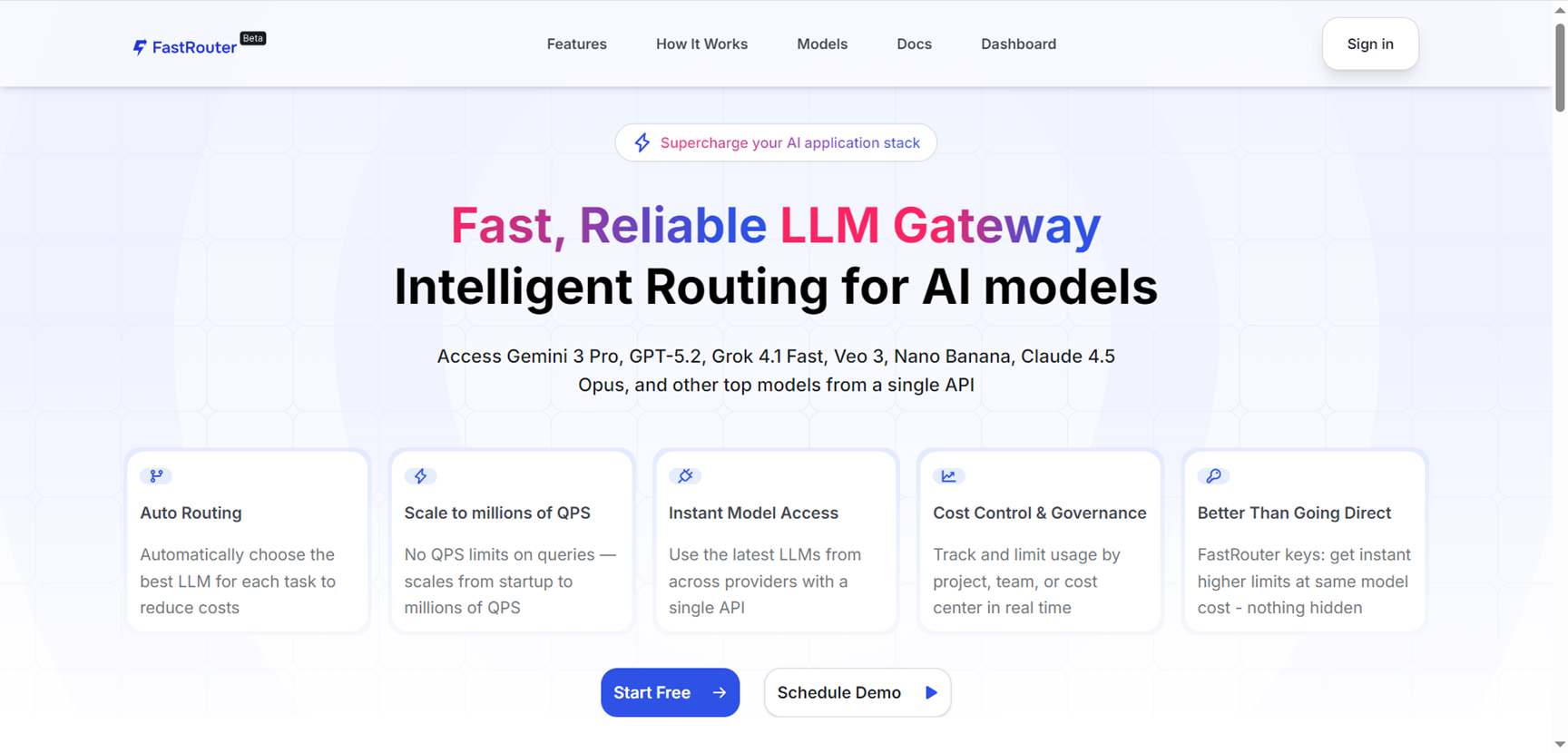
FastRouter.ai serves as a unified API gateway for large language models, simplifying access to over 100 LLMs from providers like OpenAI, Anthropic, Google, Meta, and more through a single OpenAI-compatible endpoint. Developers and enterprises route requests intelligently based on speed, cost, reliability, and performance, with automatic failover, real-time analytics, and no transaction fees. Key features include multimodal support for text, images, video, embeddings, web search integration, custom model lists, project governance with budgets and permissions, a model playground for comparisons, and seamless IDE integrations like Cursor and Cline. It handles high-scale workloads with superior latency and uptime.
FastRouter.ai
FastRouter.ai serves as a unified API gateway for large language models, simplifying access to over 100 LLMs from providers like OpenAI, Anthropic, Google, Meta, and more through a single OpenAI-compatible endpoint. Developers and enterprises route requests intelligently based on speed, cost, reliability, and performance, with automatic failover, real-time analytics, and no transaction fees. Key features include multimodal support for text, images, video, embeddings, web search integration, custom model lists, project governance with budgets and permissions, a model playground for comparisons, and seamless IDE integrations like Cursor and Cline. It handles high-scale workloads with superior latency and uptime.
FastRouter.ai
FastRouter.ai serves as a unified API gateway for large language models, simplifying access to over 100 LLMs from providers like OpenAI, Anthropic, Google, Meta, and more through a single OpenAI-compatible endpoint. Developers and enterprises route requests intelligently based on speed, cost, reliability, and performance, with automatic failover, real-time analytics, and no transaction fees. Key features include multimodal support for text, images, video, embeddings, web search integration, custom model lists, project governance with budgets and permissions, a model playground for comparisons, and seamless IDE integrations like Cursor and Cline. It handles high-scale workloads with superior latency and uptime.

Maia
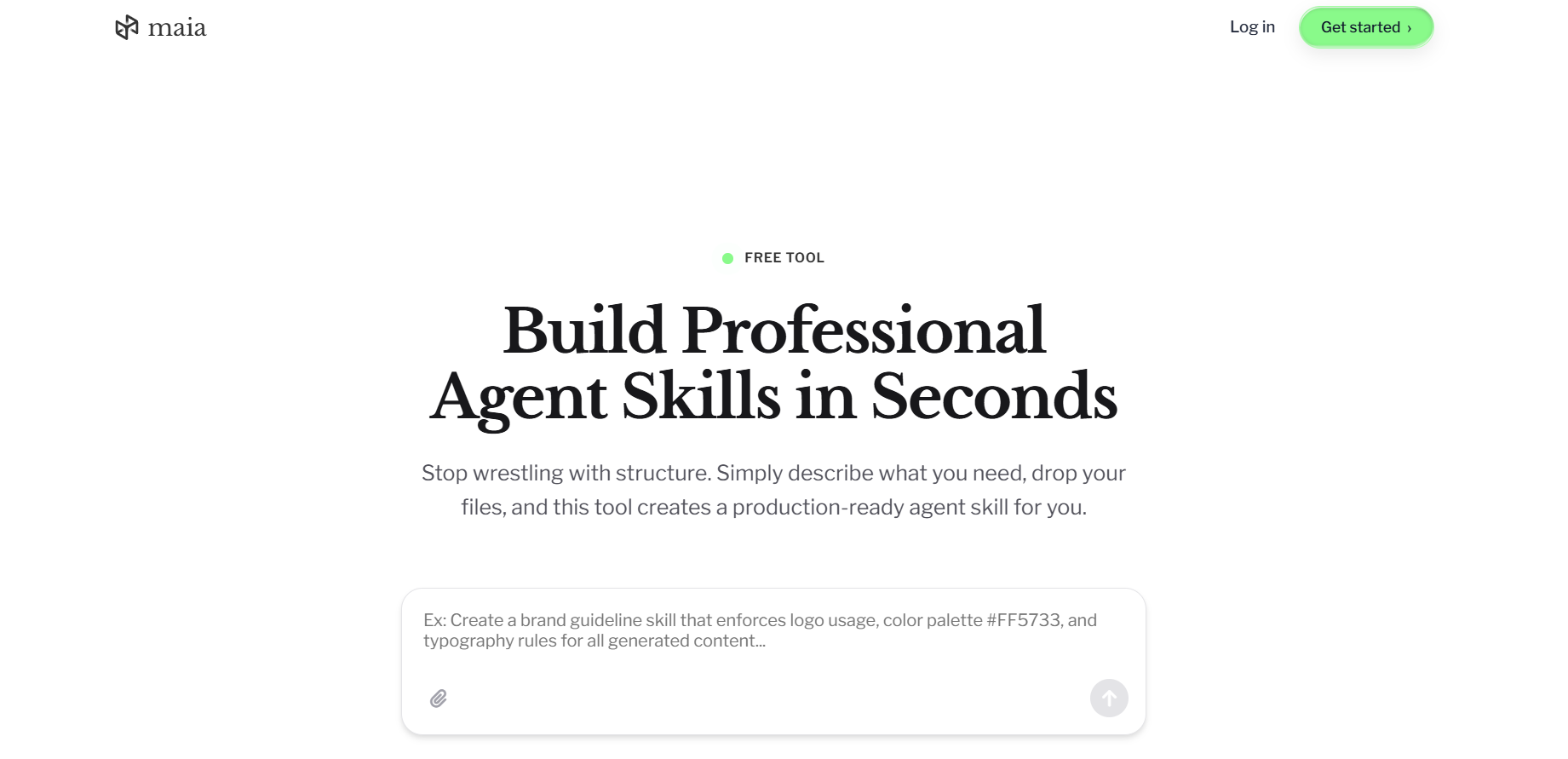
The Free Agent Skill Builder from Maia is a production-oriented AI development tool that enables users to build professional agent skills rapidly and with minimal technical friction. Rather than manually structuring prompts, logic flows, and data handling code, users simply describe what they need and upload supporting files; the tool then generates a fully functional, production-ready skill for an AI agent. This approach abstracts away the complexities of skill development, including intent design, context management, and integration considerations, allowing builders—technical and non-technical—to focus on what the agent should accomplish rather than how it should be built. By automating skill generation and packaging, the Free Agent Skill Builder accelerates development cycles and bridges the gap between concept and deployable agent capability.
Maia
The Free Agent Skill Builder from Maia is a production-oriented AI development tool that enables users to build professional agent skills rapidly and with minimal technical friction. Rather than manually structuring prompts, logic flows, and data handling code, users simply describe what they need and upload supporting files; the tool then generates a fully functional, production-ready skill for an AI agent. This approach abstracts away the complexities of skill development, including intent design, context management, and integration considerations, allowing builders—technical and non-technical—to focus on what the agent should accomplish rather than how it should be built. By automating skill generation and packaging, the Free Agent Skill Builder accelerates development cycles and bridges the gap between concept and deployable agent capability.
Maia
The Free Agent Skill Builder from Maia is a production-oriented AI development tool that enables users to build professional agent skills rapidly and with minimal technical friction. Rather than manually structuring prompts, logic flows, and data handling code, users simply describe what they need and upload supporting files; the tool then generates a fully functional, production-ready skill for an AI agent. This approach abstracts away the complexities of skill development, including intent design, context management, and integration considerations, allowing builders—technical and non-technical—to focus on what the agent should accomplish rather than how it should be built. By automating skill generation and packaging, the Free Agent Skill Builder accelerates development cycles and bridges the gap between concept and deployable agent capability.
Editorial Note
This page was researched and written by the ATB Editorial Team. Our team researches each AI tool by reviewing its official website, testing features, exploring real use cases, and considering user feedback. Every page is fact-checked and regularly updated to ensure the information stays accurate, neutral, and useful for our readers.
If you have any suggestions or questions, email us at hello@aitoolbook.ai