

- C Developers: Generate boilerplate or function-level C code efficiently using AI assistance.
- Researchers & Academics: Use an open, inspectable model for exploring AI code generation methods.
- Students & Educators: Learn or teach C programming concepts using AI-generated examples.
- Privacy-Conscious Developers: Run the model locally without relying on cloud APIs.
- Open Source Contributors: Benefit from AI suggestions while working on open C-based projects.
How to Use PolyCoder?
- Download the Model: Access PolyCoder from its GitHub repository.
- Run Locally: Use the available code and instructions to run PolyCoder on your machine.
- Input Code Prompts: Provide a C-based input or comment to guide code generation.
- Receive AI-Generated Code: Get C code completions based on your prompt using the model.
- Customize & Extend: Modify the code or training setup to adapt PolyCoder to your use case.
- C-Language Focused: One of the few AI models specifically trained on C programming.
- Open-Source & Transparent: Fully open under the MIT License with source code available on GitHub.
- Lightweight GPT-2 Base: Built on a smaller GPT-2 architecture for easier deployment.
- High Performance in C: Outperforms larger models like GPT-Neo in C code generation tasks.
- Research-Friendly: Ideal for studying and advancing code generation in academic settings.
- Local Deployment: Can be used offline, offering more control over data and execution.
- Focused on C: Tailored training allows better performance for C than many general models.
- Open and Free: Available under MIT license with full access to code and data.
- Research-Oriented: Designed to support transparency and experimentation.
- Runs Locally: No dependency on cloud-based APIs or external services.
- Limited Language Support: Only trained on C, no support for other languages.
- Requires Technical Setup: Not beginner-friendly; needs local environment and coding knowledge.
- No GUI or Plugins: Lacks polished UI/IDE extensions compared to other AI tools.
No images or videos added yet.
Proud of the love you're getting? Show off your AI Toolbook reviews—then invite more fans to share the love and build your credibility.
Add an AI Toolbook badge to your site—an easy way to drive followers, showcase updates, and collect reviews. It's like a mini 24/7 billboard for your AI.
Reviews
Rating Distribution
Average score
Popular Mention
FAQs
Similar AI Tools
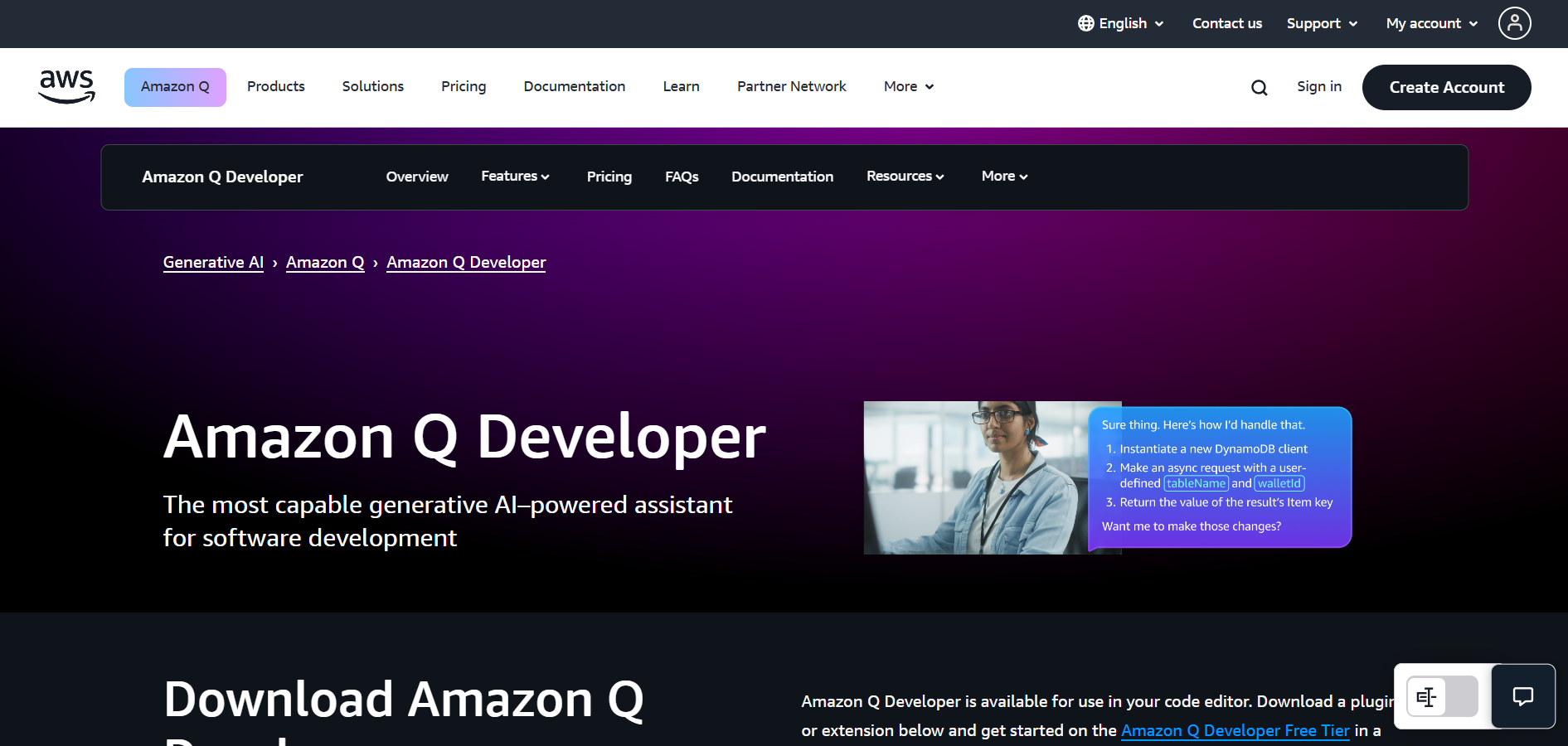
Amazon CodeWhisperer is an AI-powered coding companion developed by AWS that helps developers write code faster and more securely by providing real-time code suggestions, snippets, and security scans within popular IDEs. Trained on billions of lines of code, CodeWhisperer accelerates software development while helping detect security vulnerabilities early in the coding process.
Amazon CodeWhisperer is an AI-powered coding companion developed by AWS that helps developers write code faster and more securely by providing real-time code suggestions, snippets, and security scans within popular IDEs. Trained on billions of lines of code, CodeWhisperer accelerates software development while helping detect security vulnerabilities early in the coding process.
Amazon CodeWhisperer is an AI-powered coding companion developed by AWS that helps developers write code faster and more securely by providing real-time code suggestions, snippets, and security scans within popular IDEs. Trained on billions of lines of code, CodeWhisperer accelerates software development while helping detect security vulnerabilities early in the coding process.

OpenAI Codex
OpenAI Codex is a powerful AI coding engine developed by OpenAI that translates natural language into code. Built on top of GPT-3, Codex understands and generates code in over a dozen programming languages, including JavaScript, Python, and more. It's the underlying model behind GitHub Copilot and is designed to help developers write code faster, learn new APIs, and prototype projects with simple language commands.
OpenAI Codex
OpenAI Codex is a powerful AI coding engine developed by OpenAI that translates natural language into code. Built on top of GPT-3, Codex understands and generates code in over a dozen programming languages, including JavaScript, Python, and more. It's the underlying model behind GitHub Copilot and is designed to help developers write code faster, learn new APIs, and prototype projects with simple language commands.
OpenAI Codex
OpenAI Codex is a powerful AI coding engine developed by OpenAI that translates natural language into code. Built on top of GPT-3, Codex understands and generates code in over a dozen programming languages, including JavaScript, Python, and more. It's the underlying model behind GitHub Copilot and is designed to help developers write code faster, learn new APIs, and prototype projects with simple language commands.

Amazon CodeGuru
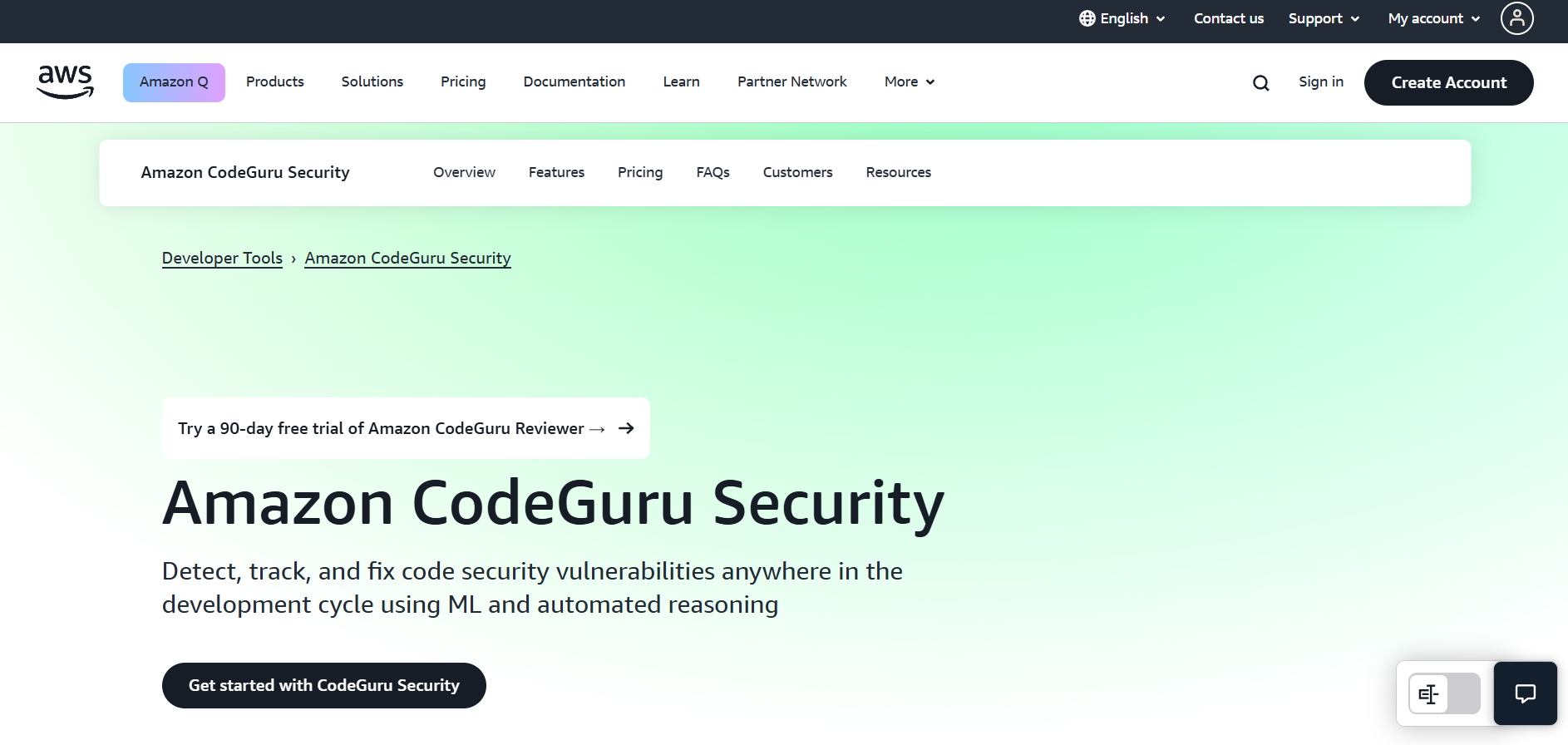
Amazon CodeGuru is a machine learning-powered developer tool from AWS that helps you automate code reviews and optimize application performance. By integrating seamlessly into your development workflow, CodeGuru analyzes your codebase for potential issues, security vulnerabilities, and performance bottlenecks—providing intelligent suggestions to improve code quality and reduce technical debt.
Amazon CodeGuru
Amazon CodeGuru is a machine learning-powered developer tool from AWS that helps you automate code reviews and optimize application performance. By integrating seamlessly into your development workflow, CodeGuru analyzes your codebase for potential issues, security vulnerabilities, and performance bottlenecks—providing intelligent suggestions to improve code quality and reduce technical debt.
Amazon CodeGuru
Amazon CodeGuru is a machine learning-powered developer tool from AWS that helps you automate code reviews and optimize application performance. By integrating seamlessly into your development workflow, CodeGuru analyzes your codebase for potential issues, security vulnerabilities, and performance bottlenecks—providing intelligent suggestions to improve code quality and reduce technical debt.

GitWit
Gitwit is an open-source, browser-based AI coding platform that combines in-browser development with AI-powered autocomplete, instant deployment, and community collaboration. It brings together code writing, testing, and deployment in one smart, accessible environment.
GitWit
Gitwit is an open-source, browser-based AI coding platform that combines in-browser development with AI-powered autocomplete, instant deployment, and community collaboration. It brings together code writing, testing, and deployment in one smart, accessible environment.
GitWit
Gitwit is an open-source, browser-based AI coding platform that combines in-browser development with AI-powered autocomplete, instant deployment, and community collaboration. It brings together code writing, testing, and deployment in one smart, accessible environment.

trae
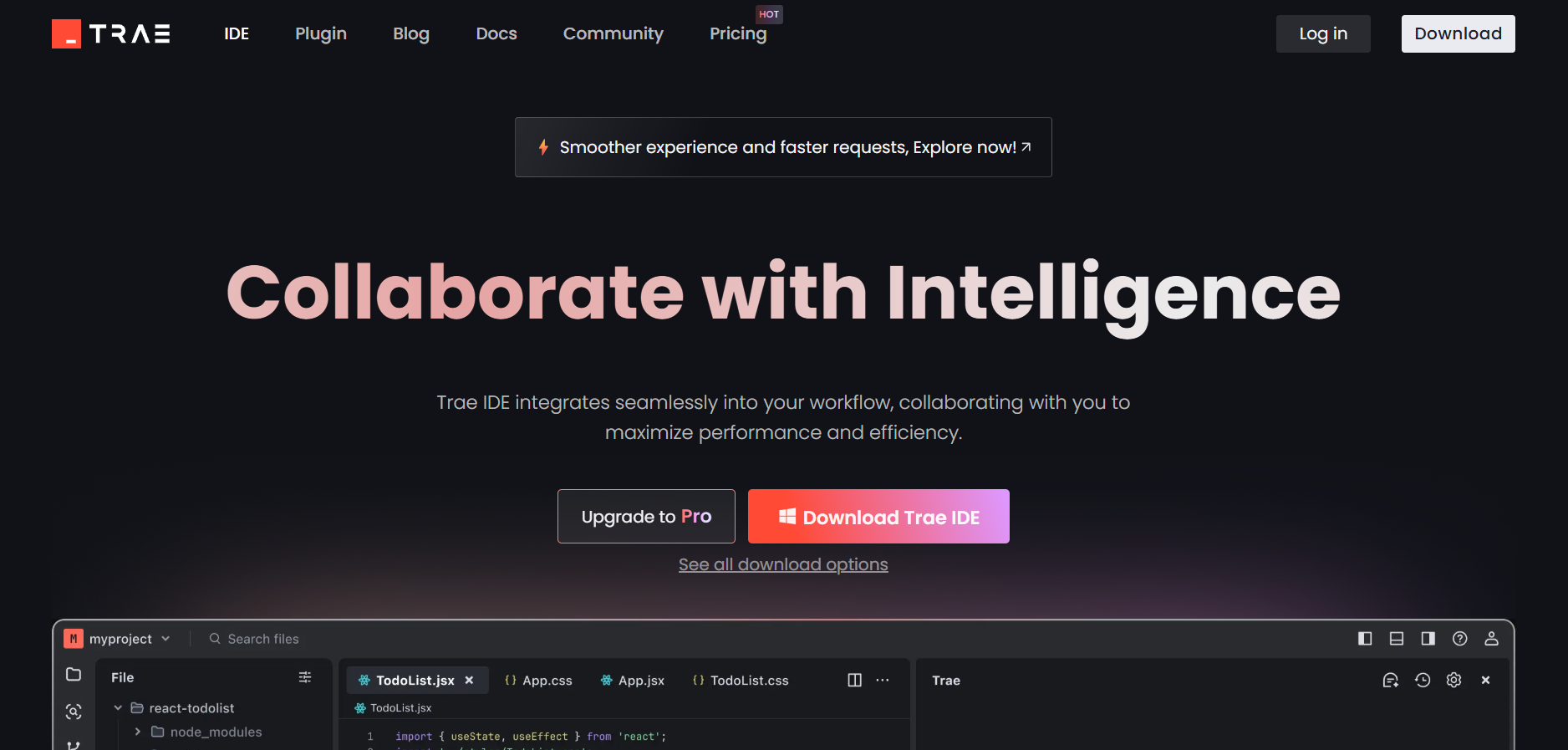
Trae AI is an innovative AI-powered Integrated Development Environment (IDE) designed to transform and streamline the coding process. By leveraging advanced AI capabilities, Trae AI offers adaptive collaboration, smart autocomplete, and real-time code generation features. This tool is tailored to enhance developer productivity by automating tasks, providing intelligent code suggestions, and facilitating better team communication. With support for multiple programming languages and seamless integration with popular development environments, Trae AI is a comprehensive solution for developers of all levels, aiming to boost efficiency and reduce project completion times.
trae
Trae AI is an innovative AI-powered Integrated Development Environment (IDE) designed to transform and streamline the coding process. By leveraging advanced AI capabilities, Trae AI offers adaptive collaboration, smart autocomplete, and real-time code generation features. This tool is tailored to enhance developer productivity by automating tasks, providing intelligent code suggestions, and facilitating better team communication. With support for multiple programming languages and seamless integration with popular development environments, Trae AI is a comprehensive solution for developers of all levels, aiming to boost efficiency and reduce project completion times.
trae
Trae AI is an innovative AI-powered Integrated Development Environment (IDE) designed to transform and streamline the coding process. By leveraging advanced AI capabilities, Trae AI offers adaptive collaboration, smart autocomplete, and real-time code generation features. This tool is tailored to enhance developer productivity by automating tasks, providing intelligent code suggestions, and facilitating better team communication. With support for multiple programming languages and seamless integration with popular development environments, Trae AI is a comprehensive solution for developers of all levels, aiming to boost efficiency and reduce project completion times.

DeepSeek-Coder-V2
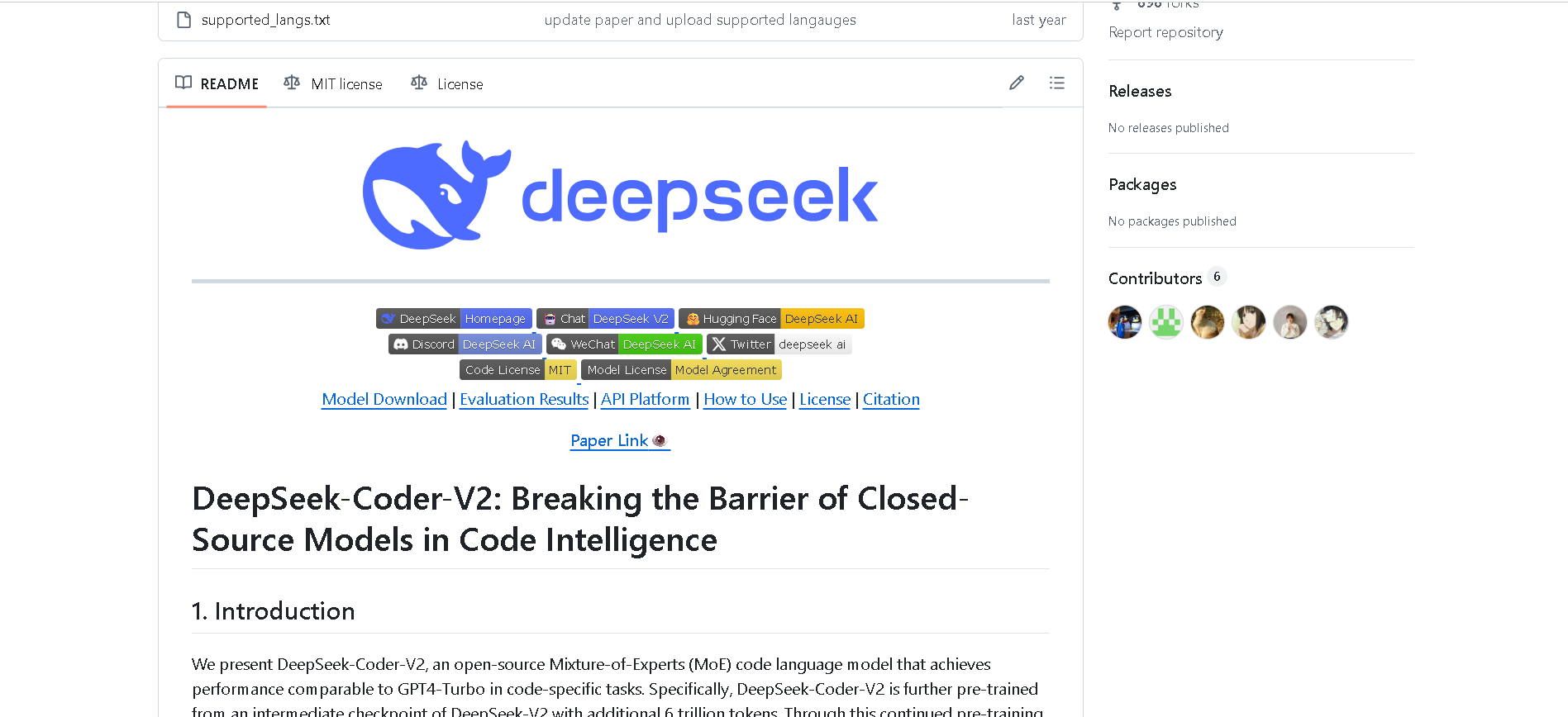
DeepSeek‑Coder V2 is an open-source, Mixture‑of‑Experts (MoE) code-focused variant of DeepSeek‑V2, purpose-built for code generation, completion, debugging, and mathematical reasoning. Trained with an additional 6 trillion tokens of code and text, it supports up to 338 programming languages and a massive 128K‑token context window, rivaling or exceeding commercial code models in performance.
DeepSeek-Coder-V2
DeepSeek‑Coder V2 is an open-source, Mixture‑of‑Experts (MoE) code-focused variant of DeepSeek‑V2, purpose-built for code generation, completion, debugging, and mathematical reasoning. Trained with an additional 6 trillion tokens of code and text, it supports up to 338 programming languages and a massive 128K‑token context window, rivaling or exceeding commercial code models in performance.
DeepSeek-Coder-V2
DeepSeek‑Coder V2 is an open-source, Mixture‑of‑Experts (MoE) code-focused variant of DeepSeek‑V2, purpose-built for code generation, completion, debugging, and mathematical reasoning. Trained with an additional 6 trillion tokens of code and text, it supports up to 338 programming languages and a massive 128K‑token context window, rivaling or exceeding commercial code models in performance.

Aider.chat
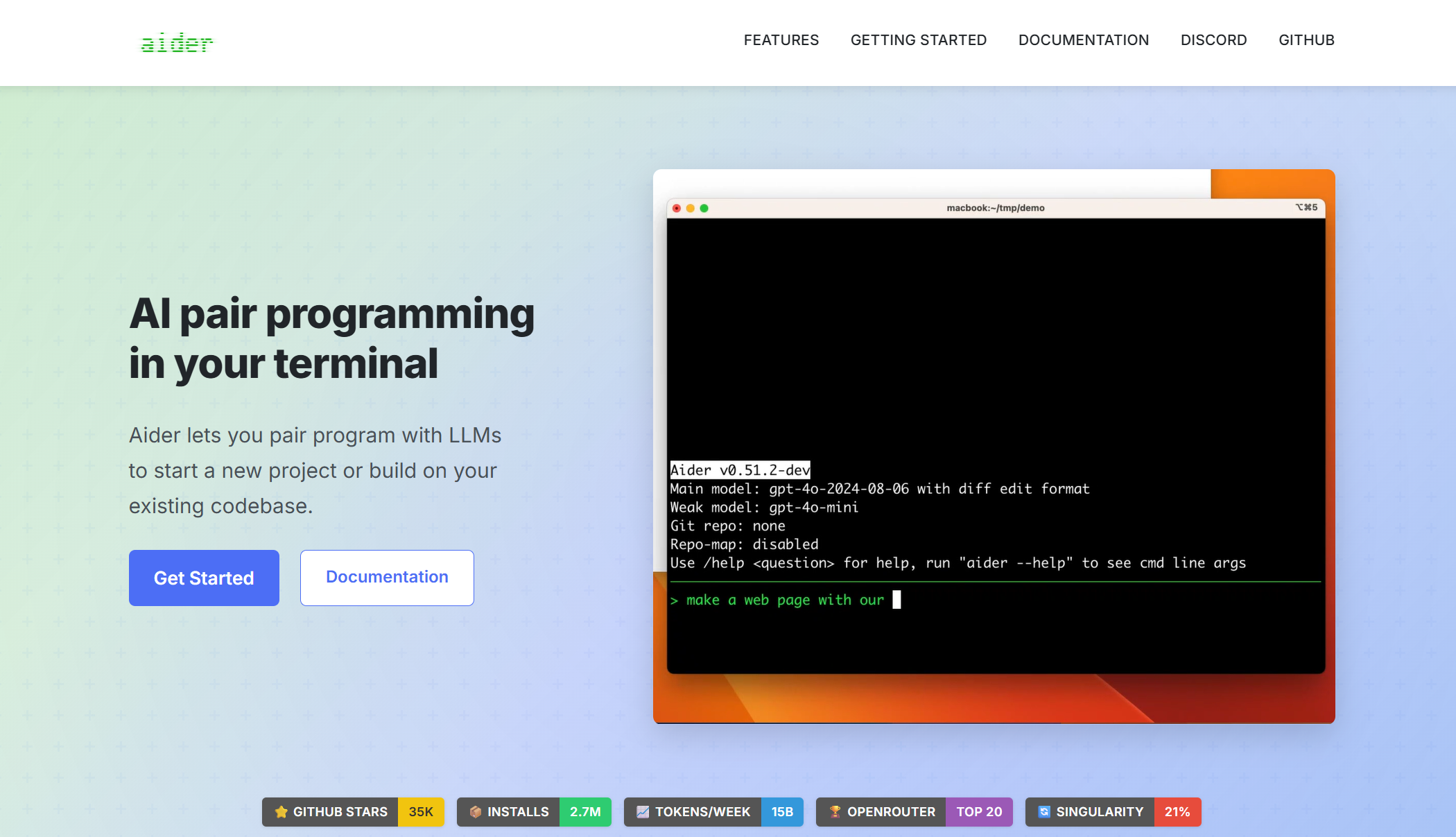
Aider.chat is an open-source AI pair‑programming assistant you run from your terminal. It connects to LLMs (like Claude 3.7 Sonnet, DeepSeek R1, GPT‑4o, and more) to write, refactor, and test code across your repository—integrated with Git to auto-commit changes, display diffs, and maintain full project context.
Aider.chat
Aider.chat is an open-source AI pair‑programming assistant you run from your terminal. It connects to LLMs (like Claude 3.7 Sonnet, DeepSeek R1, GPT‑4o, and more) to write, refactor, and test code across your repository—integrated with Git to auto-commit changes, display diffs, and maintain full project context.
Aider.chat
Aider.chat is an open-source AI pair‑programming assistant you run from your terminal. It connects to LLMs (like Claude 3.7 Sonnet, DeepSeek R1, GPT‑4o, and more) to write, refactor, and test code across your repository—integrated with Git to auto-commit changes, display diffs, and maintain full project context.
Aide Dev
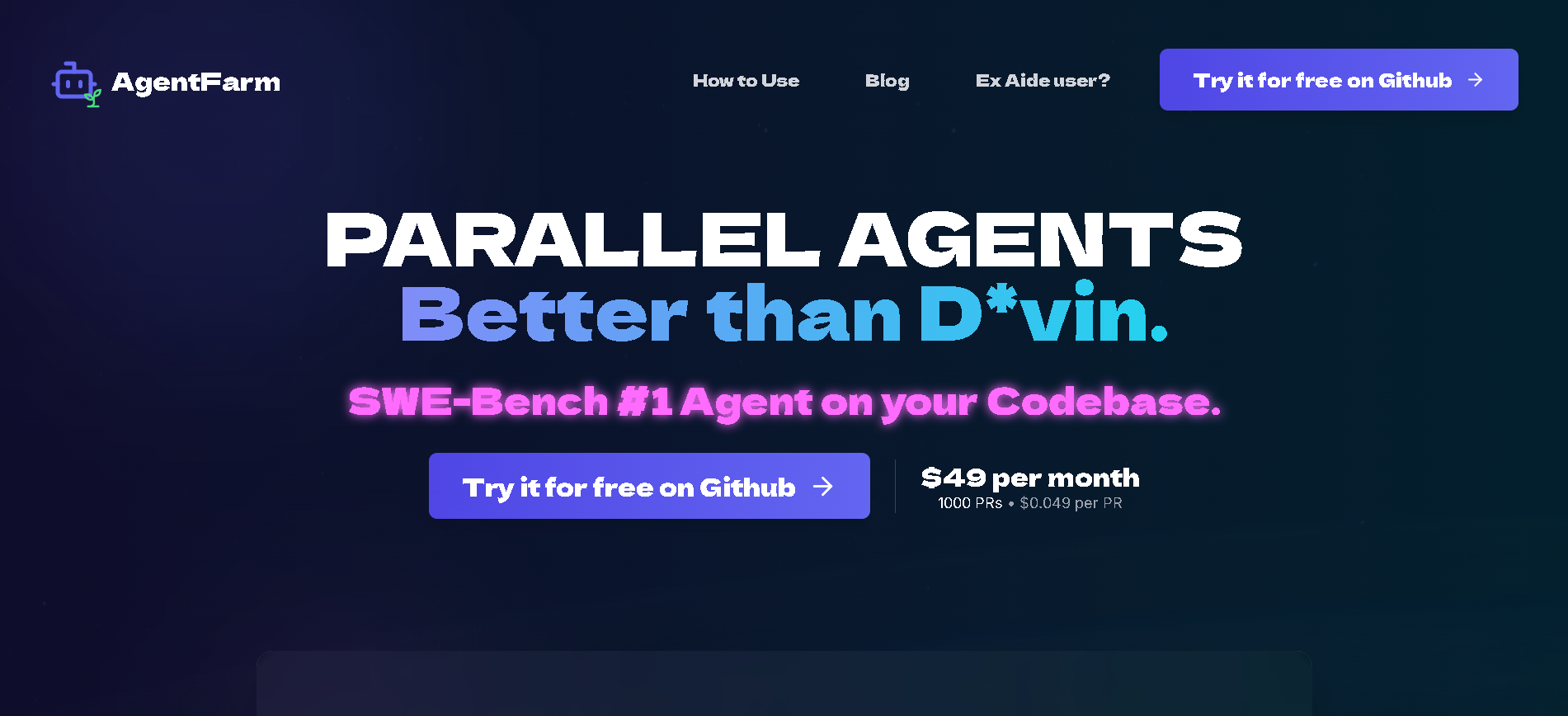
Aide is an AI-powered agent designed to enhance software development workflows, particularly for codebases and Pull Requests (PRs). It claims to outperform competitors like D*vin and holds the #1 ranking on SWE-Bench for codebases, offering automated PR workflows, smart suggestions, and continuous improvements.
Aide Dev
Aide is an AI-powered agent designed to enhance software development workflows, particularly for codebases and Pull Requests (PRs). It claims to outperform competitors like D*vin and holds the #1 ranking on SWE-Bench for codebases, offering automated PR workflows, smart suggestions, and continuous improvements.
Aide Dev
Aide is an AI-powered agent designed to enhance software development workflows, particularly for codebases and Pull Requests (PRs). It claims to outperform competitors like D*vin and holds the #1 ranking on SWE-Bench for codebases, offering automated PR workflows, smart suggestions, and continuous improvements.


Kiro AI
Kiro.dev is a powerful AI-powered code generation tool designed to accelerate the software development process. It leverages advanced machine learning models to help developers write code faster, more efficiently, and with fewer errors. Kiro.dev offers various features, including code completion, code generation from natural language prompts, and code explanation, making it a valuable asset for developers of all skill levels.
Kiro AI
Kiro.dev is a powerful AI-powered code generation tool designed to accelerate the software development process. It leverages advanced machine learning models to help developers write code faster, more efficiently, and with fewer errors. Kiro.dev offers various features, including code completion, code generation from natural language prompts, and code explanation, making it a valuable asset for developers of all skill levels.
Kiro AI
Kiro.dev is a powerful AI-powered code generation tool designed to accelerate the software development process. It leverages advanced machine learning models to help developers write code faster, more efficiently, and with fewer errors. Kiro.dev offers various features, including code completion, code generation from natural language prompts, and code explanation, making it a valuable asset for developers of all skill levels.
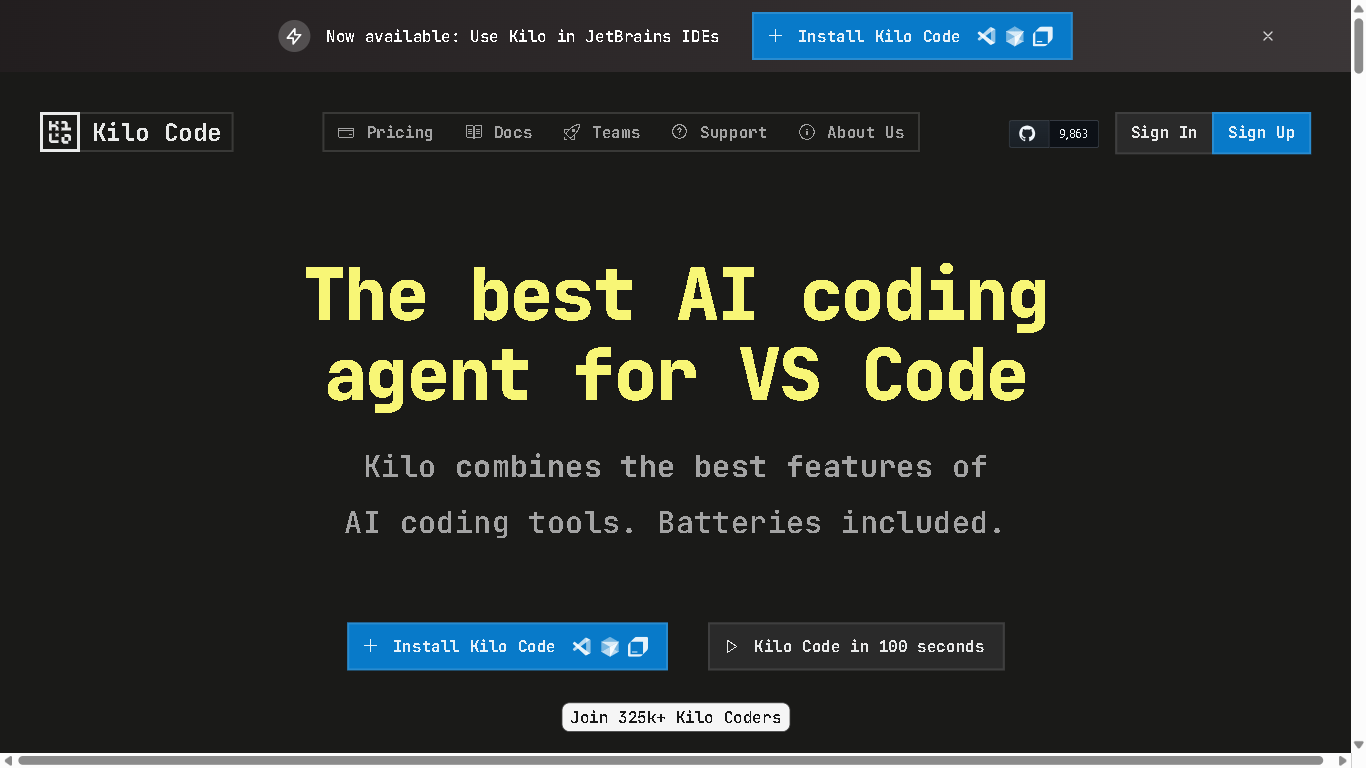

Kilo Code
Kilo Code is an AI-powered coding assistant designed to enhance software development within IDEs like Visual Studio Code and JetBrains. It integrates features from existing AI coding tools while providing unique functionalities such as the Model Context Protocol (MCP) Server Marketplace and intelligent system notifications. Kilo Code streamlines development by automating repetitive tasks, generating code from natural language prompts, and providing intelligent suggestions to developers.
Kilo Code
Kilo Code is an AI-powered coding assistant designed to enhance software development within IDEs like Visual Studio Code and JetBrains. It integrates features from existing AI coding tools while providing unique functionalities such as the Model Context Protocol (MCP) Server Marketplace and intelligent system notifications. Kilo Code streamlines development by automating repetitive tasks, generating code from natural language prompts, and providing intelligent suggestions to developers.
Kilo Code
Kilo Code is an AI-powered coding assistant designed to enhance software development within IDEs like Visual Studio Code and JetBrains. It integrates features from existing AI coding tools while providing unique functionalities such as the Model Context Protocol (MCP) Server Marketplace and intelligent system notifications. Kilo Code streamlines development by automating repetitive tasks, generating code from natural language prompts, and providing intelligent suggestions to developers.
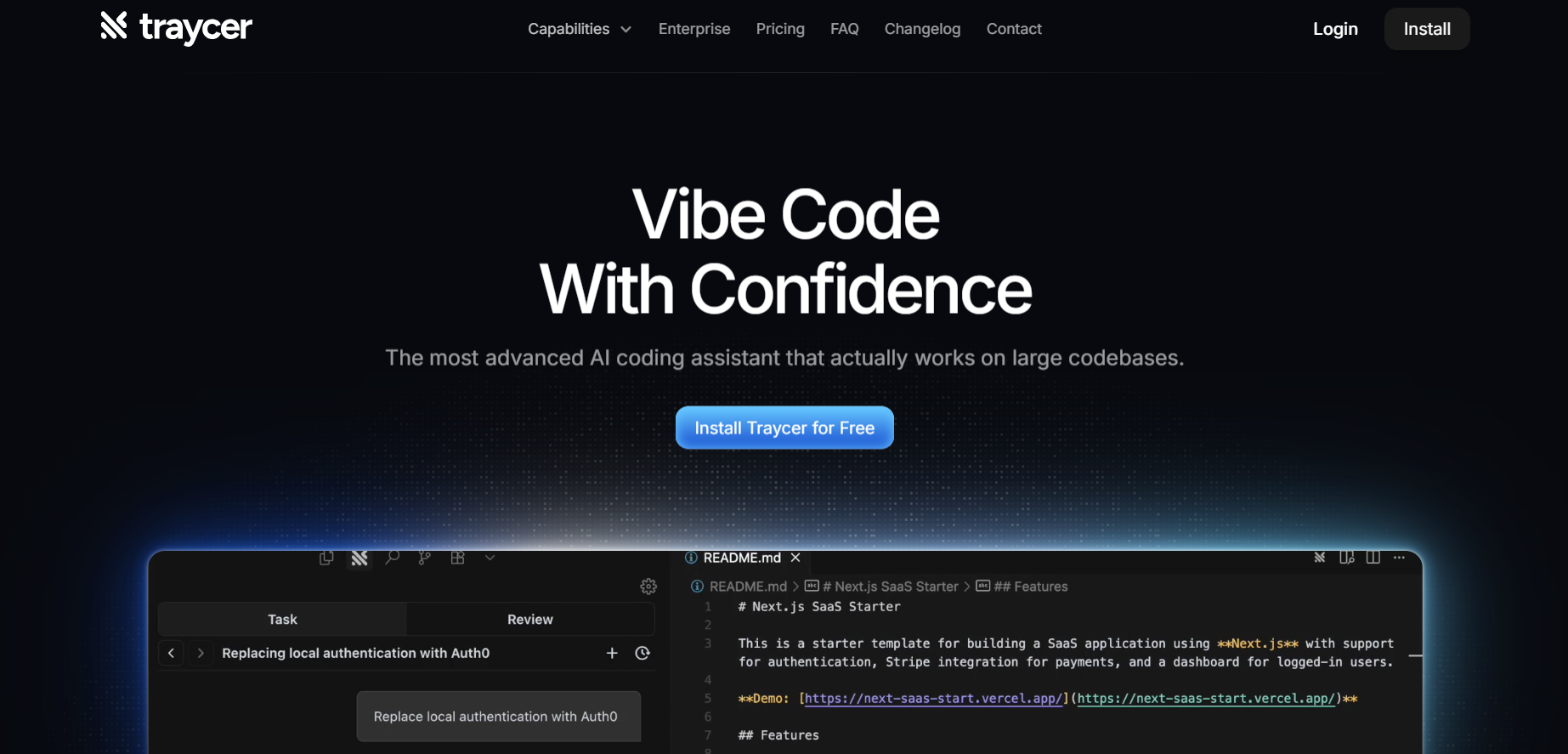

Traycer
Traycer AI is an advanced coding assistant focused on planning, executing, and reviewing code changes in large projects. Rather than immediately generating code, it begins each task by creating detailed, structured plans that break down high-level intent into manageable actions. From there, it allows users to iterate on these plans, then hand them off to AI agents like Claude Code, Cursor, or others to implement the changes. Traycer also includes functionality to verify AI-generated changes against the existing codebase to catch errors early. It integrates with development environments (VSCode, Cursor, Windsurf) and supports features like “Ticket Assist,” which turns GitHub issues into executable plans directly in your IDE.
Traycer
Traycer AI is an advanced coding assistant focused on planning, executing, and reviewing code changes in large projects. Rather than immediately generating code, it begins each task by creating detailed, structured plans that break down high-level intent into manageable actions. From there, it allows users to iterate on these plans, then hand them off to AI agents like Claude Code, Cursor, or others to implement the changes. Traycer also includes functionality to verify AI-generated changes against the existing codebase to catch errors early. It integrates with development environments (VSCode, Cursor, Windsurf) and supports features like “Ticket Assist,” which turns GitHub issues into executable plans directly in your IDE.
Traycer
Traycer AI is an advanced coding assistant focused on planning, executing, and reviewing code changes in large projects. Rather than immediately generating code, it begins each task by creating detailed, structured plans that break down high-level intent into manageable actions. From there, it allows users to iterate on these plans, then hand them off to AI agents like Claude Code, Cursor, or others to implement the changes. Traycer also includes functionality to verify AI-generated changes against the existing codebase to catch errors early. It integrates with development environments (VSCode, Cursor, Windsurf) and supports features like “Ticket Assist,” which turns GitHub issues into executable plans directly in your IDE.


Roo Code
Roo Code is an open-source AI-powered coding assistant available on GitHub through the RooVetGit repository. It integrates directly with Visual Studio Code, providing developers with an autonomous “AI dev team” that can plan, write, debug, and refactor code across multiple files. Built as a fork of the earlier Roo Cline project, Roo Code uses agentic modes—such as Code, Architect, Ask, and Debug—to handle distinct development tasks. Developers can customize modes, connect various AI model providers, and fine-tune workflows for maximum control. Fully open-source, it supports local and cloud-based models while prioritizing privacy and flexibility.
Roo Code
Roo Code is an open-source AI-powered coding assistant available on GitHub through the RooVetGit repository. It integrates directly with Visual Studio Code, providing developers with an autonomous “AI dev team” that can plan, write, debug, and refactor code across multiple files. Built as a fork of the earlier Roo Cline project, Roo Code uses agentic modes—such as Code, Architect, Ask, and Debug—to handle distinct development tasks. Developers can customize modes, connect various AI model providers, and fine-tune workflows for maximum control. Fully open-source, it supports local and cloud-based models while prioritizing privacy and flexibility.
Roo Code
Roo Code is an open-source AI-powered coding assistant available on GitHub through the RooVetGit repository. It integrates directly with Visual Studio Code, providing developers with an autonomous “AI dev team” that can plan, write, debug, and refactor code across multiple files. Built as a fork of the earlier Roo Cline project, Roo Code uses agentic modes—such as Code, Architect, Ask, and Debug—to handle distinct development tasks. Developers can customize modes, connect various AI model providers, and fine-tune workflows for maximum control. Fully open-source, it supports local and cloud-based models while prioritizing privacy and flexibility.
Editorial Note
This page was researched and written by the ATB Editorial Team. Our team researches each AI tool by reviewing its official website, testing features, exploring real use cases, and considering user feedback. Every page is fact-checked and regularly updated to ensure the information stays accurate, neutral, and useful for our readers.
If you have any suggestions or questions, email us at hello@aitoolbook.ai