
- Data Analysts: Automate data summarization and extraction from datasets.
- Product Managers: Create workflows for auto-labeling feedback or routing tasks.
- Marketers: Build automated content pipelines, e.g., tag generation or copywriting.
- Support Teams: Set up auto-response flows and ticket classification.
- AI Enthusiasts & No-Code Users: Prototype GPT workflows visually without coding.
How to Use Ellipsis?
- Sign Up & Open Canvas: Start a free account and access the visual editor.
- Add Nodes: Drag in actions like “Summarize”, “Classify”, “Chat”.
- Connect Steps: Link nodes to define your workflow, e.g., input→summarize→export.
- Configure Each Node: Set prompts, parameters, output formats per step.
- Run & Export: Test your flow, iterate, then export via API or integrate with Zapier.
- Flow-Based GPT Workflows: Build multi-step automation visually like flowcharts.
- Pre-Built Functions: Includes common tasks like summarization, translation, classification.
- No Coding Required: Completely no-code—build AI pipelines with drag and drop.
- Multi-Output Support: Export results via API, webhooks, or third-party tools.
- Flexible Integration: Connect to Google Sheets, Slack, Zapier, etc., for real-world use cases.
- Empowers users to build multi-step AI flows without code.
- Drag-and-drop interface boosts speed and usability.
- Reusable workflow templates accelerate prototyping.
- Integration with SaaS tools enhances automation versatility.
- Limited control over low-level prompt logic.
- Can become complex when building large pipelines.
- Some integrations locked behind paid tier.
Free
$ 0.00
Simply install to use
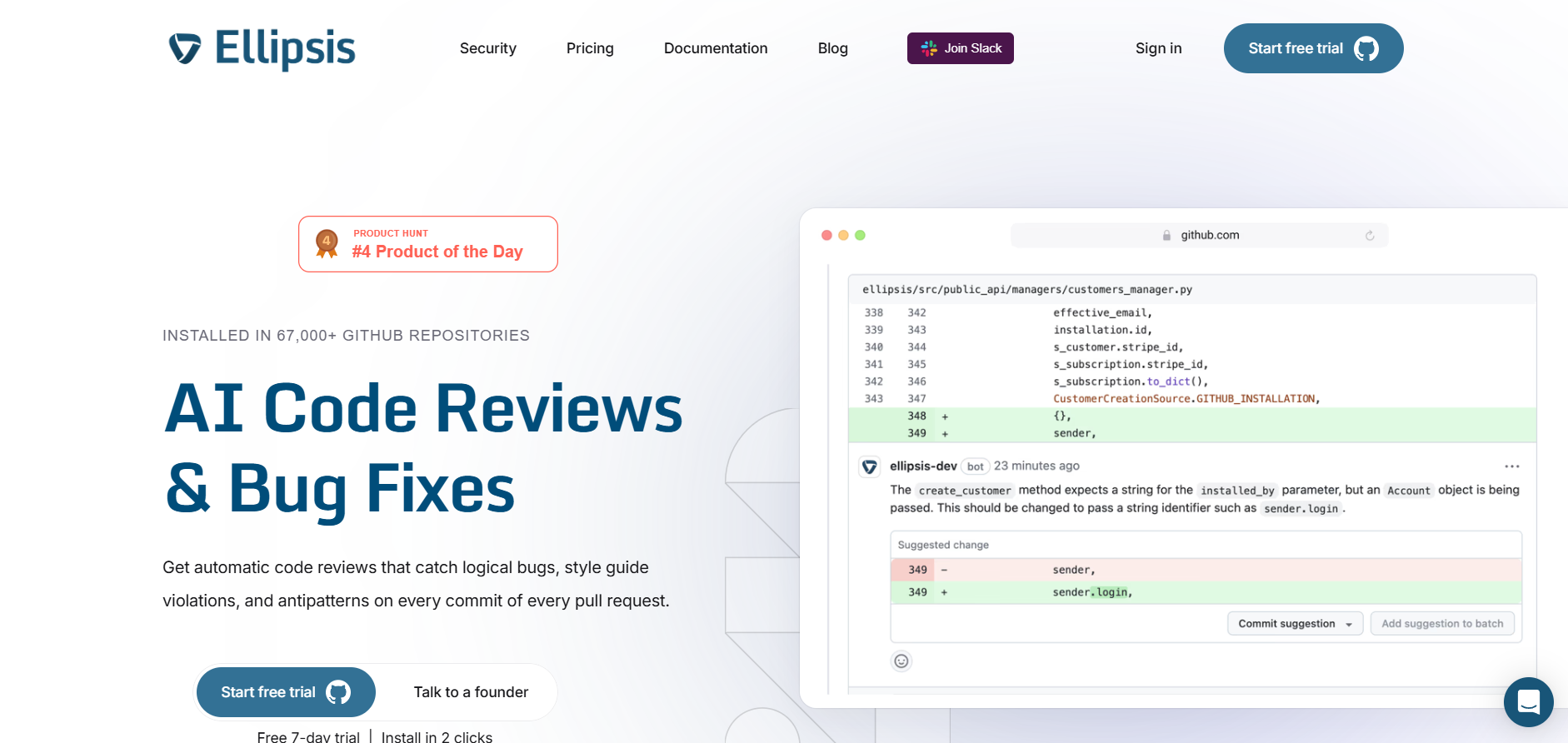
Automated code reviews, release notes, feature development, and bug fixes
Community support
No credit card required
Immediate setup
Paid Plan
$ 20.00
Pull request summaries
Unlimited code generation
Question & answer functionality
Proud of the love you're getting? Show off your AI Toolbook reviews—then invite more fans to share the love and build your credibility.
Add an AI Toolbook badge to your site—an easy way to drive followers, showcase updates, and collect reviews. It's like a mini 24/7 billboard for your AI.
Reviews
Rating Distribution
Average score
Popular Mention
FAQs
Similar AI Tools

OpenAI Codex
OpenAI Codex is a powerful AI coding engine developed by OpenAI that translates natural language into code. Built on top of GPT-3, Codex understands and generates code in over a dozen programming languages, including JavaScript, Python, and more. It's the underlying model behind GitHub Copilot and is designed to help developers write code faster, learn new APIs, and prototype projects with simple language commands.
OpenAI Codex
OpenAI Codex is a powerful AI coding engine developed by OpenAI that translates natural language into code. Built on top of GPT-3, Codex understands and generates code in over a dozen programming languages, including JavaScript, Python, and more. It's the underlying model behind GitHub Copilot and is designed to help developers write code faster, learn new APIs, and prototype projects with simple language commands.
OpenAI Codex
OpenAI Codex is a powerful AI coding engine developed by OpenAI that translates natural language into code. Built on top of GPT-3, Codex understands and generates code in over a dozen programming languages, including JavaScript, Python, and more. It's the underlying model behind GitHub Copilot and is designed to help developers write code faster, learn new APIs, and prototype projects with simple language commands.
IntelliCode is an AI-powered code assistance tool built into Microsoft Visual Studio and Visual Studio Code. It enhances developer productivity by providing intelligent code suggestions, auto-completions, and best practice recommendations based on machine learning models trained on thousands of high-quality open-source projects. IntelliCode makes coding faster and smarter by anticipating developer intent and offering context-aware recommendations.
IntelliCode is an AI-powered code assistance tool built into Microsoft Visual Studio and Visual Studio Code. It enhances developer productivity by providing intelligent code suggestions, auto-completions, and best practice recommendations based on machine learning models trained on thousands of high-quality open-source projects. IntelliCode makes coding faster and smarter by anticipating developer intent and offering context-aware recommendations.
IntelliCode is an AI-powered code assistance tool built into Microsoft Visual Studio and Visual Studio Code. It enhances developer productivity by providing intelligent code suggestions, auto-completions, and best practice recommendations based on machine learning models trained on thousands of high-quality open-source projects. IntelliCode makes coding faster and smarter by anticipating developer intent and offering context-aware recommendations.


GitLab AI
GitLab Plan Stage AI is an integrated suite of AI-powered features in GitLab’s planning stage that helps teams automate repetitive planning tasks—such as issue generation, labeling, assignment—and surface insights to streamline project management. Built within GitLab’s DevOps lifecycle, it brings intelligent assistance directly into planning workflows.
GitLab AI
GitLab Plan Stage AI is an integrated suite of AI-powered features in GitLab’s planning stage that helps teams automate repetitive planning tasks—such as issue generation, labeling, assignment—and surface insights to streamline project management. Built within GitLab’s DevOps lifecycle, it brings intelligent assistance directly into planning workflows.
GitLab AI
GitLab Plan Stage AI is an integrated suite of AI-powered features in GitLab’s planning stage that helps teams automate repetitive planning tasks—such as issue generation, labeling, assignment—and surface insights to streamline project management. Built within GitLab’s DevOps lifecycle, it brings intelligent assistance directly into planning workflows.

PearAI
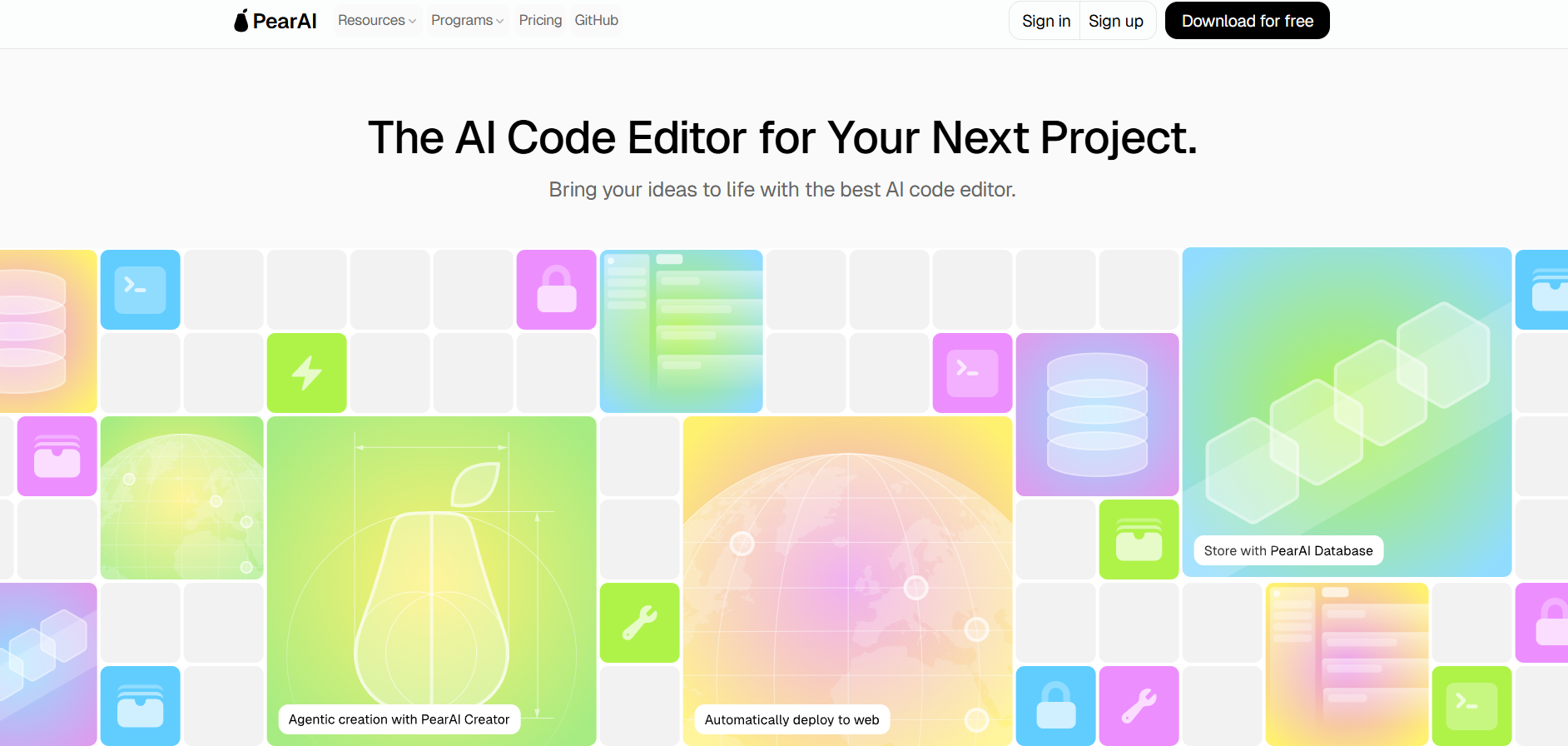
PearAI is an open-source, AI-powered code editor based on Visual Studio Code that combines top AI coding tools like GPT-4, Claude, LLaMA, and AI agents into one intelligent workspace. Designed for developers who want deep codebase understanding, automated assistance, and fast project scaffolding, PearAI delivers a unified, local-first AI coding experience.
PearAI
PearAI is an open-source, AI-powered code editor based on Visual Studio Code that combines top AI coding tools like GPT-4, Claude, LLaMA, and AI agents into one intelligent workspace. Designed for developers who want deep codebase understanding, automated assistance, and fast project scaffolding, PearAI delivers a unified, local-first AI coding experience.
PearAI
PearAI is an open-source, AI-powered code editor based on Visual Studio Code that combines top AI coding tools like GPT-4, Claude, LLaMA, and AI agents into one intelligent workspace. Designed for developers who want deep codebase understanding, automated assistance, and fast project scaffolding, PearAI delivers a unified, local-first AI coding experience.

CodeStory
CodeStory is an AI-native, privacy-focused IDE (a fork of VS Code) that lets humans and AI pair-program together. It supports multi-file editing, proactive error fixing, intelligent code completion, and deep context awareness—all running locally with advanced AI agents to streamline complex development tasks.
CodeStory
CodeStory is an AI-native, privacy-focused IDE (a fork of VS Code) that lets humans and AI pair-program together. It supports multi-file editing, proactive error fixing, intelligent code completion, and deep context awareness—all running locally with advanced AI agents to streamline complex development tasks.
CodeStory
CodeStory is an AI-native, privacy-focused IDE (a fork of VS Code) that lets humans and AI pair-program together. It supports multi-file editing, proactive error fixing, intelligent code completion, and deep context awareness—all running locally with advanced AI agents to streamline complex development tasks.
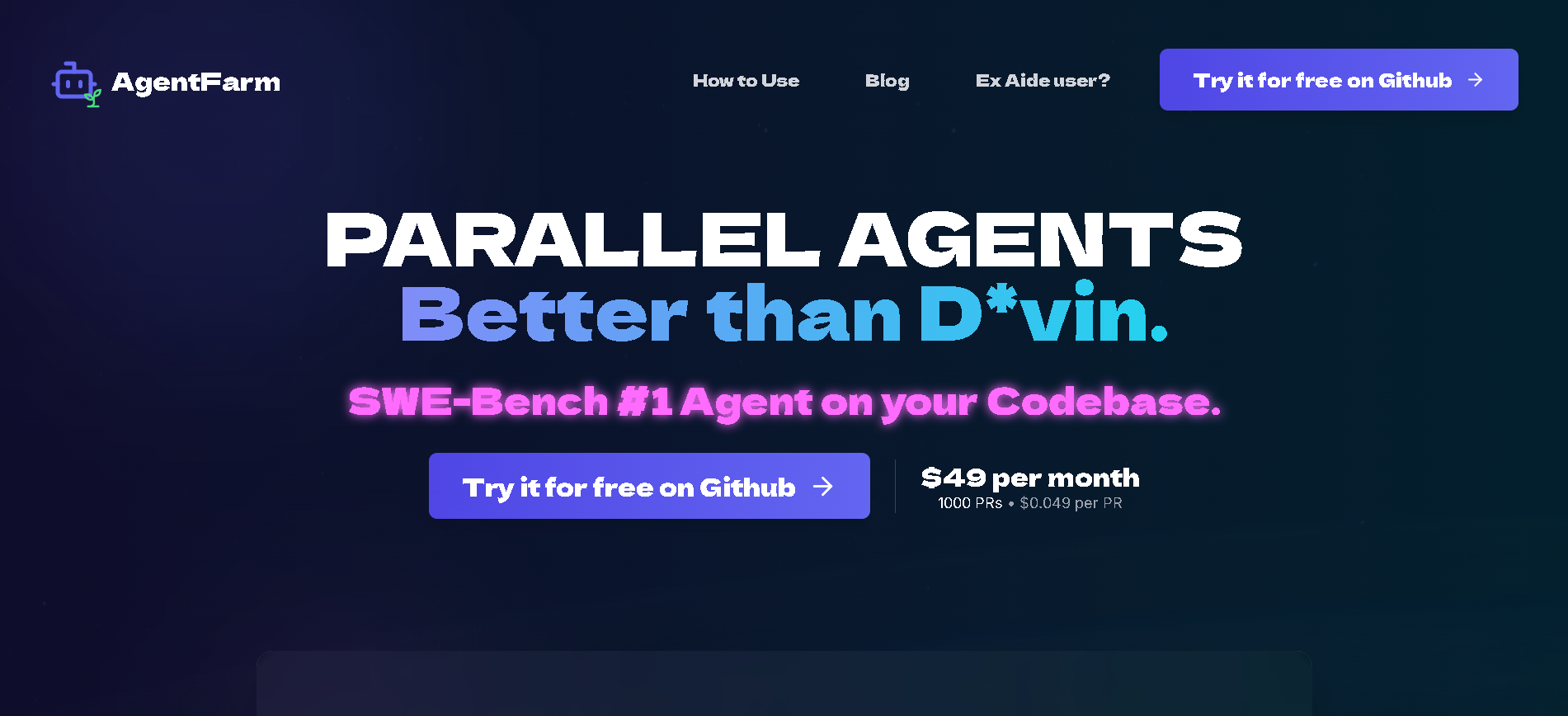
Aide Dev
Aide is an AI-powered agent designed to enhance software development workflows, particularly for codebases and Pull Requests (PRs). It claims to outperform competitors like D*vin and holds the #1 ranking on SWE-Bench for codebases, offering automated PR workflows, smart suggestions, and continuous improvements.
Aide Dev
Aide is an AI-powered agent designed to enhance software development workflows, particularly for codebases and Pull Requests (PRs). It claims to outperform competitors like D*vin and holds the #1 ranking on SWE-Bench for codebases, offering automated PR workflows, smart suggestions, and continuous improvements.
Aide Dev
Aide is an AI-powered agent designed to enhance software development workflows, particularly for codebases and Pull Requests (PRs). It claims to outperform competitors like D*vin and holds the #1 ranking on SWE-Bench for codebases, offering automated PR workflows, smart suggestions, and continuous improvements.


Manus AI
ManusAI is an AI-powered code assistant built to help developers write, understand, and debug code faster and more efficiently. With deep code comprehension, custom workflows, and seamless IDE integrations, ManusAI acts like a virtual senior engineer—guiding you through complex logic, code reviews, and refactoring tasks. Whether you’re writing new code or diving into a legacy codebase, ManusAI accelerates your productivity with precision. Essentially, Manus AI aims to be an "intelligent hand" that translates user intent directly into action, automating tasks that typically require human management. It's currently accessible via an invitation-only beta.
Manus AI
ManusAI is an AI-powered code assistant built to help developers write, understand, and debug code faster and more efficiently. With deep code comprehension, custom workflows, and seamless IDE integrations, ManusAI acts like a virtual senior engineer—guiding you through complex logic, code reviews, and refactoring tasks. Whether you’re writing new code or diving into a legacy codebase, ManusAI accelerates your productivity with precision. Essentially, Manus AI aims to be an "intelligent hand" that translates user intent directly into action, automating tasks that typically require human management. It's currently accessible via an invitation-only beta.
Manus AI
ManusAI is an AI-powered code assistant built to help developers write, understand, and debug code faster and more efficiently. With deep code comprehension, custom workflows, and seamless IDE integrations, ManusAI acts like a virtual senior engineer—guiding you through complex logic, code reviews, and refactoring tasks. Whether you’re writing new code or diving into a legacy codebase, ManusAI accelerates your productivity with precision. Essentially, Manus AI aims to be an "intelligent hand" that translates user intent directly into action, automating tasks that typically require human management. It's currently accessible via an invitation-only beta.


Kiro AI
Kiro.dev is a powerful AI-powered code generation tool designed to accelerate the software development process. It leverages advanced machine learning models to help developers write code faster, more efficiently, and with fewer errors. Kiro.dev offers various features, including code completion, code generation from natural language prompts, and code explanation, making it a valuable asset for developers of all skill levels.
Kiro AI
Kiro.dev is a powerful AI-powered code generation tool designed to accelerate the software development process. It leverages advanced machine learning models to help developers write code faster, more efficiently, and with fewer errors. Kiro.dev offers various features, including code completion, code generation from natural language prompts, and code explanation, making it a valuable asset for developers of all skill levels.
Kiro AI
Kiro.dev is a powerful AI-powered code generation tool designed to accelerate the software development process. It leverages advanced machine learning models to help developers write code faster, more efficiently, and with fewer errors. Kiro.dev offers various features, including code completion, code generation from natural language prompts, and code explanation, making it a valuable asset for developers of all skill levels.
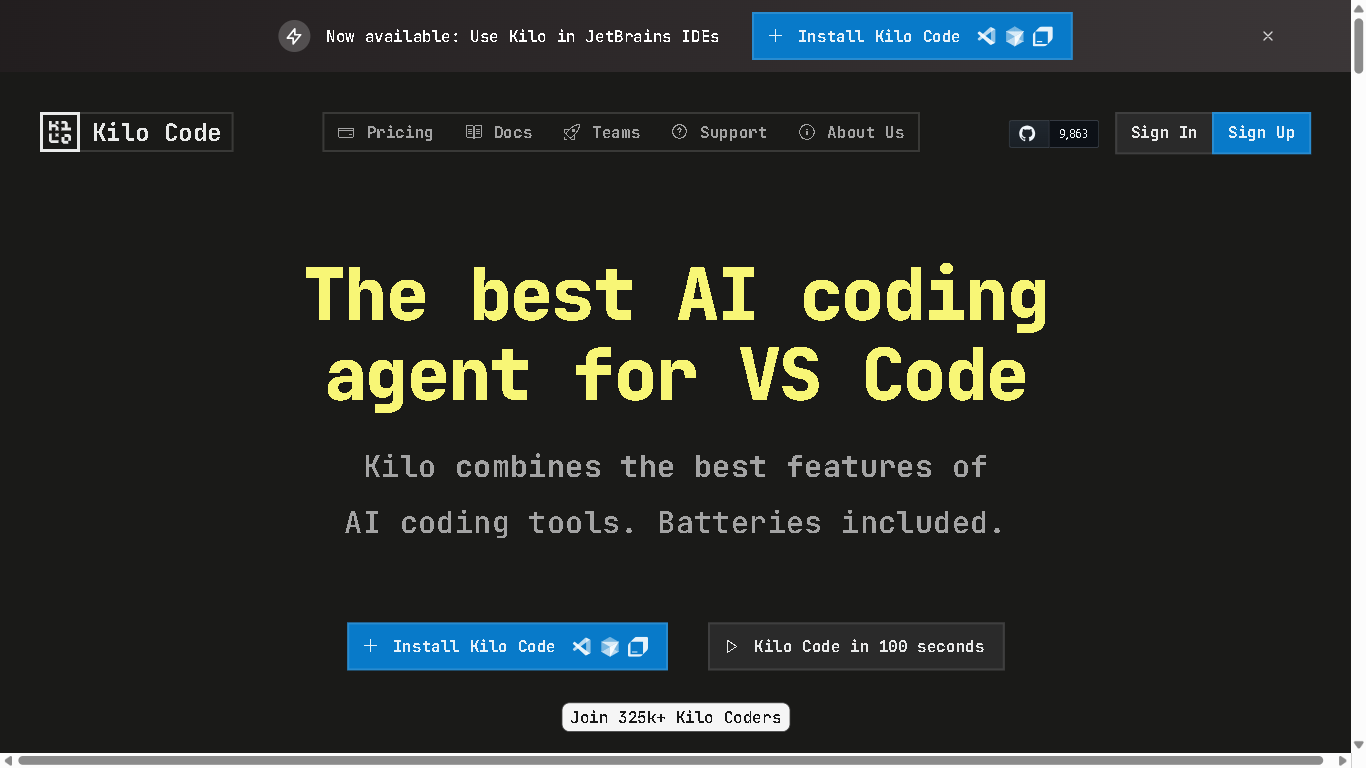

Kilo Code
Kilo Code is an AI-powered coding assistant designed to enhance software development within IDEs like Visual Studio Code and JetBrains. It integrates features from existing AI coding tools while providing unique functionalities such as the Model Context Protocol (MCP) Server Marketplace and intelligent system notifications. Kilo Code streamlines development by automating repetitive tasks, generating code from natural language prompts, and providing intelligent suggestions to developers.
Kilo Code
Kilo Code is an AI-powered coding assistant designed to enhance software development within IDEs like Visual Studio Code and JetBrains. It integrates features from existing AI coding tools while providing unique functionalities such as the Model Context Protocol (MCP) Server Marketplace and intelligent system notifications. Kilo Code streamlines development by automating repetitive tasks, generating code from natural language prompts, and providing intelligent suggestions to developers.
Kilo Code
Kilo Code is an AI-powered coding assistant designed to enhance software development within IDEs like Visual Studio Code and JetBrains. It integrates features from existing AI coding tools while providing unique functionalities such as the Model Context Protocol (MCP) Server Marketplace and intelligent system notifications. Kilo Code streamlines development by automating repetitive tasks, generating code from natural language prompts, and providing intelligent suggestions to developers.


Roo Code
Roo Code is an open-source AI-powered coding assistant available on GitHub through the RooVetGit repository. It integrates directly with Visual Studio Code, providing developers with an autonomous “AI dev team” that can plan, write, debug, and refactor code across multiple files. Built as a fork of the earlier Roo Cline project, Roo Code uses agentic modes—such as Code, Architect, Ask, and Debug—to handle distinct development tasks. Developers can customize modes, connect various AI model providers, and fine-tune workflows for maximum control. Fully open-source, it supports local and cloud-based models while prioritizing privacy and flexibility.
Roo Code
Roo Code is an open-source AI-powered coding assistant available on GitHub through the RooVetGit repository. It integrates directly with Visual Studio Code, providing developers with an autonomous “AI dev team” that can plan, write, debug, and refactor code across multiple files. Built as a fork of the earlier Roo Cline project, Roo Code uses agentic modes—such as Code, Architect, Ask, and Debug—to handle distinct development tasks. Developers can customize modes, connect various AI model providers, and fine-tune workflows for maximum control. Fully open-source, it supports local and cloud-based models while prioritizing privacy and flexibility.
Roo Code
Roo Code is an open-source AI-powered coding assistant available on GitHub through the RooVetGit repository. It integrates directly with Visual Studio Code, providing developers with an autonomous “AI dev team” that can plan, write, debug, and refactor code across multiple files. Built as a fork of the earlier Roo Cline project, Roo Code uses agentic modes—such as Code, Architect, Ask, and Debug—to handle distinct development tasks. Developers can customize modes, connect various AI model providers, and fine-tune workflows for maximum control. Fully open-source, it supports local and cloud-based models while prioritizing privacy and flexibility.
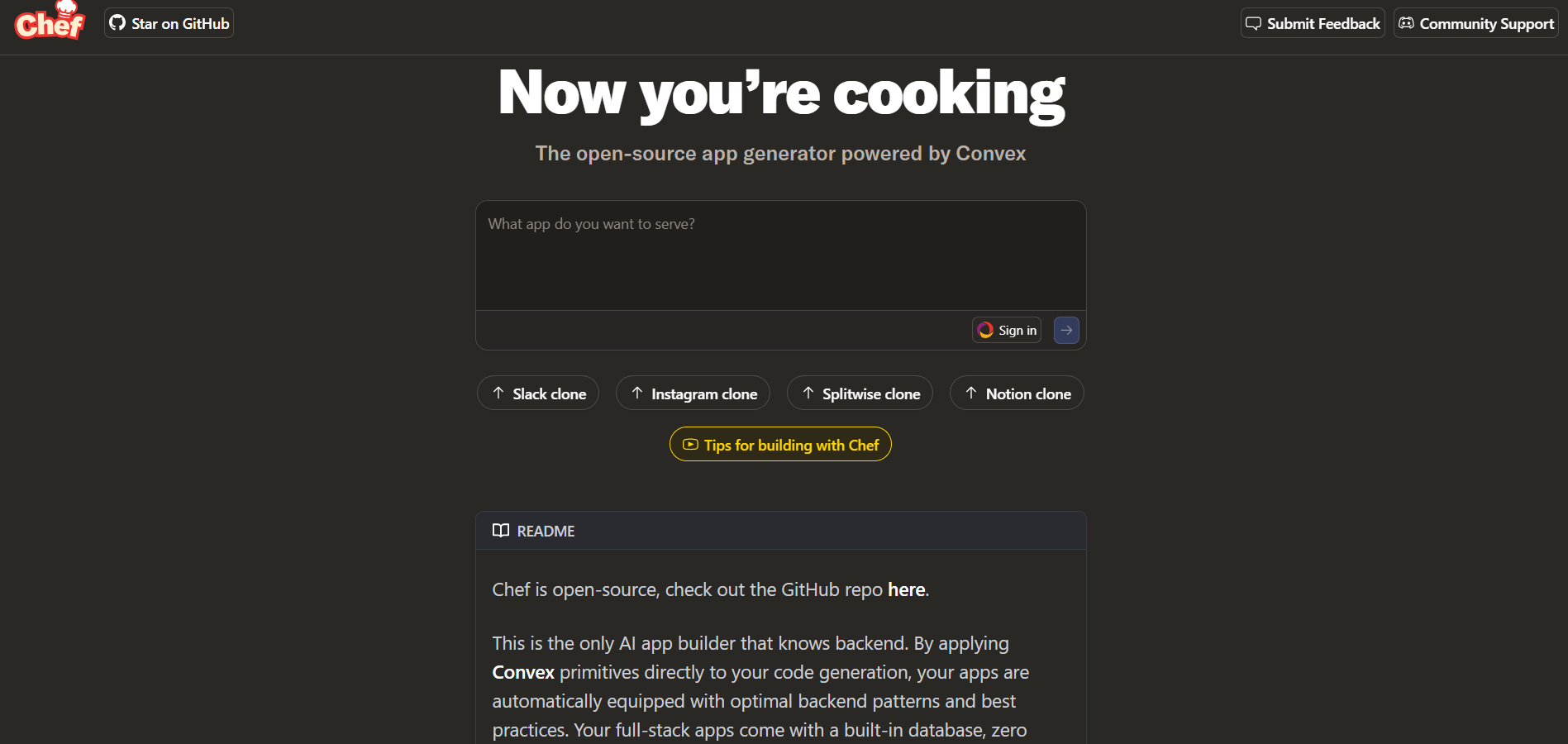

Chef
Chef by Convex is an AI-powered development assistant built to help developers create, test, and deploy web applications faster using natural language prompts. Integrated with Convex’s backend-as-a-service platform, Chef automates code generation, database setup, and API creation, enabling developers to move from concept to functional prototype within minutes. The tool understands developer intent, allowing users to describe what they want and instantly receive production-ready code snippets. With collaborative features and integrated testing environments, Chef by Convex simplifies modern app development for both individuals and teams, combining AI intelligence with backend scalability.
Chef
Chef by Convex is an AI-powered development assistant built to help developers create, test, and deploy web applications faster using natural language prompts. Integrated with Convex’s backend-as-a-service platform, Chef automates code generation, database setup, and API creation, enabling developers to move from concept to functional prototype within minutes. The tool understands developer intent, allowing users to describe what they want and instantly receive production-ready code snippets. With collaborative features and integrated testing environments, Chef by Convex simplifies modern app development for both individuals and teams, combining AI intelligence with backend scalability.
Chef
Chef by Convex is an AI-powered development assistant built to help developers create, test, and deploy web applications faster using natural language prompts. Integrated with Convex’s backend-as-a-service platform, Chef automates code generation, database setup, and API creation, enabling developers to move from concept to functional prototype within minutes. The tool understands developer intent, allowing users to describe what they want and instantly receive production-ready code snippets. With collaborative features and integrated testing environments, Chef by Convex simplifies modern app development for both individuals and teams, combining AI intelligence with backend scalability.

Coderabbit AI
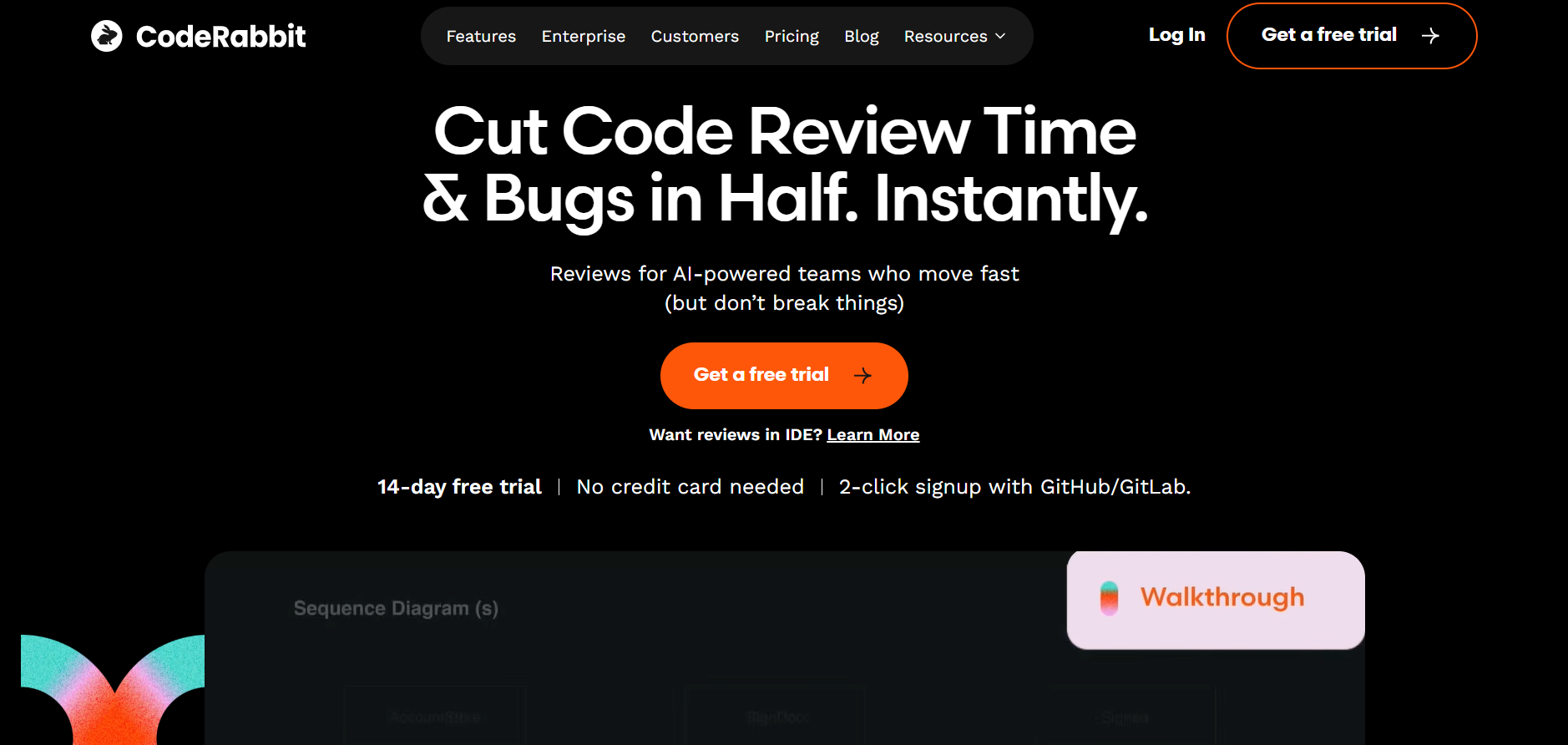
CodeRabbit AI is an intelligent code review assistant designed to automate software review processes, identify bugs, and improve code quality using machine learning. It integrates directly with GitHub and other version control systems to provide real-time analysis, review comments, and improvement suggestions. By mimicking human reviewer logic, CodeRabbit helps development teams maintain code standards while reducing time spent on manual reviews. Its AI models are trained on best coding practices, ensuring that every commit is efficient, secure, and optimized for performance.
Coderabbit AI
CodeRabbit AI is an intelligent code review assistant designed to automate software review processes, identify bugs, and improve code quality using machine learning. It integrates directly with GitHub and other version control systems to provide real-time analysis, review comments, and improvement suggestions. By mimicking human reviewer logic, CodeRabbit helps development teams maintain code standards while reducing time spent on manual reviews. Its AI models are trained on best coding practices, ensuring that every commit is efficient, secure, and optimized for performance.
Coderabbit AI
CodeRabbit AI is an intelligent code review assistant designed to automate software review processes, identify bugs, and improve code quality using machine learning. It integrates directly with GitHub and other version control systems to provide real-time analysis, review comments, and improvement suggestions. By mimicking human reviewer logic, CodeRabbit helps development teams maintain code standards while reducing time spent on manual reviews. Its AI models are trained on best coding practices, ensuring that every commit is efficient, secure, and optimized for performance.
Editorial Note
This page was researched and written by the ATB Editorial Team. Our team researches each AI tool by reviewing its official website, testing features, exploring real use cases, and considering user feedback. Every page is fact-checked and regularly updated to ensure the information stays accurate, neutral, and useful for our readers.
If you have any suggestions or questions, email us at hello@aitoolbook.ai