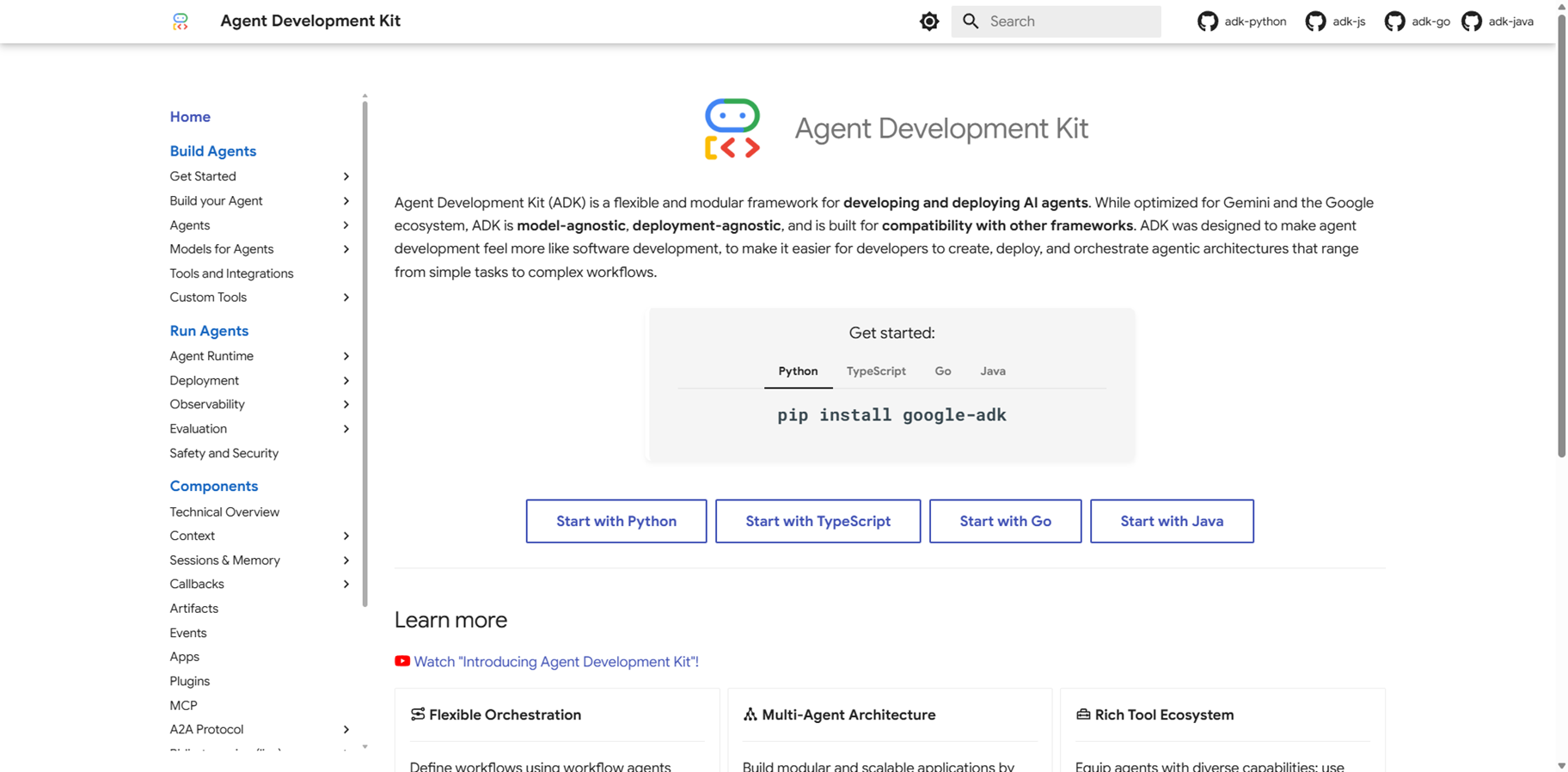
- AI Developers: Build modular agents with tools and orchestration patterns easily.
- Software Engineers: Create production multi-agent apps like traditional software.
- Enterprise Teams: Deploy scalable agents on Vertex AI for customer engagement.
- Researchers: Evaluate agent performance with built-in test cases and metrics.
- Product Builders: Integrate with Google Workspace, CRMs for productivity bots.
How to Use Agent Development Kit?
- Install SDK: Use pip for Python, npm for TypeScript, or Maven for Java from GitHub.
- Define Agents: Create LlmAgent with model, instructions, tools like Google Search.
- Orchestrate Workflows: Compose with sub-agents, Sequential/Parallel/Loop for hierarchies.
- Test & Deploy: Run via CLI/UI, evaluate locally, containerize for Vertex AI or Docker.
- Multi-Agent Hierarchies: Delegate tasks via LLM transfer or explicit AgentTool calls.
- Rich Tool Integration: Custom functions, APIs, databases, long-running async tools.
- Built-in Evaluation: Test final responses and execution steps against datasets.
- Developer Tooling: CLI, UI for debugging, streaming, multimodal support.
- Deployment Flexibility: Local, Vertex AI Engine, Cloud Run, Docker agnostic.
- Makes complex multi-agent builds feel like regular coding.
- Model-agnostic with strong Gemini optimization.
- Full lifecycle from eval to secure deployment.
- Open-source across Python, TS, Go, Java SDKs.
- Steep learning for orchestration patterns initially.
- Best features shine in Google Cloud ecosystem.
- Limited non-Gemini model integrations out-of-box.
- Docs heavy on examples over simple intros.
Custom
Pricing information is not directly provided.
Proud of the love you're getting? Show off your AI Toolbook reviews—then invite more fans to share the love and build your credibility.
Add an AI Toolbook badge to your site—an easy way to drive followers, showcase updates, and collect reviews. It's like a mini 24/7 billboard for your AI.
Reviews
Rating Distribution
Average score
Popular Mention
FAQs
Similar AI Tools

GenFuse AI
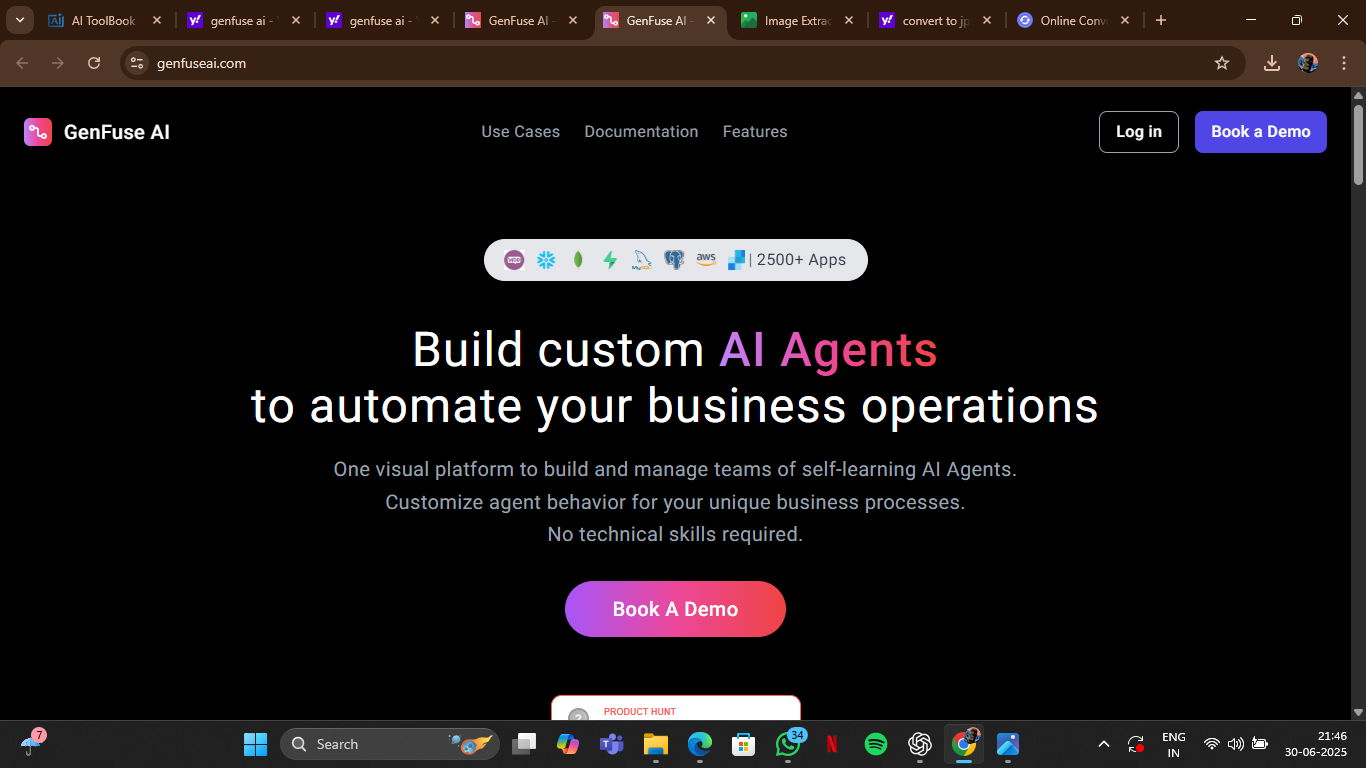
GenFuse AI is a powerful no-code AI automation platform that enables users to build, manage, and deploy intelligent AI agents without writing a single line of code. Designed for professionals, teams, and businesses of all sizes. GenFuse AI automates complex workflows—combining text, images, and logic—into seamless, goal-oriented agents. Whether you are creating task bots, automating internal processes, or building customer-facing assistants. GenFuseAI makes advanced AI accessible to everyone.
GenFuse AI
GenFuse AI is a powerful no-code AI automation platform that enables users to build, manage, and deploy intelligent AI agents without writing a single line of code. Designed for professionals, teams, and businesses of all sizes. GenFuse AI automates complex workflows—combining text, images, and logic—into seamless, goal-oriented agents. Whether you are creating task bots, automating internal processes, or building customer-facing assistants. GenFuseAI makes advanced AI accessible to everyone.
GenFuse AI
GenFuse AI is a powerful no-code AI automation platform that enables users to build, manage, and deploy intelligent AI agents without writing a single line of code. Designed for professionals, teams, and businesses of all sizes. GenFuse AI automates complex workflows—combining text, images, and logic—into seamless, goal-oriented agents. Whether you are creating task bots, automating internal processes, or building customer-facing assistants. GenFuseAI makes advanced AI accessible to everyone.
Aide Dev
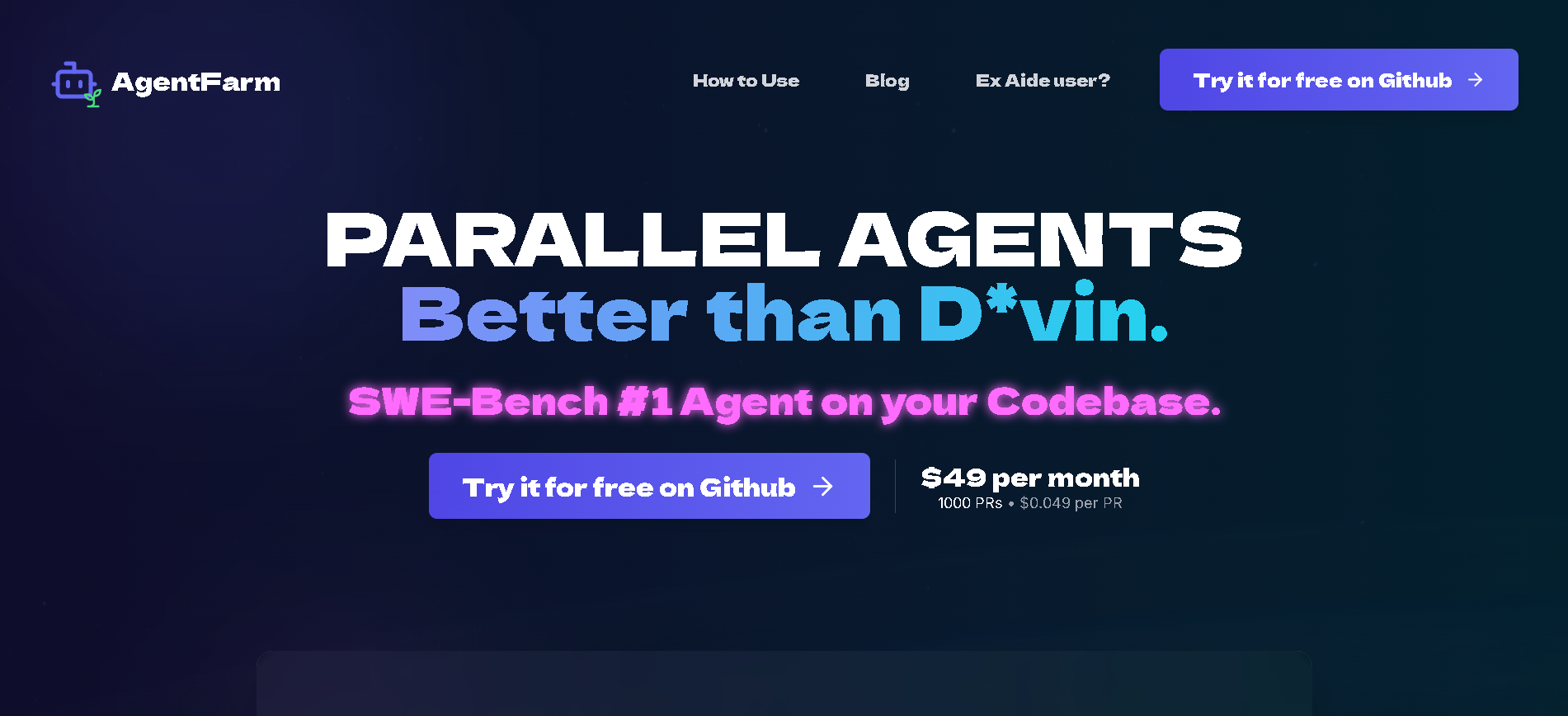
Aide is an AI-powered agent designed to enhance software development workflows, particularly for codebases and Pull Requests (PRs). It claims to outperform competitors like D*vin and holds the #1 ranking on SWE-Bench for codebases, offering automated PR workflows, smart suggestions, and continuous improvements.
Aide Dev
Aide is an AI-powered agent designed to enhance software development workflows, particularly for codebases and Pull Requests (PRs). It claims to outperform competitors like D*vin and holds the #1 ranking on SWE-Bench for codebases, offering automated PR workflows, smart suggestions, and continuous improvements.
Aide Dev
Aide is an AI-powered agent designed to enhance software development workflows, particularly for codebases and Pull Requests (PRs). It claims to outperform competitors like D*vin and holds the #1 ranking on SWE-Bench for codebases, offering automated PR workflows, smart suggestions, and continuous improvements.


Kiro AI
Kiro.dev is a powerful AI-powered code generation tool designed to accelerate the software development process. It leverages advanced machine learning models to help developers write code faster, more efficiently, and with fewer errors. Kiro.dev offers various features, including code completion, code generation from natural language prompts, and code explanation, making it a valuable asset for developers of all skill levels.
Kiro AI
Kiro.dev is a powerful AI-powered code generation tool designed to accelerate the software development process. It leverages advanced machine learning models to help developers write code faster, more efficiently, and with fewer errors. Kiro.dev offers various features, including code completion, code generation from natural language prompts, and code explanation, making it a valuable asset for developers of all skill levels.
Kiro AI
Kiro.dev is a powerful AI-powered code generation tool designed to accelerate the software development process. It leverages advanced machine learning models to help developers write code faster, more efficiently, and with fewer errors. Kiro.dev offers various features, including code completion, code generation from natural language prompts, and code explanation, making it a valuable asset for developers of all skill levels.

Developer Toolkit
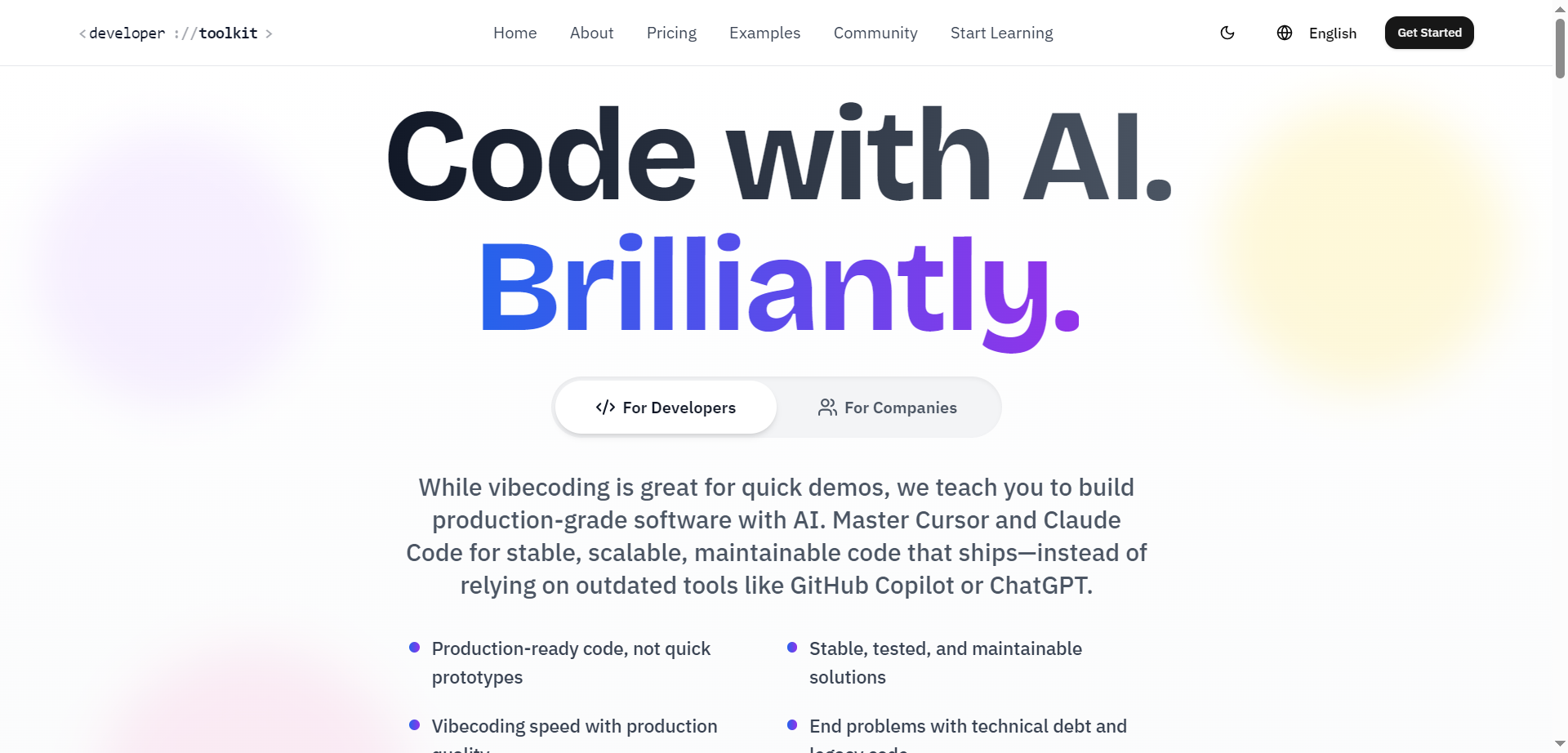
DeveloperToolkit.ai is an advanced AI-assisted development platform designed to help developers build production-grade, scalable, and maintainable software. It leverages powerful models like Claude Code and Cursor to generate production-ready code that’s secure, tested, and optimized for real-world deployment. Unlike tools that stop at quick prototypes, DeveloperToolkit.ai focuses on long-term code quality, maintainability, and best practices. Whether writing API endpoints, components, or full-fledged systems, it accelerates the entire development process while ensuring cleaner architectures and stable results fit for teams that ship with confidence.
Developer Toolkit
DeveloperToolkit.ai is an advanced AI-assisted development platform designed to help developers build production-grade, scalable, and maintainable software. It leverages powerful models like Claude Code and Cursor to generate production-ready code that’s secure, tested, and optimized for real-world deployment. Unlike tools that stop at quick prototypes, DeveloperToolkit.ai focuses on long-term code quality, maintainability, and best practices. Whether writing API endpoints, components, or full-fledged systems, it accelerates the entire development process while ensuring cleaner architectures and stable results fit for teams that ship with confidence.
Developer Toolkit
DeveloperToolkit.ai is an advanced AI-assisted development platform designed to help developers build production-grade, scalable, and maintainable software. It leverages powerful models like Claude Code and Cursor to generate production-ready code that’s secure, tested, and optimized for real-world deployment. Unlike tools that stop at quick prototypes, DeveloperToolkit.ai focuses on long-term code quality, maintainability, and best practices. Whether writing API endpoints, components, or full-fledged systems, it accelerates the entire development process while ensuring cleaner architectures and stable results fit for teams that ship with confidence.

Langchain
LangChain is a powerful open-source framework designed to help developers build context-aware applications that leverage large language models (LLMs). It allows users to connect language models to various data sources, APIs, and memory components, enabling intelligent, multi-step reasoning and decision-making processes. LangChain supports both Python and JavaScript, providing modular building blocks for developers to create chatbots, AI assistants, retrieval-augmented generation (RAG) systems, and agent-based tools. The framework is widely adopted across industries for its flexibility in connecting structured and unstructured data with LLMs.
Langchain
LangChain is a powerful open-source framework designed to help developers build context-aware applications that leverage large language models (LLMs). It allows users to connect language models to various data sources, APIs, and memory components, enabling intelligent, multi-step reasoning and decision-making processes. LangChain supports both Python and JavaScript, providing modular building blocks for developers to create chatbots, AI assistants, retrieval-augmented generation (RAG) systems, and agent-based tools. The framework is widely adopted across industries for its flexibility in connecting structured and unstructured data with LLMs.
Langchain
LangChain is a powerful open-source framework designed to help developers build context-aware applications that leverage large language models (LLMs). It allows users to connect language models to various data sources, APIs, and memory components, enabling intelligent, multi-step reasoning and decision-making processes. LangChain supports both Python and JavaScript, providing modular building blocks for developers to create chatbots, AI assistants, retrieval-augmented generation (RAG) systems, and agent-based tools. The framework is widely adopted across industries for its flexibility in connecting structured and unstructured data with LLMs.

Chef
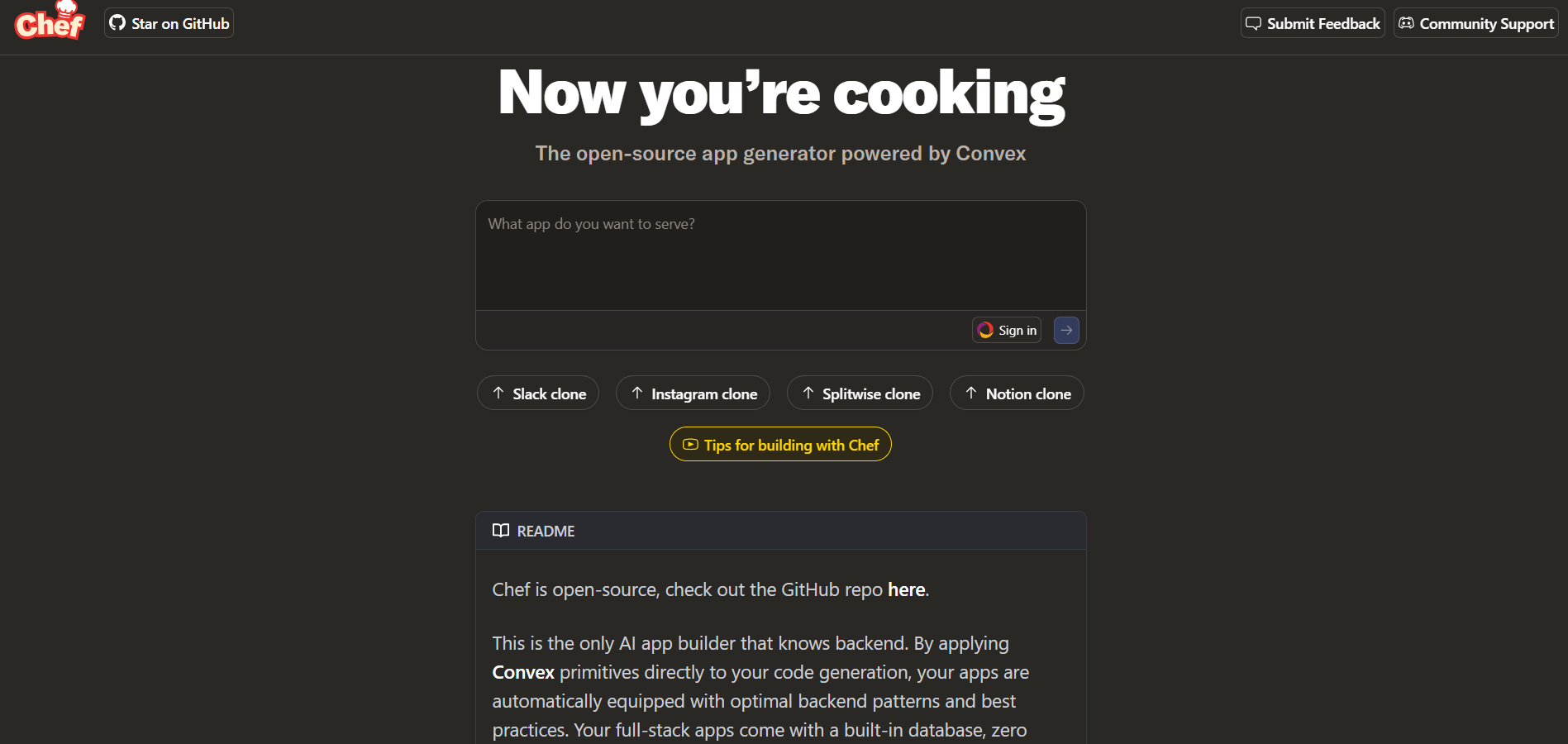
Chef by Convex is an AI-powered development assistant built to help developers create, test, and deploy web applications faster using natural language prompts. Integrated with Convex’s backend-as-a-service platform, Chef automates code generation, database setup, and API creation, enabling developers to move from concept to functional prototype within minutes. The tool understands developer intent, allowing users to describe what they want and instantly receive production-ready code snippets. With collaborative features and integrated testing environments, Chef by Convex simplifies modern app development for both individuals and teams, combining AI intelligence with backend scalability.
Chef
Chef by Convex is an AI-powered development assistant built to help developers create, test, and deploy web applications faster using natural language prompts. Integrated with Convex’s backend-as-a-service platform, Chef automates code generation, database setup, and API creation, enabling developers to move from concept to functional prototype within minutes. The tool understands developer intent, allowing users to describe what they want and instantly receive production-ready code snippets. With collaborative features and integrated testing environments, Chef by Convex simplifies modern app development for both individuals and teams, combining AI intelligence with backend scalability.
Chef
Chef by Convex is an AI-powered development assistant built to help developers create, test, and deploy web applications faster using natural language prompts. Integrated with Convex’s backend-as-a-service platform, Chef automates code generation, database setup, and API creation, enabling developers to move from concept to functional prototype within minutes. The tool understands developer intent, allowing users to describe what they want and instantly receive production-ready code snippets. With collaborative features and integrated testing environments, Chef by Convex simplifies modern app development for both individuals and teams, combining AI intelligence with backend scalability.

Swarmia
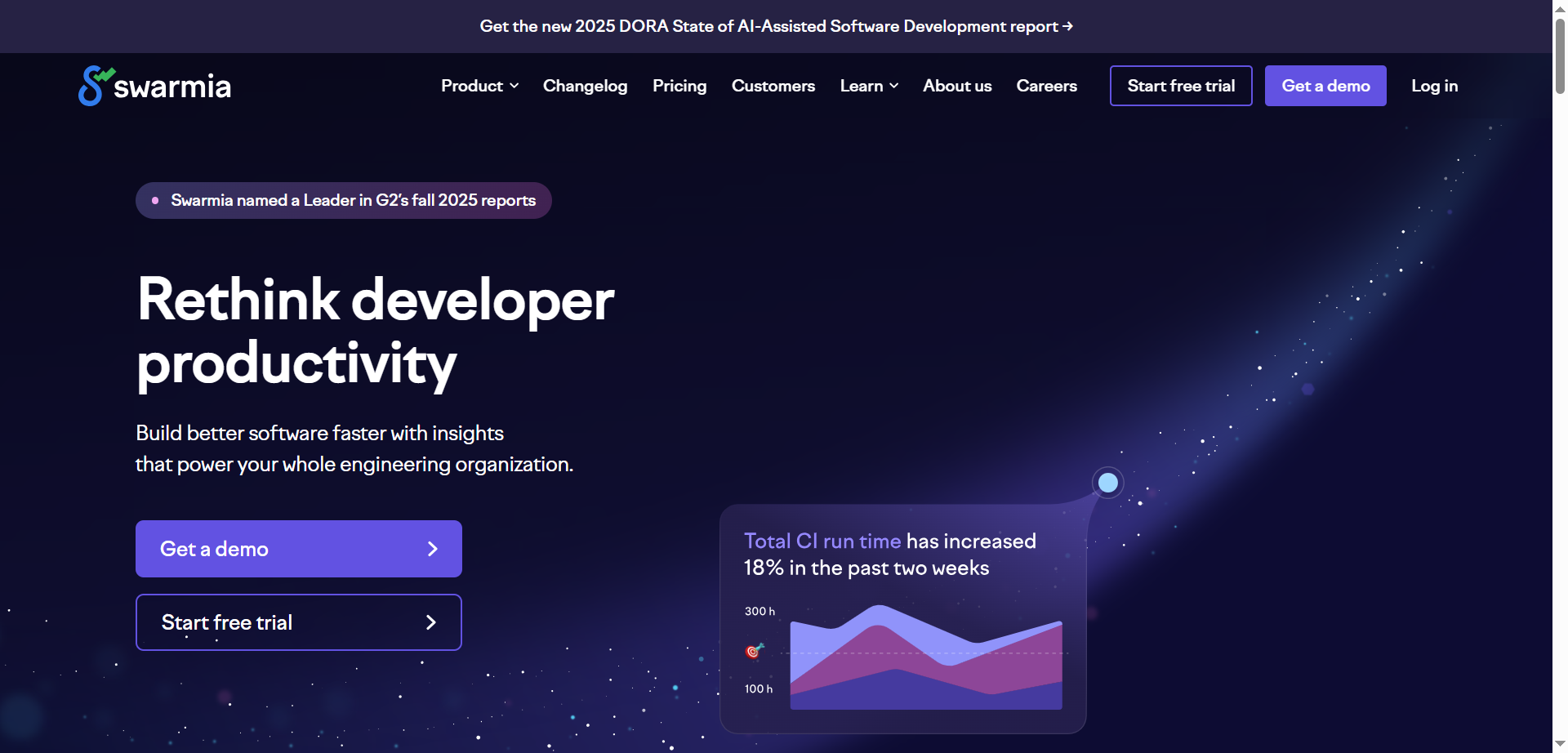
Swarmia is a developer productivity platform that rethinks engineering performance measurement by connecting code, workflows, and team dynamics to deliver actionable insights for software leaders. It integrates with GitHub, GitLab, Jira, Linear, and other tools to provide real-time metrics on cycle time, deployment frequency, pull request health, and flow efficiency without slowing teams down. Engineering managers use it to identify bottlenecks, celebrate wins, coach developers effectively, and align productivity with business goals through customizable dashboards and trend analysis. Trusted by high-growth teams, it shifts focus from flawed metrics like lines of code to true flow and outcomes, enabling data-driven decisions that boost velocity and quality across organizations.
Swarmia
Swarmia is a developer productivity platform that rethinks engineering performance measurement by connecting code, workflows, and team dynamics to deliver actionable insights for software leaders. It integrates with GitHub, GitLab, Jira, Linear, and other tools to provide real-time metrics on cycle time, deployment frequency, pull request health, and flow efficiency without slowing teams down. Engineering managers use it to identify bottlenecks, celebrate wins, coach developers effectively, and align productivity with business goals through customizable dashboards and trend analysis. Trusted by high-growth teams, it shifts focus from flawed metrics like lines of code to true flow and outcomes, enabling data-driven decisions that boost velocity and quality across organizations.
Swarmia
Swarmia is a developer productivity platform that rethinks engineering performance measurement by connecting code, workflows, and team dynamics to deliver actionable insights for software leaders. It integrates with GitHub, GitLab, Jira, Linear, and other tools to provide real-time metrics on cycle time, deployment frequency, pull request health, and flow efficiency without slowing teams down. Engineering managers use it to identify bottlenecks, celebrate wins, coach developers effectively, and align productivity with business goals through customizable dashboards and trend analysis. Trusted by high-growth teams, it shifts focus from flawed metrics like lines of code to true flow and outcomes, enabling data-driven decisions that boost velocity and quality across organizations.


Kurral
Kurral v3 is an open-source AI agent framework designed to help developers build, experiment with, and orchestrate autonomous or semi-autonomous AI agents. It provides a structured foundation for managing agent logic, task execution, memory, and tool usage in a modular way. Rather than being a finished end-user application, Kurral v3 serves as a development layer for engineers who want full control over how agents reason, act, and interact with external systems. Its architecture emphasizes flexibility, transparency, and extensibility, making it suitable for research, prototyping, and advanced AI system design. The framework supports iterative experimentation, allowing developers to define agent behaviors, integrate custom tools, and refine workflows over time. By keeping the system open and configurable, Kurral v3 enables builders to explore different agent patterns, coordination strategies, and execution flows without being locked into a proprietary platform.
Kurral
Kurral v3 is an open-source AI agent framework designed to help developers build, experiment with, and orchestrate autonomous or semi-autonomous AI agents. It provides a structured foundation for managing agent logic, task execution, memory, and tool usage in a modular way. Rather than being a finished end-user application, Kurral v3 serves as a development layer for engineers who want full control over how agents reason, act, and interact with external systems. Its architecture emphasizes flexibility, transparency, and extensibility, making it suitable for research, prototyping, and advanced AI system design. The framework supports iterative experimentation, allowing developers to define agent behaviors, integrate custom tools, and refine workflows over time. By keeping the system open and configurable, Kurral v3 enables builders to explore different agent patterns, coordination strategies, and execution flows without being locked into a proprietary platform.
Kurral
Kurral v3 is an open-source AI agent framework designed to help developers build, experiment with, and orchestrate autonomous or semi-autonomous AI agents. It provides a structured foundation for managing agent logic, task execution, memory, and tool usage in a modular way. Rather than being a finished end-user application, Kurral v3 serves as a development layer for engineers who want full control over how agents reason, act, and interact with external systems. Its architecture emphasizes flexibility, transparency, and extensibility, making it suitable for research, prototyping, and advanced AI system design. The framework supports iterative experimentation, allowing developers to define agent behaviors, integrate custom tools, and refine workflows over time. By keeping the system open and configurable, Kurral v3 enables builders to explore different agent patterns, coordination strategies, and execution flows without being locked into a proprietary platform.

potpie.ai
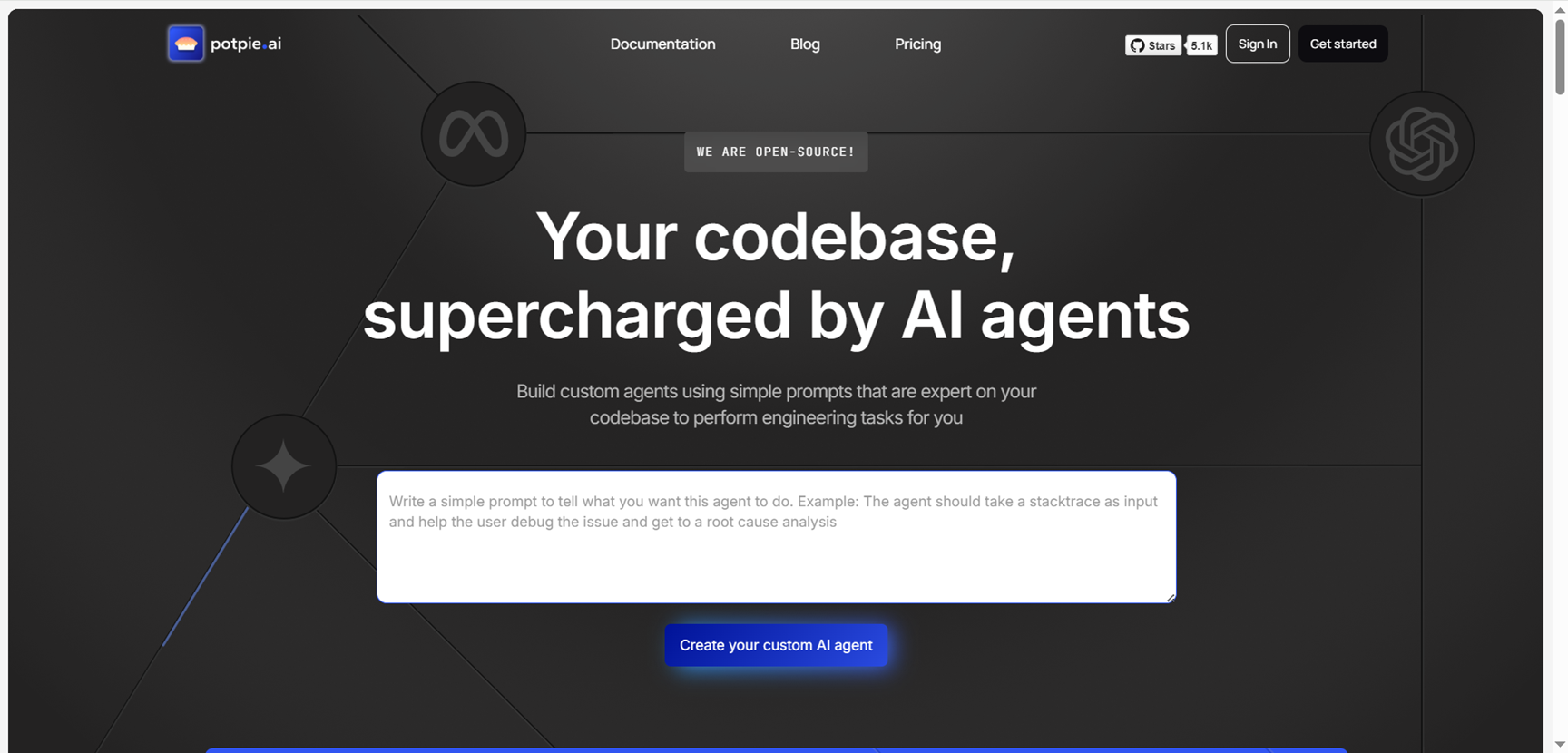
Potpie.ai is an innovative AI agent platform that enables developers to create intelligent agents for their codebase in just minutes, transforming software development through automated understanding and interaction. Designed specifically for codebase analysis, it allows users to deploy AI agents that comprehend entire repositories, perform tasks like code reviews, bug detection, refactoring suggestions, and feature implementation autonomously. The platform emphasizes speed and simplicity, requiring minimal setup to integrate with existing projects on GitHub or local environments. Key capabilities include natural language queries for code exploration, multi-agent collaboration for complex workflows, and seamless integration with popular IDEs like VS Code. By leveraging advanced LLMs fine-tuned for code, Potpie.ai boosts productivity for solo developers and teams alike, making AI-assisted coding accessible without deep expertise.
potpie.ai
Potpie.ai is an innovative AI agent platform that enables developers to create intelligent agents for their codebase in just minutes, transforming software development through automated understanding and interaction. Designed specifically for codebase analysis, it allows users to deploy AI agents that comprehend entire repositories, perform tasks like code reviews, bug detection, refactoring suggestions, and feature implementation autonomously. The platform emphasizes speed and simplicity, requiring minimal setup to integrate with existing projects on GitHub or local environments. Key capabilities include natural language queries for code exploration, multi-agent collaboration for complex workflows, and seamless integration with popular IDEs like VS Code. By leveraging advanced LLMs fine-tuned for code, Potpie.ai boosts productivity for solo developers and teams alike, making AI-assisted coding accessible without deep expertise.
potpie.ai
Potpie.ai is an innovative AI agent platform that enables developers to create intelligent agents for their codebase in just minutes, transforming software development through automated understanding and interaction. Designed specifically for codebase analysis, it allows users to deploy AI agents that comprehend entire repositories, perform tasks like code reviews, bug detection, refactoring suggestions, and feature implementation autonomously. The platform emphasizes speed and simplicity, requiring minimal setup to integrate with existing projects on GitHub or local environments. Key capabilities include natural language queries for code exploration, multi-agent collaboration for complex workflows, and seamless integration with popular IDEs like VS Code. By leveraging advanced LLMs fine-tuned for code, Potpie.ai boosts productivity for solo developers and teams alike, making AI-assisted coding accessible without deep expertise.

Qoder
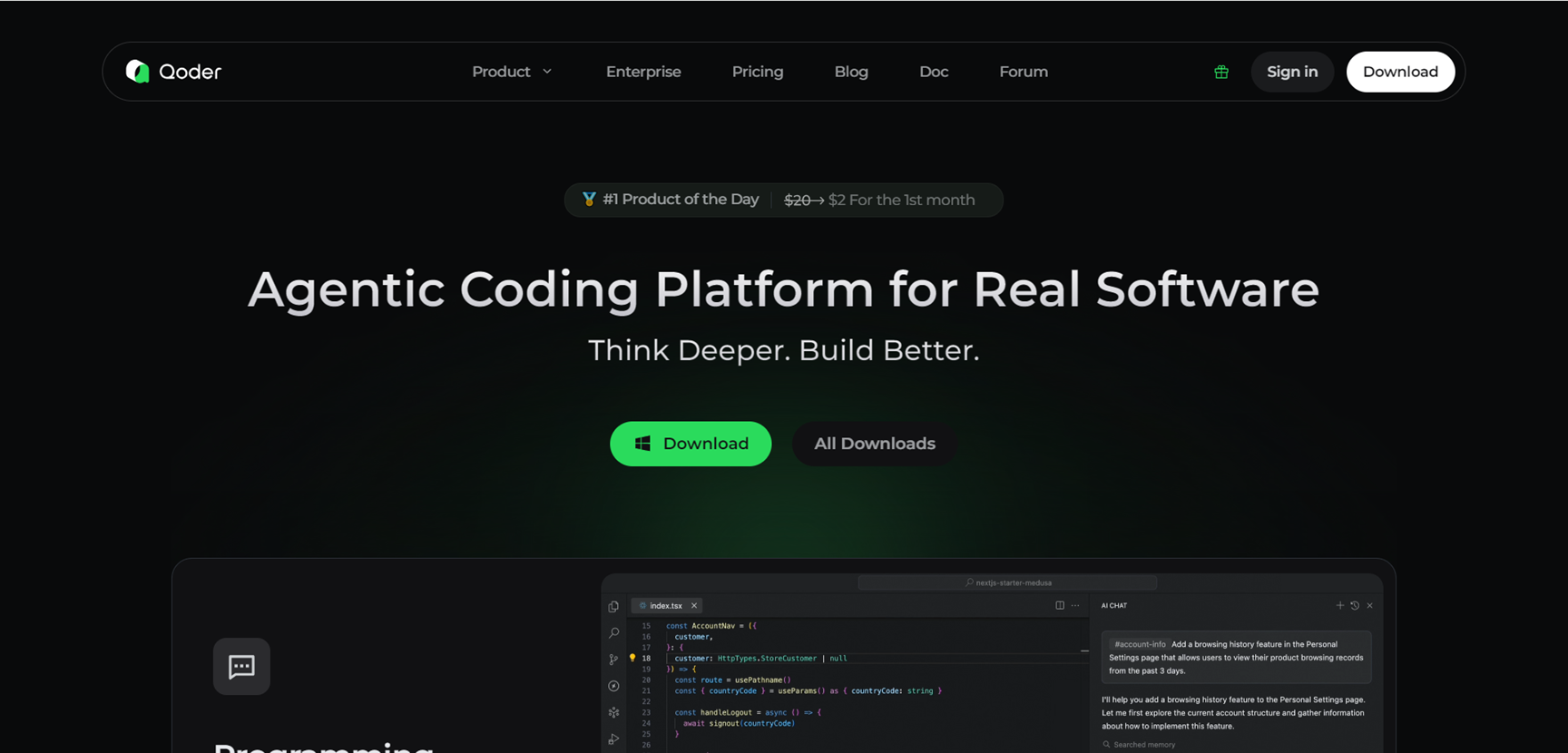
Qoder is an agentic coding platform that powers real software development with AI agents handling complex tasks like code generation, testing, refactoring, and debugging across 200+ languages. It features NES intelligent suggestions, Quest mode for autonomous multi-file work, inline chats, codebase wikis, persistent memory learning, and MCP tool integration for external services. Downloadable for Windows, Mac, and Linux, it combines multi-model AI (Claude, GPT, Gemini) with deep context engineering for precise, iterative coding support.
Qoder
Qoder is an agentic coding platform that powers real software development with AI agents handling complex tasks like code generation, testing, refactoring, and debugging across 200+ languages. It features NES intelligent suggestions, Quest mode for autonomous multi-file work, inline chats, codebase wikis, persistent memory learning, and MCP tool integration for external services. Downloadable for Windows, Mac, and Linux, it combines multi-model AI (Claude, GPT, Gemini) with deep context engineering for precise, iterative coding support.
Qoder
Qoder is an agentic coding platform that powers real software development with AI agents handling complex tasks like code generation, testing, refactoring, and debugging across 200+ languages. It features NES intelligent suggestions, Quest mode for autonomous multi-file work, inline chats, codebase wikis, persistent memory learning, and MCP tool integration for external services. Downloadable for Windows, Mac, and Linux, it combines multi-model AI (Claude, GPT, Gemini) with deep context engineering for precise, iterative coding support.

BlackBox AI
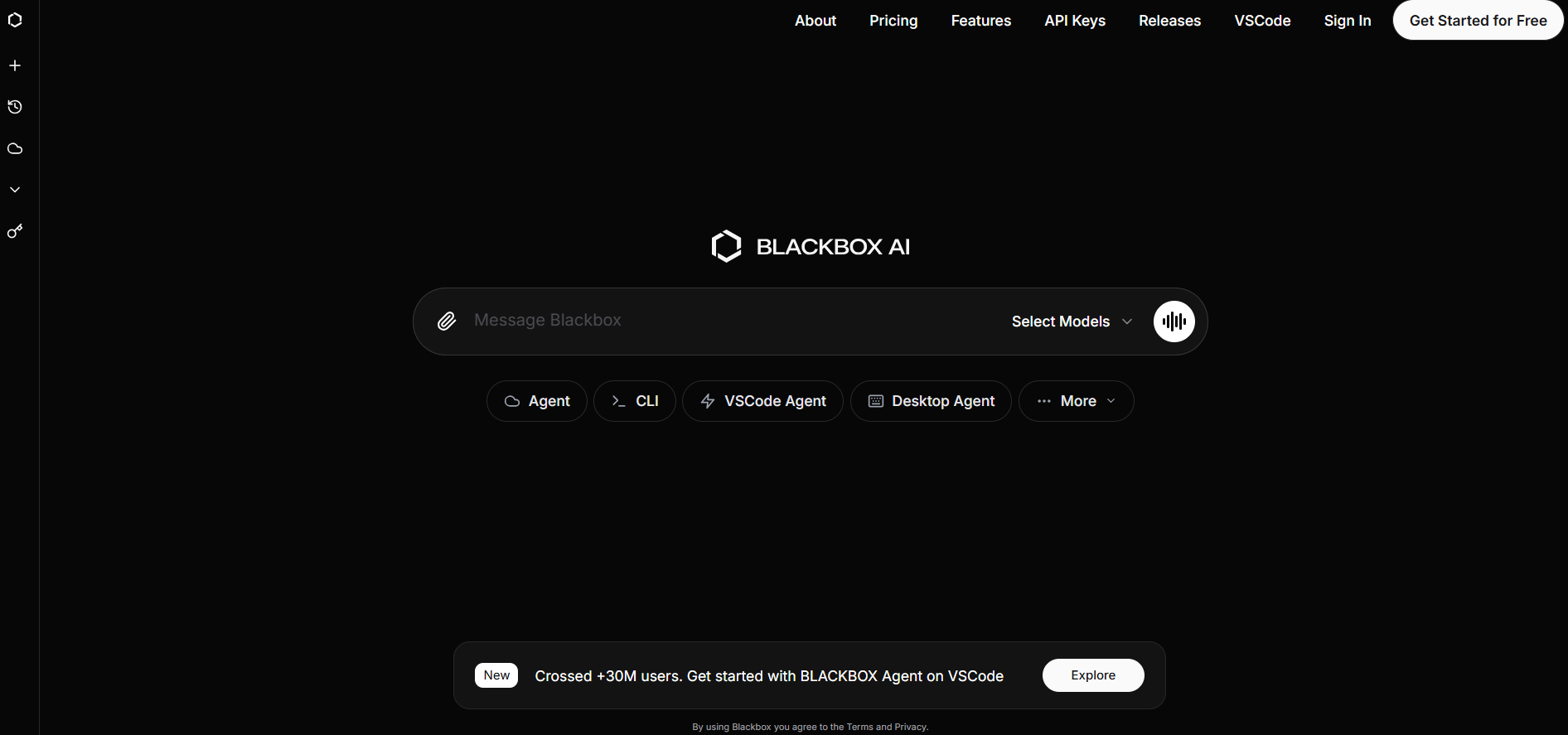
Blackbox.ai is a unified coding assistant platform that merges leading AI coding agents—Claude Code, Codex, Gemini, and Blackbox—into one environment used by over 30 million developers. It provides multi-agent code generation, debugging assistance, code translation, and intelligent search across projects. Instead of switching between tools, developers can query multiple coding agents in a single interface to compare solutions, fix errors, and accelerate development. Blackbox.ai reduces friction in coding tasks by enabling AI collaboration, helping developers build, debug, and ship faster with assistance from several powerful models working together.
BlackBox AI
Blackbox.ai is a unified coding assistant platform that merges leading AI coding agents—Claude Code, Codex, Gemini, and Blackbox—into one environment used by over 30 million developers. It provides multi-agent code generation, debugging assistance, code translation, and intelligent search across projects. Instead of switching between tools, developers can query multiple coding agents in a single interface to compare solutions, fix errors, and accelerate development. Blackbox.ai reduces friction in coding tasks by enabling AI collaboration, helping developers build, debug, and ship faster with assistance from several powerful models working together.
BlackBox AI
Blackbox.ai is a unified coding assistant platform that merges leading AI coding agents—Claude Code, Codex, Gemini, and Blackbox—into one environment used by over 30 million developers. It provides multi-agent code generation, debugging assistance, code translation, and intelligent search across projects. Instead of switching between tools, developers can query multiple coding agents in a single interface to compare solutions, fix errors, and accelerate development. Blackbox.ai reduces friction in coding tasks by enabling AI collaboration, helping developers build, debug, and ship faster with assistance from several powerful models working together.

Google Antigravity
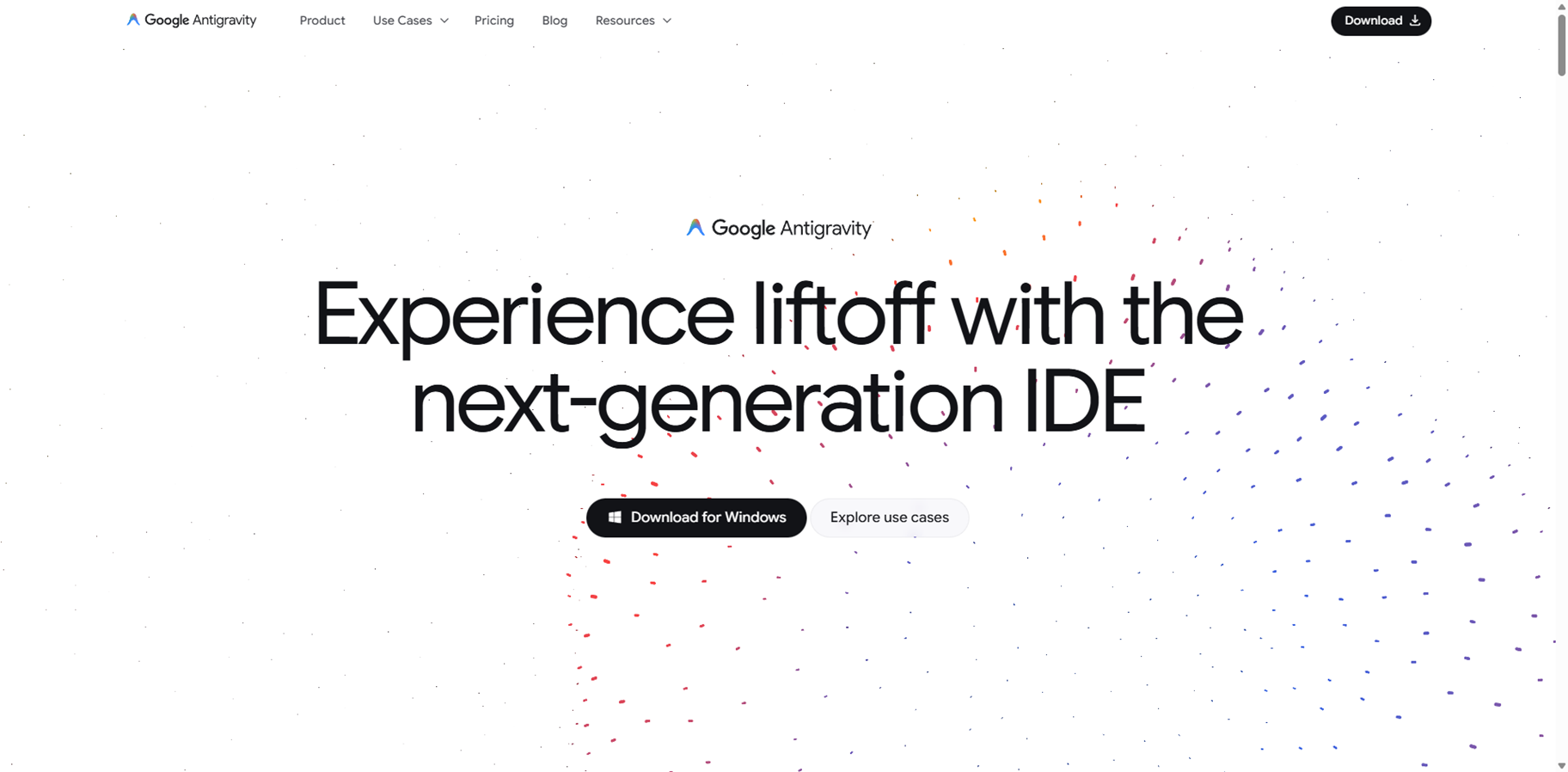
Google Antigravity is an innovative agent-first AI-powered integrated development environment (IDE) from Google that transforms software development by letting autonomous AI agents handle complex coding tasks. Released in November 2025 alongside Gemini 3, it combines a familiar editor like VS Code with powerful agent management, allowing agents to plan projects, write code across files, run terminal commands, test in a built-in browser via Chrome extension, and generate verifiable artifacts like task lists, implementation plans, screenshots, and recordings. Developers can orchestrate multiple agents in parallel for higher productivity, switching between models like free Gemini 3 Pro, Claude Sonnet 4.5, or others, all while working locally on Windows, macOS, or Linux for privacy and speed.
Google Antigravity
Google Antigravity is an innovative agent-first AI-powered integrated development environment (IDE) from Google that transforms software development by letting autonomous AI agents handle complex coding tasks. Released in November 2025 alongside Gemini 3, it combines a familiar editor like VS Code with powerful agent management, allowing agents to plan projects, write code across files, run terminal commands, test in a built-in browser via Chrome extension, and generate verifiable artifacts like task lists, implementation plans, screenshots, and recordings. Developers can orchestrate multiple agents in parallel for higher productivity, switching between models like free Gemini 3 Pro, Claude Sonnet 4.5, or others, all while working locally on Windows, macOS, or Linux for privacy and speed.
Google Antigravity
Google Antigravity is an innovative agent-first AI-powered integrated development environment (IDE) from Google that transforms software development by letting autonomous AI agents handle complex coding tasks. Released in November 2025 alongside Gemini 3, it combines a familiar editor like VS Code with powerful agent management, allowing agents to plan projects, write code across files, run terminal commands, test in a built-in browser via Chrome extension, and generate verifiable artifacts like task lists, implementation plans, screenshots, and recordings. Developers can orchestrate multiple agents in parallel for higher productivity, switching between models like free Gemini 3 Pro, Claude Sonnet 4.5, or others, all while working locally on Windows, macOS, or Linux for privacy and speed.
Editorial Note
This page was researched and written by the ATB Editorial Team. Our team researches each AI tool by reviewing its official website, testing features, exploring real use cases, and considering user feedback. Every page is fact-checked and regularly updated to ensure the information stays accurate, neutral, and useful for our readers.
If you have any suggestions or questions, email us at hello@aitoolbook.ai