- Backend & Frontend Engineers: Automate comprehensive test coverage with minimal effort.
- QA Teams: Enhance testing culture with AI-generated, maintainable tests.
- Tech Leads: Enforce quality without excessive hands-on time.
- DevOps Teams: Integrate seamlessly into CI pipelines for consistent coverage.
- Testing-Centric Projects: Great for teams where tests consume half of PR time.
How to Use Tusk.ai?
- Connect to Your Repo: Integrate via GitHub, GitLab, or Bitbucket.
- Enable PR Testing: Tusk will analyze new PRs and generate tests automatically.
- Run & Self-Fix: Tests run in isolated environments and self-correct on failures.
- Review & Merge: Tusk adds comments with test summaries; merge at will.
- Monitor & Iterate: Use analytics dashboard to track coverage trends.
- PR-Driven Test Generation: Creates unit and integration tests on pull request trigger.
- Self-Iterating Agent: Automatically fixes failing tests until they pass.
- Supports Edge Cases: Goes beyond happy path to catch nuanced issues.
- CI/Workflow Integration: Operates inside existing CI without disruptions.
- Team Flow Adaptation: Learns project conventions and label patterns.
- Spend less time writing tests manually.
- Context-rich test generation ensures relevant coverage.
- Self‐healing agent eliminates test maintenance overhead.
- Integrates deeply with CI and PR processes.
- May require tuning to match team styles or frameworks.
- Focused on unit/integration tests—does not cover end-to-end UI flows.
Free
$ 0.00
Basic AI-generated pull requests for UI tickets
Limited usage (details on usage caps not specified)
No credit card required
Immediate setup
Basic
$ 94.50
All Free features, plus increased usage limits
AI-generated pull requests and automation for more repositories/projects
Priority support
Team
$ 445.50
All Basic features, plus higher usage and advanced integrations
Designed for larger teams and organizations
Enhanced support and onboarding
Proud of the love you're getting? Show off your AI Toolbook reviews—then invite more fans to share the love and build your credibility.
Add an AI Toolbook badge to your site—an easy way to drive followers, showcase updates, and collect reviews. It's like a mini 24/7 billboard for your AI.
Reviews
Rating Distribution
Average score
Popular Mention
FAQs
Similar AI Tools


Coding Fleet
CodingFleet is an AI-powered coding assistant platform designed to help developers write, understand, convert, and improve code across 90+ programming languages and frameworks. With tools like Code Generator, Code Assistant, Code Converter, and Unit Test Generator, CodingFleet streamlines the coding process, enabling developers to focus on solving problems rather than writing boilerplate code.
Coding Fleet
CodingFleet is an AI-powered coding assistant platform designed to help developers write, understand, convert, and improve code across 90+ programming languages and frameworks. With tools like Code Generator, Code Assistant, Code Converter, and Unit Test Generator, CodingFleet streamlines the coding process, enabling developers to focus on solving problems rather than writing boilerplate code.
Coding Fleet
CodingFleet is an AI-powered coding assistant platform designed to help developers write, understand, convert, and improve code across 90+ programming languages and frameworks. With tools like Code Generator, Code Assistant, Code Converter, and Unit Test Generator, CodingFleet streamlines the coding process, enabling developers to focus on solving problems rather than writing boilerplate code.

Windsurf
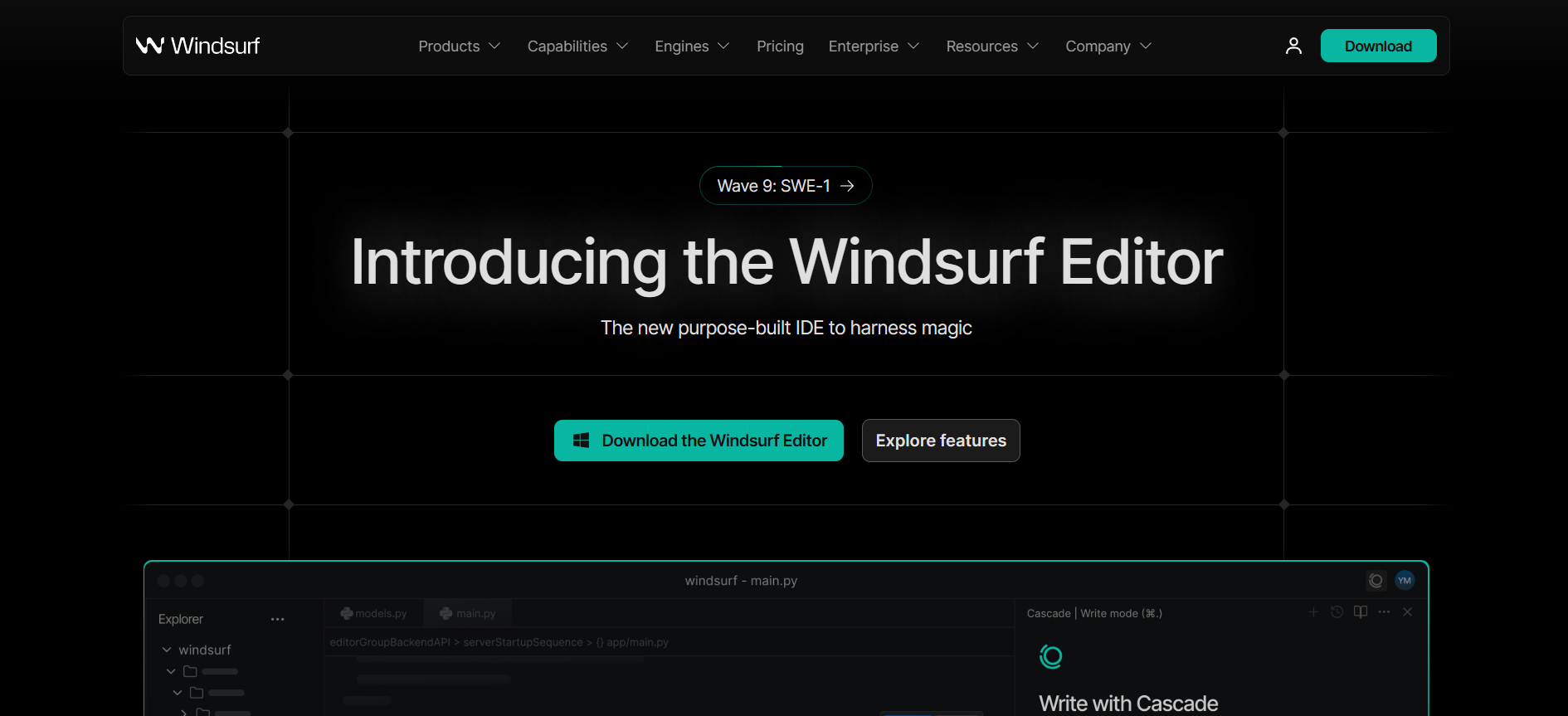
Windsurf.ai is a powerful AI-driven code assistant designed to help developers write, navigate, and understand code faster and more efficiently. By integrating advanced AI with your codebase, Windsurf provides intelligent code search, in-context code explanations, and AI-powered code completion to boost developer productivity and accelerate software development workflows.
Windsurf
Windsurf.ai is a powerful AI-driven code assistant designed to help developers write, navigate, and understand code faster and more efficiently. By integrating advanced AI with your codebase, Windsurf provides intelligent code search, in-context code explanations, and AI-powered code completion to boost developer productivity and accelerate software development workflows.
Windsurf
Windsurf.ai is a powerful AI-driven code assistant designed to help developers write, navigate, and understand code faster and more efficiently. By integrating advanced AI with your codebase, Windsurf provides intelligent code search, in-context code explanations, and AI-powered code completion to boost developer productivity and accelerate software development workflows.

Aider
Aider.ai is an open-source AI-powered coding assistant that allows developers to collaborate with large language models like GPT-4 directly from the command line. It integrates seamlessly with Git, enabling conversational programming, code editing, and refactoring within your existing development workflow. With Aider, you can modify multiple files at once, get code explanations, and maintain clean version history—all from your terminal.
Aider
Aider.ai is an open-source AI-powered coding assistant that allows developers to collaborate with large language models like GPT-4 directly from the command line. It integrates seamlessly with Git, enabling conversational programming, code editing, and refactoring within your existing development workflow. With Aider, you can modify multiple files at once, get code explanations, and maintain clean version history—all from your terminal.
Aider
Aider.ai is an open-source AI-powered coding assistant that allows developers to collaborate with large language models like GPT-4 directly from the command line. It integrates seamlessly with Git, enabling conversational programming, code editing, and refactoring within your existing development workflow. With Aider, you can modify multiple files at once, get code explanations, and maintain clean version history—all from your terminal.

OpenAI Codex
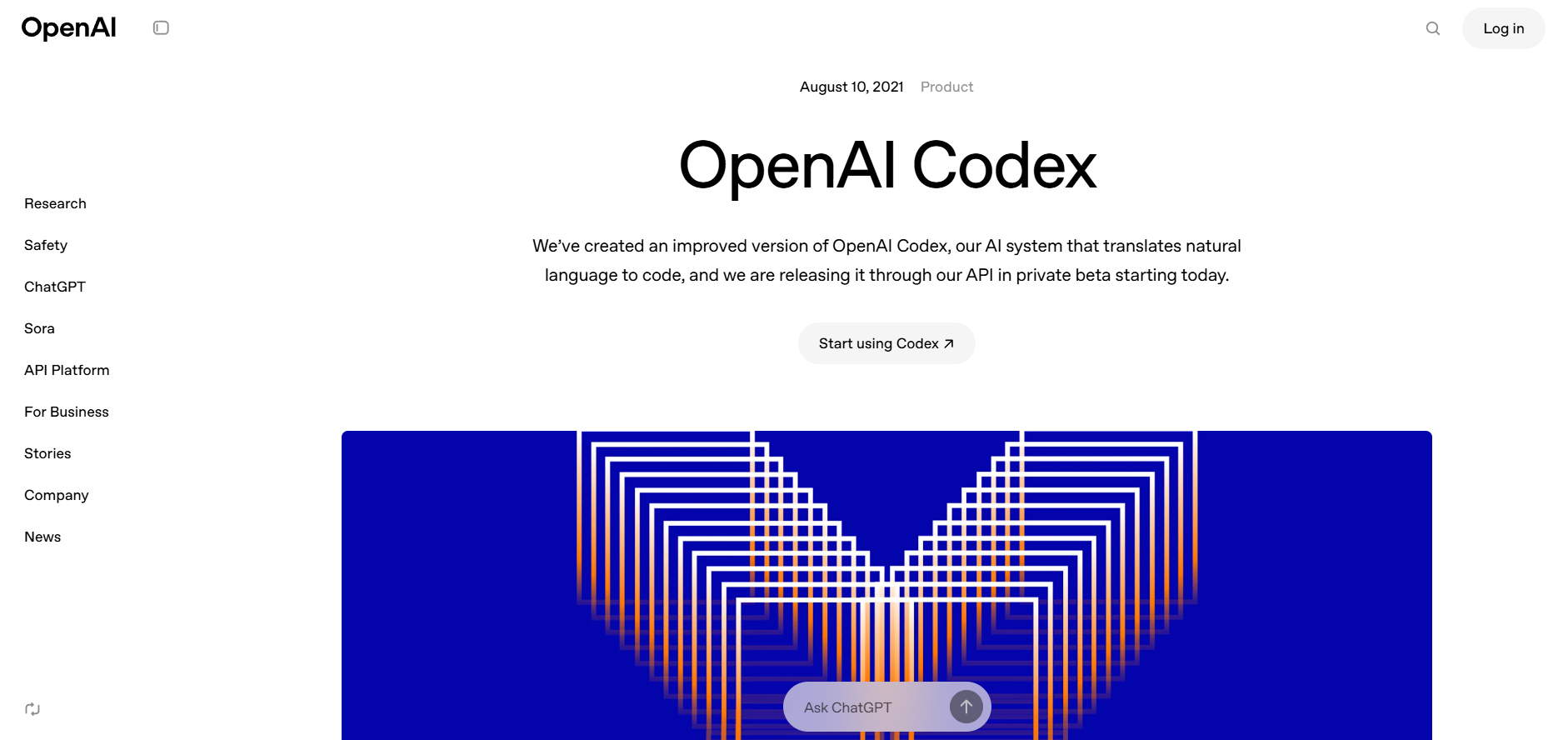
OpenAI Codex is a powerful AI coding engine developed by OpenAI that translates natural language into code. Built on top of GPT-3, Codex understands and generates code in over a dozen programming languages, including JavaScript, Python, and more. It's the underlying model behind GitHub Copilot and is designed to help developers write code faster, learn new APIs, and prototype projects with simple language commands.
OpenAI Codex
OpenAI Codex is a powerful AI coding engine developed by OpenAI that translates natural language into code. Built on top of GPT-3, Codex understands and generates code in over a dozen programming languages, including JavaScript, Python, and more. It's the underlying model behind GitHub Copilot and is designed to help developers write code faster, learn new APIs, and prototype projects with simple language commands.
OpenAI Codex
OpenAI Codex is a powerful AI coding engine developed by OpenAI that translates natural language into code. Built on top of GPT-3, Codex understands and generates code in over a dozen programming languages, including JavaScript, Python, and more. It's the underlying model behind GitHub Copilot and is designed to help developers write code faster, learn new APIs, and prototype projects with simple language commands.
Ask Codi
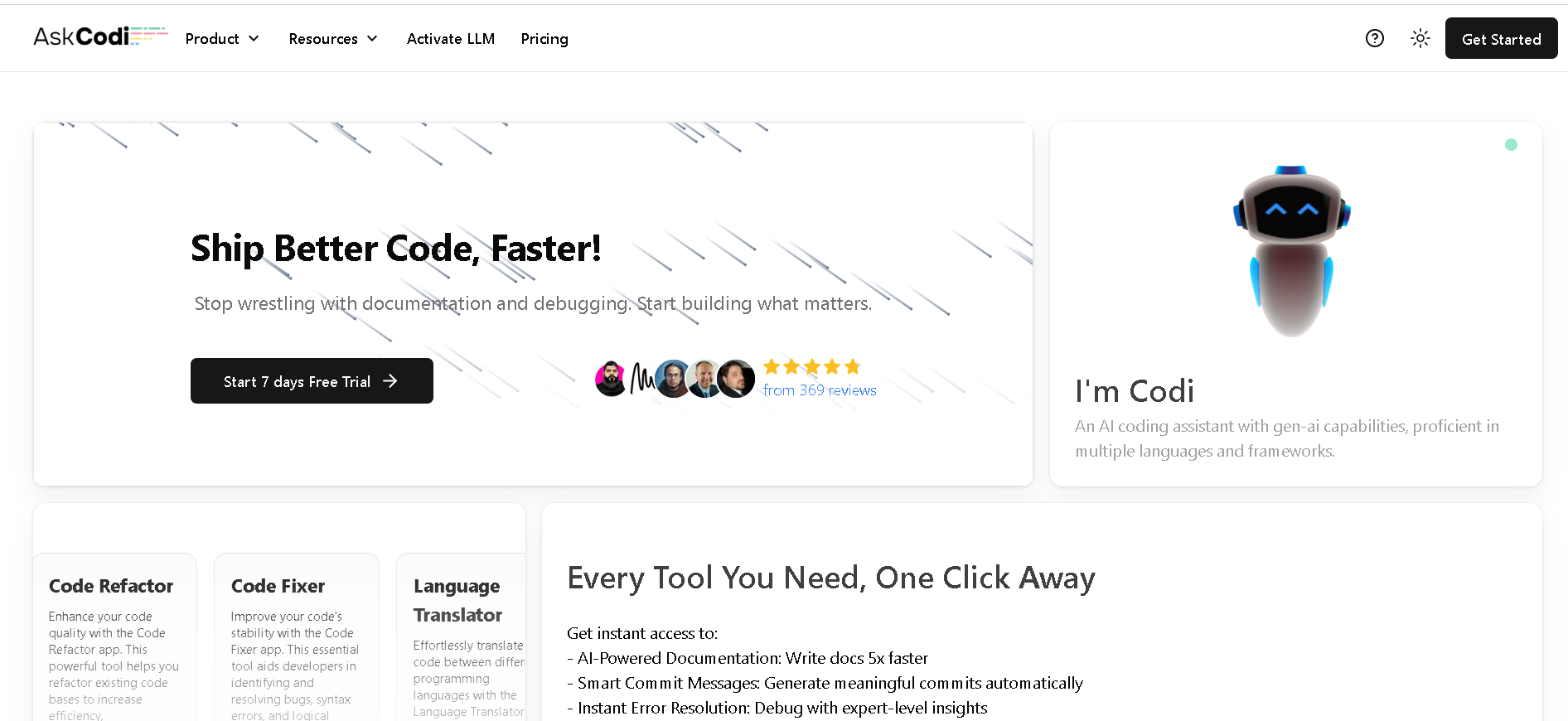
AskCodi.com is an AI-powered coding assistant designed to simplify and accelerate the software development process. It provides developers with a comprehensive suite of AI tools to generate, refactor, fix, explain, and test code across multiple programming languages and frameworks. AskCodi aims to streamline workflows, enhance productivity, and improve code quality from prototyping to deployment.
Ask Codi
AskCodi.com is an AI-powered coding assistant designed to simplify and accelerate the software development process. It provides developers with a comprehensive suite of AI tools to generate, refactor, fix, explain, and test code across multiple programming languages and frameworks. AskCodi aims to streamline workflows, enhance productivity, and improve code quality from prototyping to deployment.
Ask Codi
AskCodi.com is an AI-powered coding assistant designed to simplify and accelerate the software development process. It provides developers with a comprehensive suite of AI tools to generate, refactor, fix, explain, and test code across multiple programming languages and frameworks. AskCodi aims to streamline workflows, enhance productivity, and improve code quality from prototyping to deployment.

CodeStory
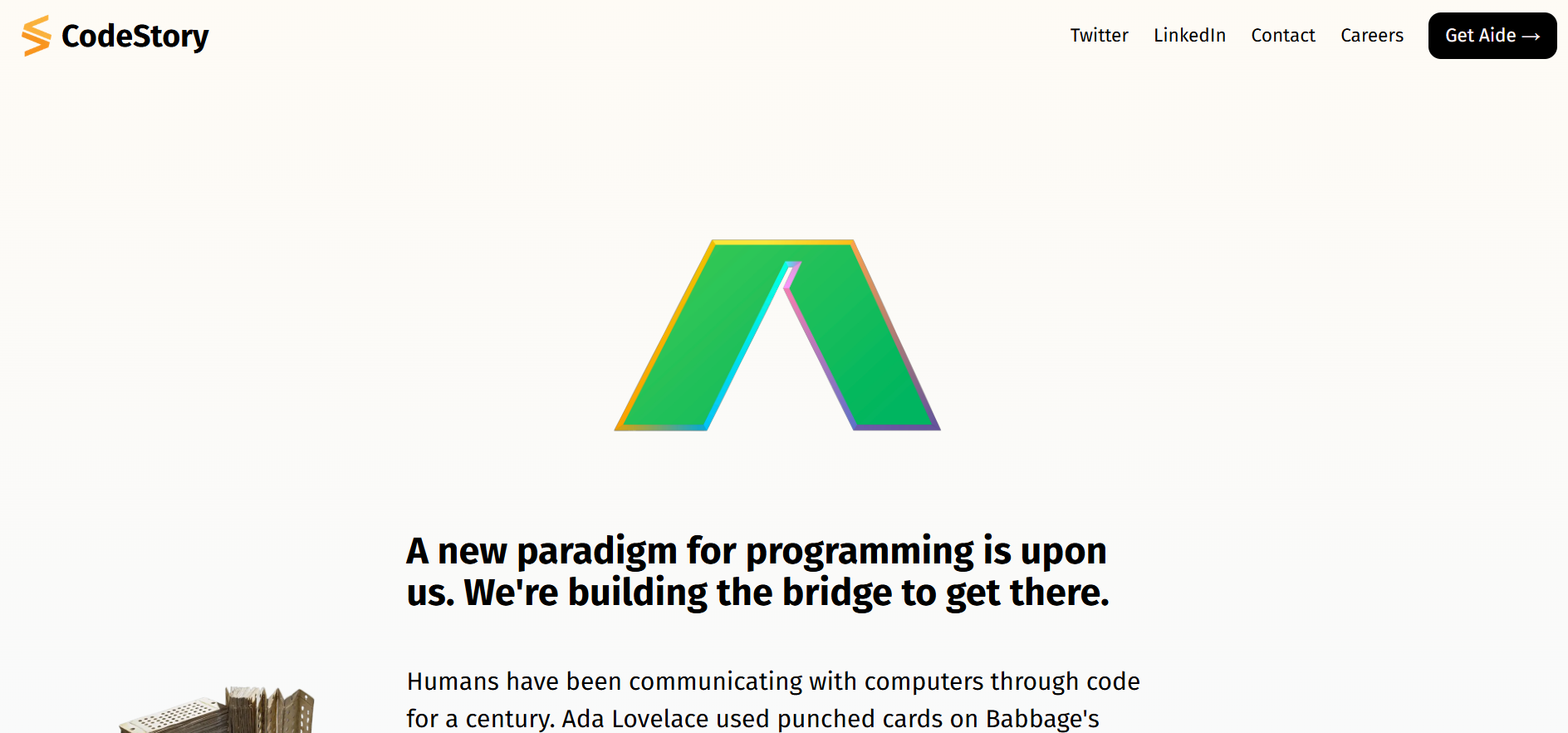
CodeStory is an AI-native, privacy-focused IDE (a fork of VS Code) that lets humans and AI pair-program together. It supports multi-file editing, proactive error fixing, intelligent code completion, and deep context awareness—all running locally with advanced AI agents to streamline complex development tasks.
CodeStory
CodeStory is an AI-native, privacy-focused IDE (a fork of VS Code) that lets humans and AI pair-program together. It supports multi-file editing, proactive error fixing, intelligent code completion, and deep context awareness—all running locally with advanced AI agents to streamline complex development tasks.
CodeStory
CodeStory is an AI-native, privacy-focused IDE (a fork of VS Code) that lets humans and AI pair-program together. It supports multi-file editing, proactive error fixing, intelligent code completion, and deep context awareness—all running locally with advanced AI agents to streamline complex development tasks.

Alumnium Ai
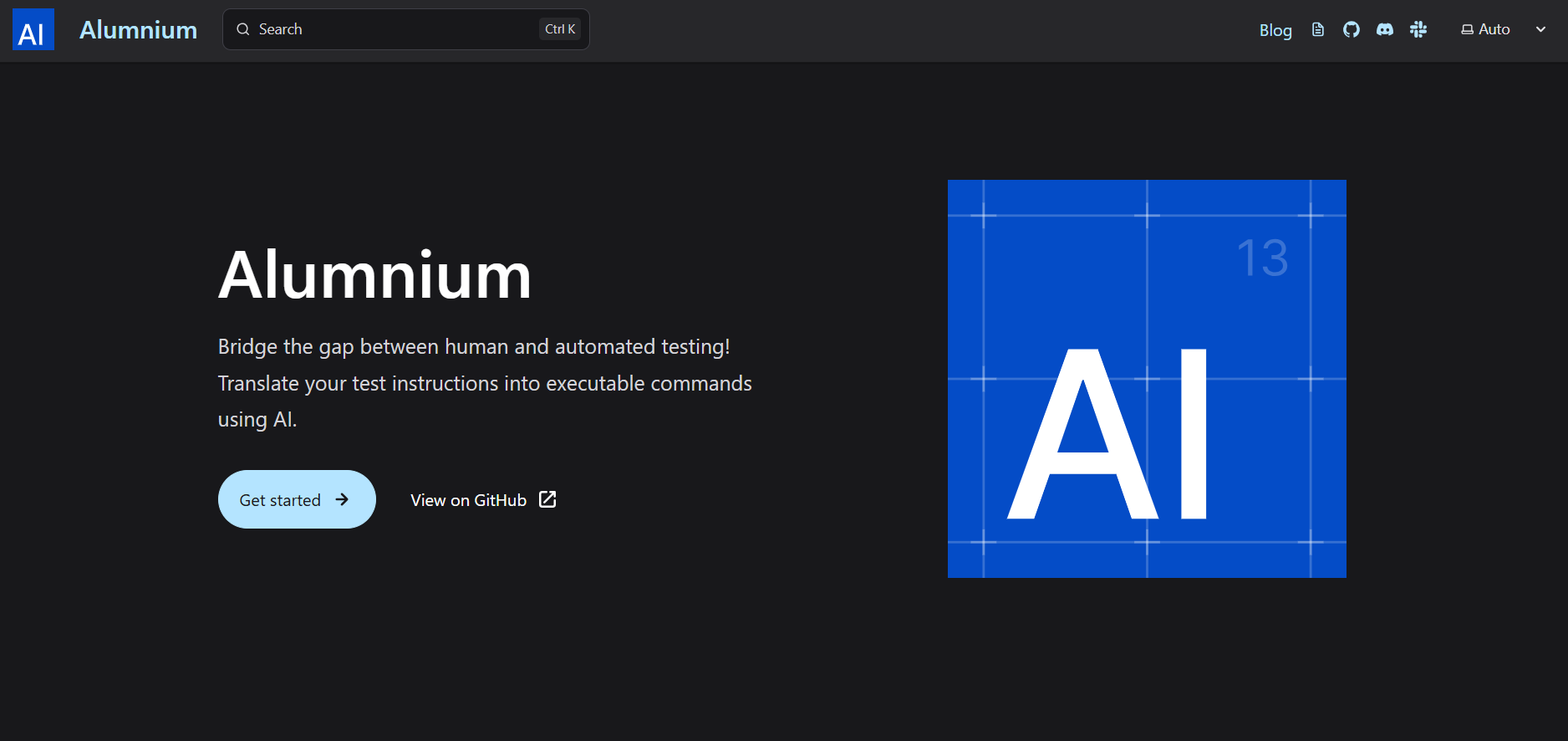
Alumnium is an experimental, open-source AI test automation library designed to streamline the creation and execution of browser-based tests with high-level, human-readable instructions. Built by software and QA engineers, it enhances traditional testing frameworks by allowing code to be written in plain-language commands such as do, check, and get, which are then transformed into executable test actions by the AI. This tool bridges the gap between manual scripting and full event-driven automation, promoting flexibility with major frameworks like Selenium, Playwright, and Appium, and supporting Python today—with JavaScript and Ruby coming soon.
Alumnium Ai
Alumnium is an experimental, open-source AI test automation library designed to streamline the creation and execution of browser-based tests with high-level, human-readable instructions. Built by software and QA engineers, it enhances traditional testing frameworks by allowing code to be written in plain-language commands such as do, check, and get, which are then transformed into executable test actions by the AI. This tool bridges the gap between manual scripting and full event-driven automation, promoting flexibility with major frameworks like Selenium, Playwright, and Appium, and supporting Python today—with JavaScript and Ruby coming soon.
Alumnium Ai
Alumnium is an experimental, open-source AI test automation library designed to streamline the creation and execution of browser-based tests with high-level, human-readable instructions. Built by software and QA engineers, it enhances traditional testing frameworks by allowing code to be written in plain-language commands such as do, check, and get, which are then transformed into executable test actions by the AI. This tool bridges the gap between manual scripting and full event-driven automation, promoting flexibility with major frameworks like Selenium, Playwright, and Appium, and supporting Python today—with JavaScript and Ruby coming soon.
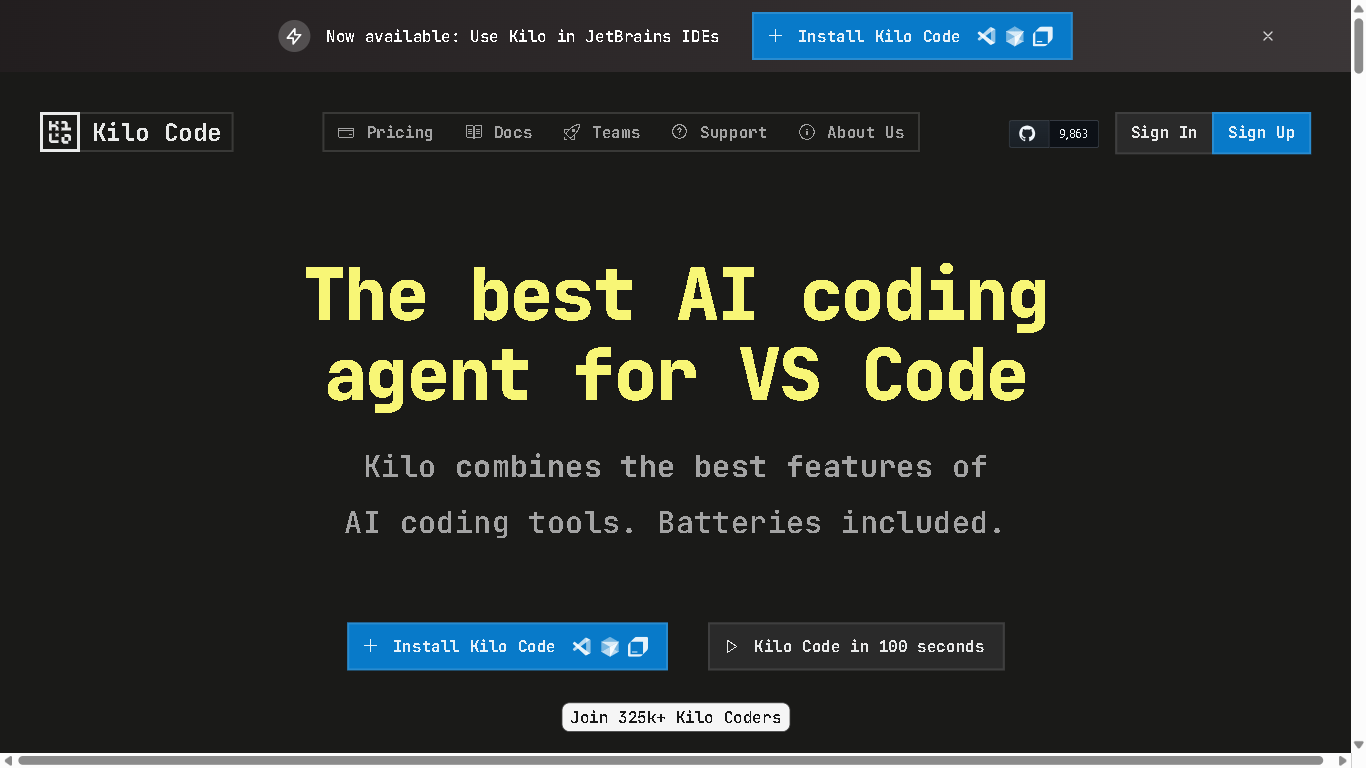

Kilo Code
Kilo Code is an AI-powered coding assistant designed to enhance software development within IDEs like Visual Studio Code and JetBrains. It integrates features from existing AI coding tools while providing unique functionalities such as the Model Context Protocol (MCP) Server Marketplace and intelligent system notifications. Kilo Code streamlines development by automating repetitive tasks, generating code from natural language prompts, and providing intelligent suggestions to developers.
Kilo Code
Kilo Code is an AI-powered coding assistant designed to enhance software development within IDEs like Visual Studio Code and JetBrains. It integrates features from existing AI coding tools while providing unique functionalities such as the Model Context Protocol (MCP) Server Marketplace and intelligent system notifications. Kilo Code streamlines development by automating repetitive tasks, generating code from natural language prompts, and providing intelligent suggestions to developers.
Kilo Code
Kilo Code is an AI-powered coding assistant designed to enhance software development within IDEs like Visual Studio Code and JetBrains. It integrates features from existing AI coding tools while providing unique functionalities such as the Model Context Protocol (MCP) Server Marketplace and intelligent system notifications. Kilo Code streamlines development by automating repetitive tasks, generating code from natural language prompts, and providing intelligent suggestions to developers.
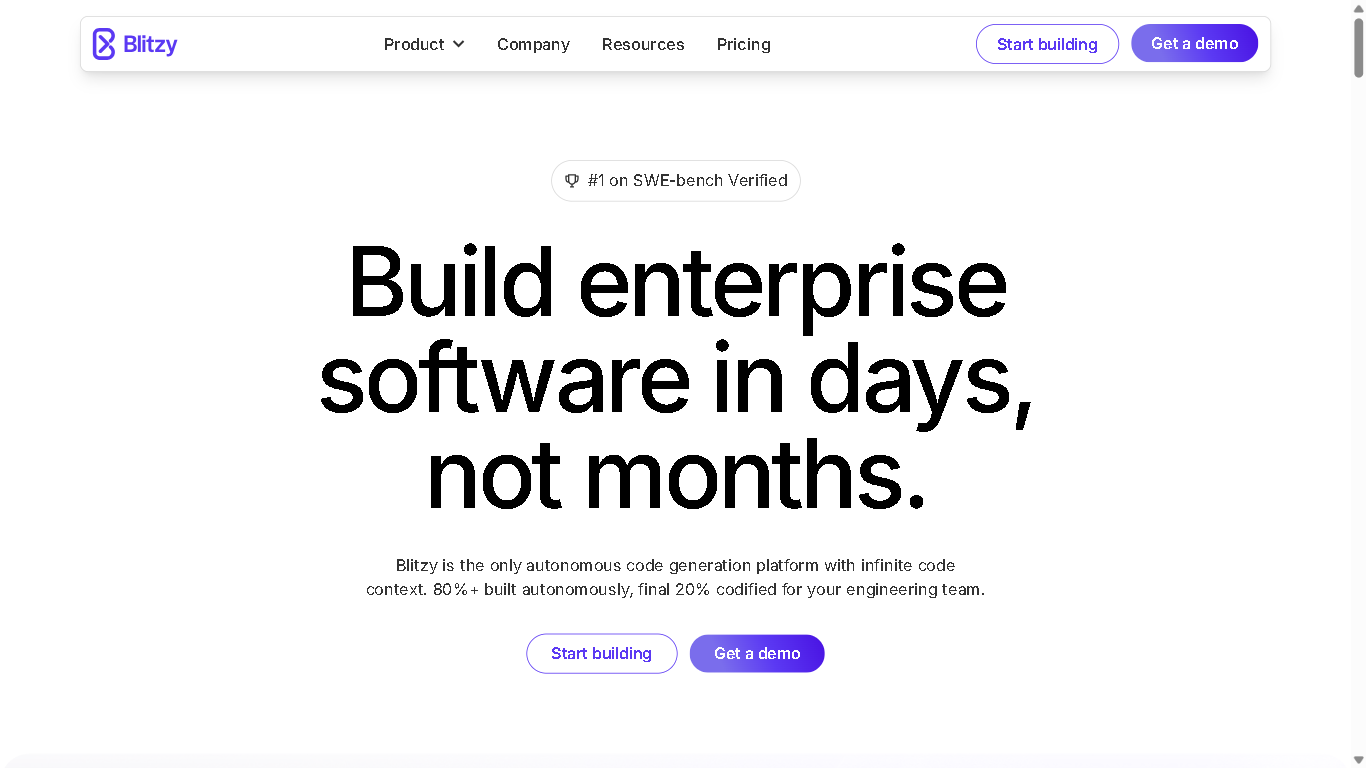
Blitzy
Blitzy is an AI-powered autonomous software development platform designed to accelerate enterprise-grade software creation. It automates over 80% of the development process, enabling teams to transform six-month projects into six-day turnarounds. Blitzy utilizes a multi-agent System 2 AI architecture to reason deeply across entire codebases, providing high-quality, production-ready code validated at both compile and runtime.
Blitzy
Blitzy is an AI-powered autonomous software development platform designed to accelerate enterprise-grade software creation. It automates over 80% of the development process, enabling teams to transform six-month projects into six-day turnarounds. Blitzy utilizes a multi-agent System 2 AI architecture to reason deeply across entire codebases, providing high-quality, production-ready code validated at both compile and runtime.
Blitzy
Blitzy is an AI-powered autonomous software development platform designed to accelerate enterprise-grade software creation. It automates over 80% of the development process, enabling teams to transform six-month projects into six-day turnarounds. Blitzy utilizes a multi-agent System 2 AI architecture to reason deeply across entire codebases, providing high-quality, production-ready code validated at both compile and runtime.
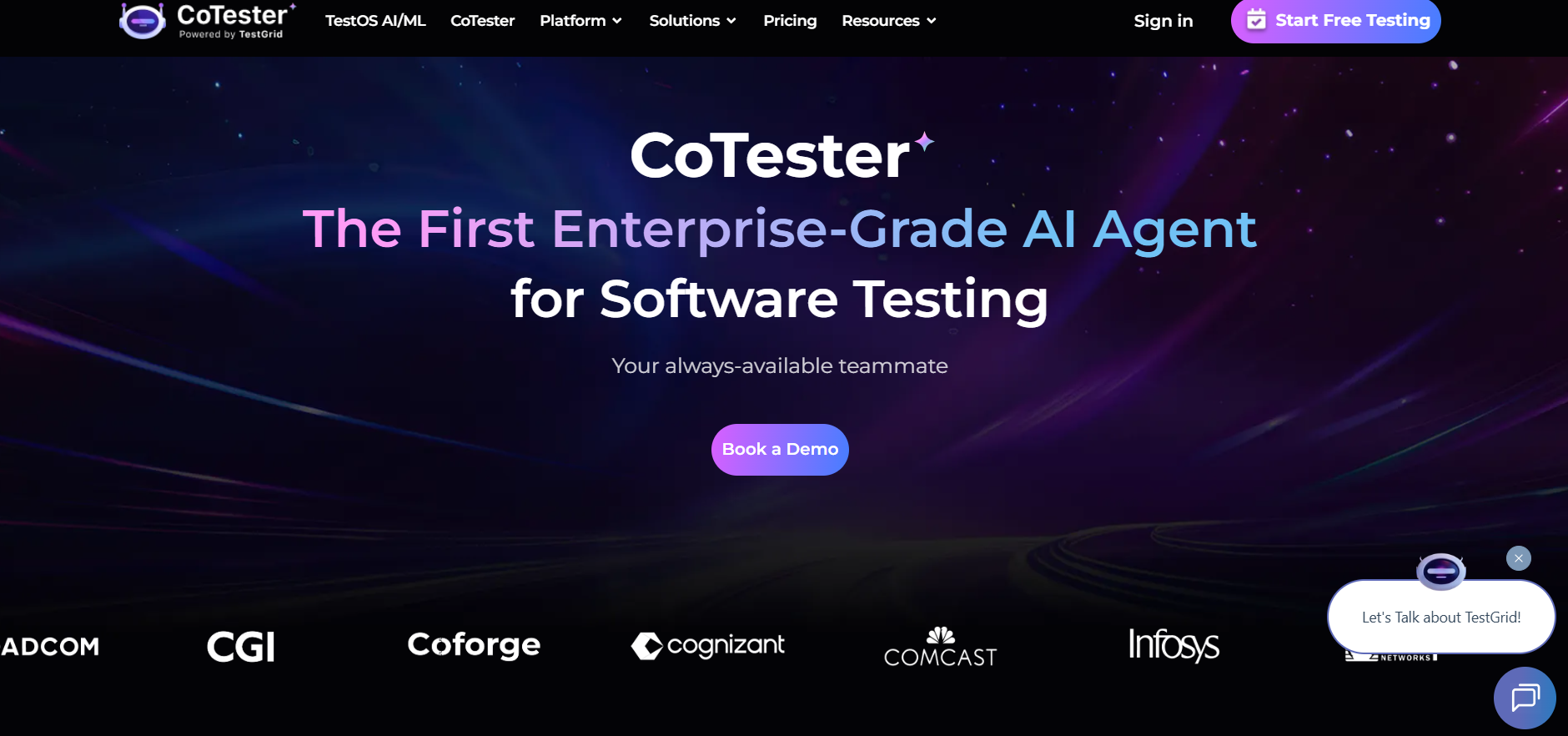
TestGrid CoTester is an AI-driven software testing assistant embedded within the TestGrid platform, built to automate test generation, execution, bug detection, and workflow management. Pretrained on core software testing principles and frameworks, CoTester integrates with your stack to draft manual and automated test cases, run them across real browsers and devices, detect performance and functional issues, and even assign bugs and tasks to team members. Over time, it learns from your inputs to better align with your project’s architecture, tech stack, and team conventions.
TestGrid CoTester is an AI-driven software testing assistant embedded within the TestGrid platform, built to automate test generation, execution, bug detection, and workflow management. Pretrained on core software testing principles and frameworks, CoTester integrates with your stack to draft manual and automated test cases, run them across real browsers and devices, detect performance and functional issues, and even assign bugs and tasks to team members. Over time, it learns from your inputs to better align with your project’s architecture, tech stack, and team conventions.
TestGrid CoTester is an AI-driven software testing assistant embedded within the TestGrid platform, built to automate test generation, execution, bug detection, and workflow management. Pretrained on core software testing principles and frameworks, CoTester integrates with your stack to draft manual and automated test cases, run them across real browsers and devices, detect performance and functional issues, and even assign bugs and tasks to team members. Over time, it learns from your inputs to better align with your project’s architecture, tech stack, and team conventions.
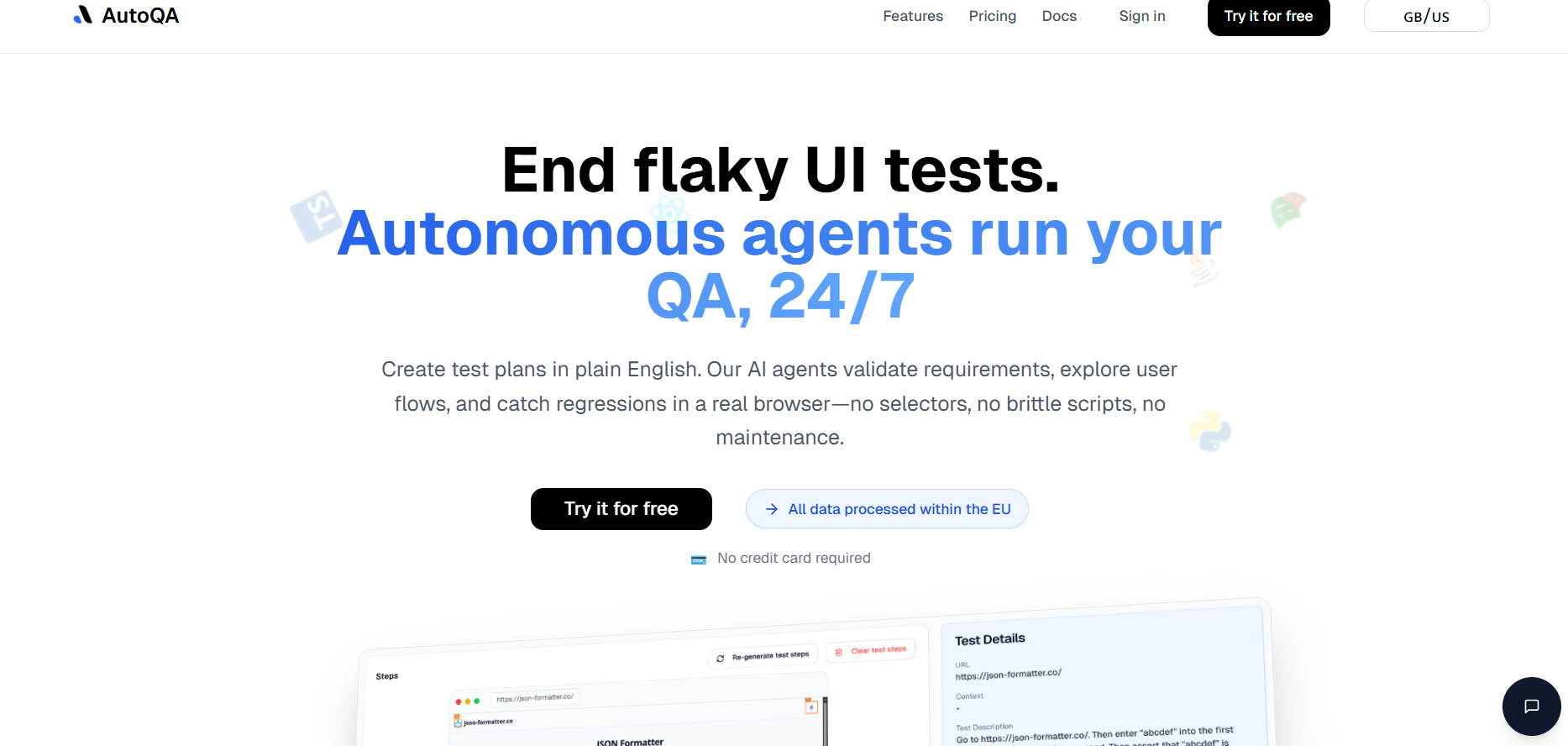

Auto QA
AutoQA is an AI-powered automated testing platform designed to help software teams build reliable applications faster. It enables teams to create, run and manage test plans with intelligent automation, reducing manual effort and improving test coverage. The solution supports automated test execution, reporting and integration into CI/CD pipelines—making it especially useful for agile teams seeking higher quality and faster releases
Auto QA
AutoQA is an AI-powered automated testing platform designed to help software teams build reliable applications faster. It enables teams to create, run and manage test plans with intelligent automation, reducing manual effort and improving test coverage. The solution supports automated test execution, reporting and integration into CI/CD pipelines—making it especially useful for agile teams seeking higher quality and faster releases
Auto QA
AutoQA is an AI-powered automated testing platform designed to help software teams build reliable applications faster. It enables teams to create, run and manage test plans with intelligent automation, reducing manual effort and improving test coverage. The solution supports automated test execution, reporting and integration into CI/CD pipelines—making it especially useful for agile teams seeking higher quality and faster releases

Coderabbit AI
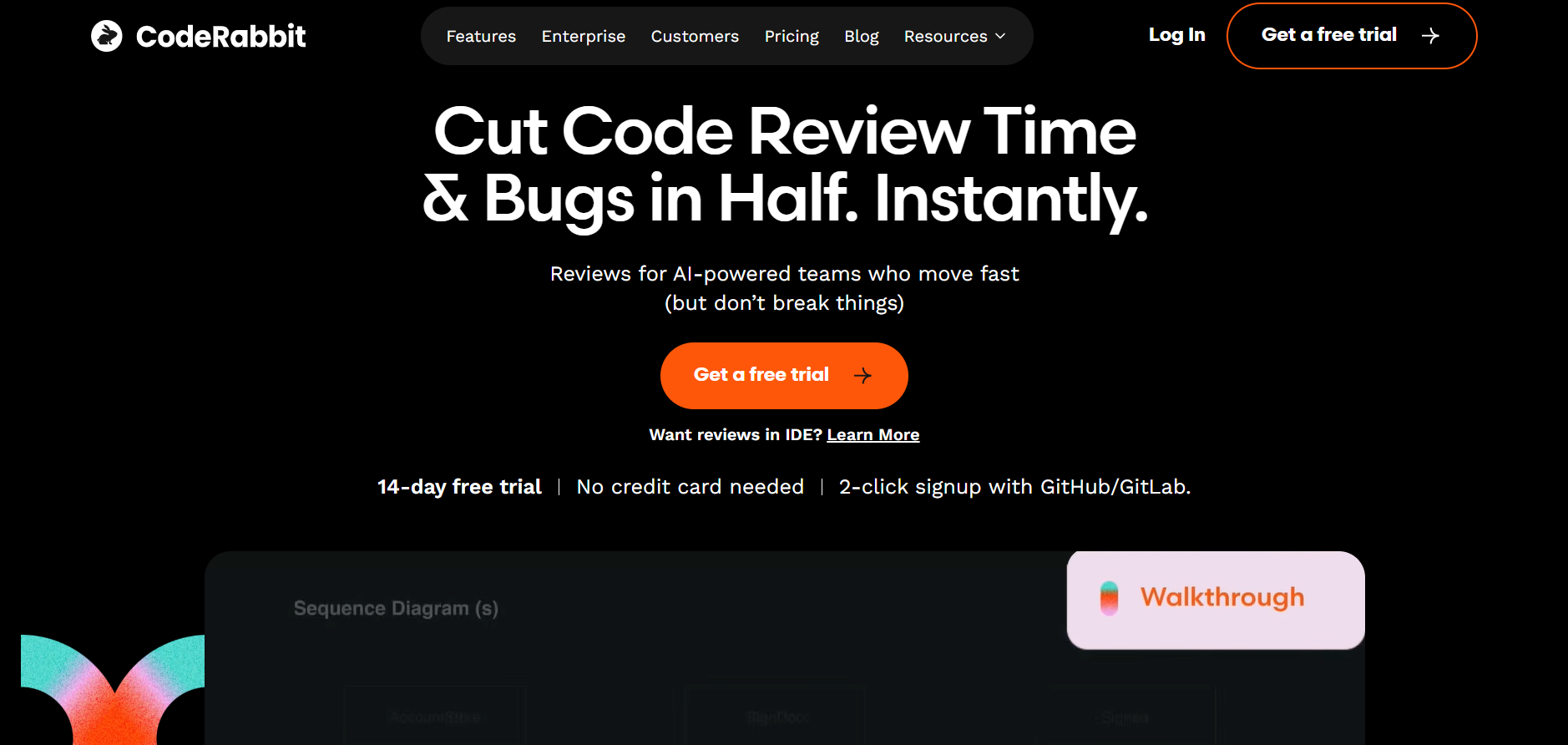
CodeRabbit AI is an intelligent code review assistant designed to automate software review processes, identify bugs, and improve code quality using machine learning. It integrates directly with GitHub and other version control systems to provide real-time analysis, review comments, and improvement suggestions. By mimicking human reviewer logic, CodeRabbit helps development teams maintain code standards while reducing time spent on manual reviews. Its AI models are trained on best coding practices, ensuring that every commit is efficient, secure, and optimized for performance.
Coderabbit AI
CodeRabbit AI is an intelligent code review assistant designed to automate software review processes, identify bugs, and improve code quality using machine learning. It integrates directly with GitHub and other version control systems to provide real-time analysis, review comments, and improvement suggestions. By mimicking human reviewer logic, CodeRabbit helps development teams maintain code standards while reducing time spent on manual reviews. Its AI models are trained on best coding practices, ensuring that every commit is efficient, secure, and optimized for performance.
Coderabbit AI
CodeRabbit AI is an intelligent code review assistant designed to automate software review processes, identify bugs, and improve code quality using machine learning. It integrates directly with GitHub and other version control systems to provide real-time analysis, review comments, and improvement suggestions. By mimicking human reviewer logic, CodeRabbit helps development teams maintain code standards while reducing time spent on manual reviews. Its AI models are trained on best coding practices, ensuring that every commit is efficient, secure, and optimized for performance.
Editorial Note
This page was researched and written by the ATB Editorial Team. Our team researches each AI tool by reviewing its official website, testing features, exploring real use cases, and considering user feedback. Every page is fact-checked and regularly updated to ensure the information stays accurate, neutral, and useful for our readers.
If you have any suggestions or questions, email us at hello@aitoolbook.ai