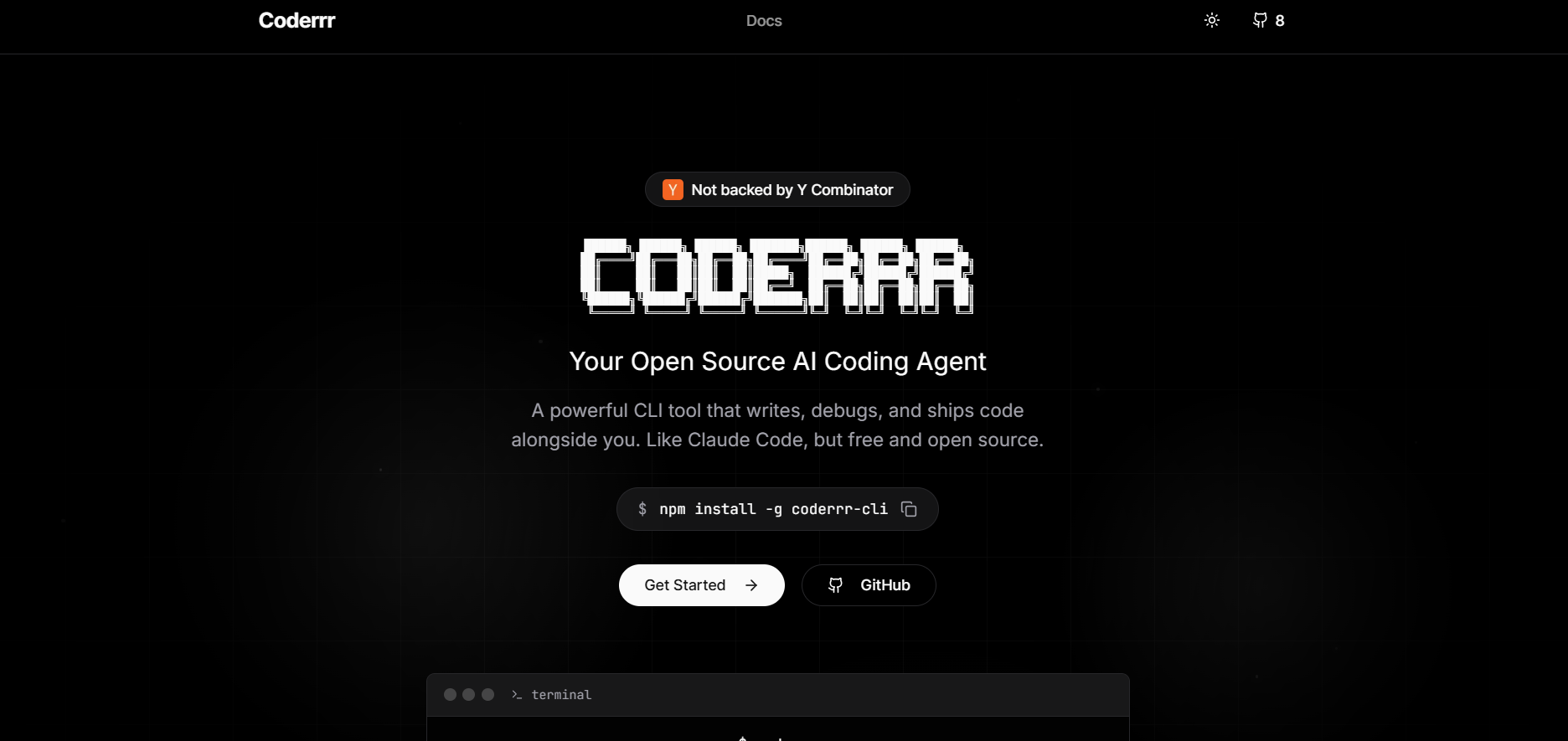
- Developers: Writing and debugging code from the terminal.
- Open-Source Contributors: Customizing and extending the agent.
- CLI Power Users: Integrating AI into command-line workflows.
- Students: Learning coding with AI assistance without paid tools.
How to Use It?
- Install CLI Tool: Set up Coderrr in your local environment.
- Run Commands: Ask the agent to write, debug, or modify code.
- Review Output: Inspect generated code or fixes.
- Ship Changes: Apply results directly to your project.
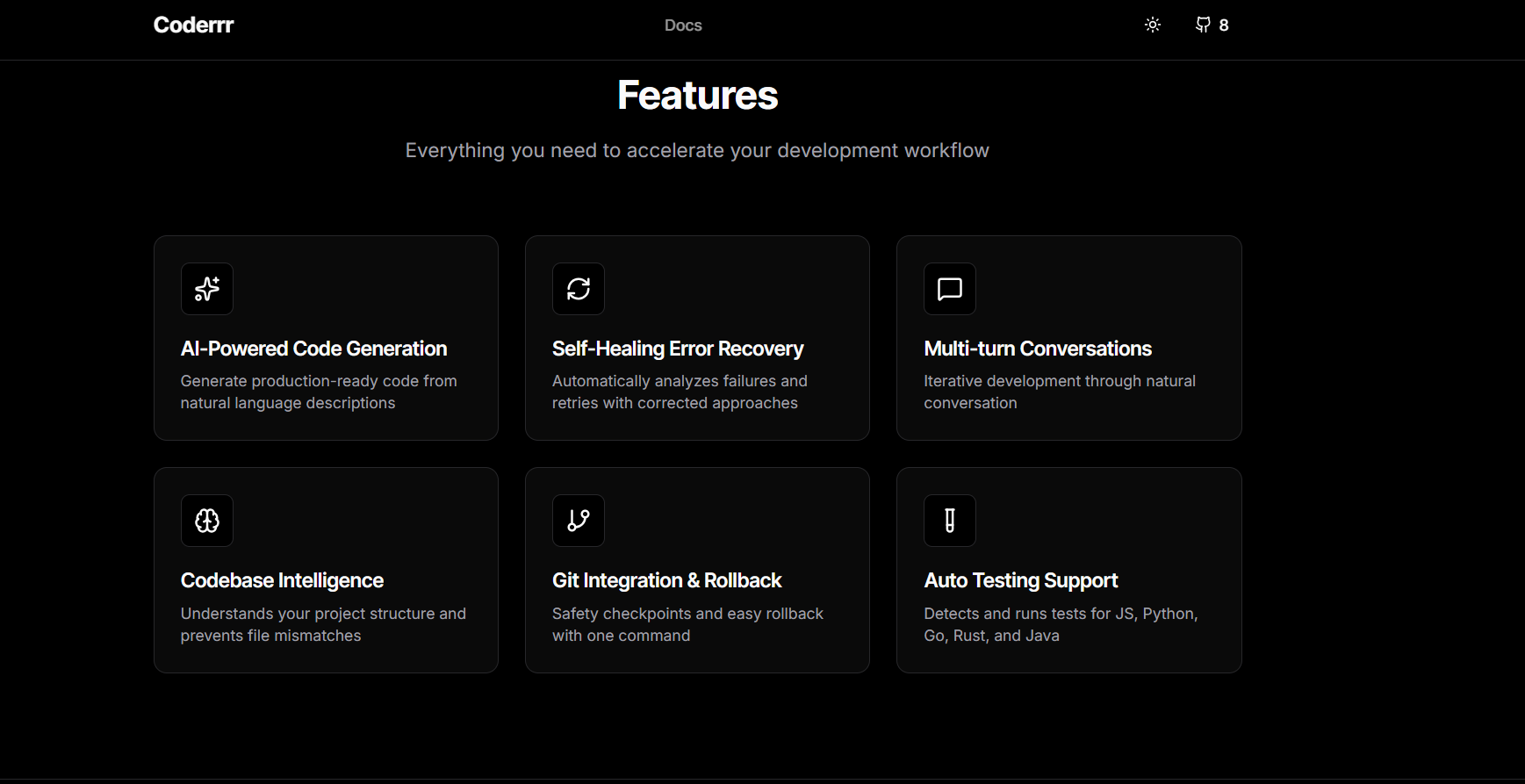
- Open Source: Fully transparent and community-driven.
- CLI-Native: Built specifically for terminal-based workflows.
- Free Alternative: Comparable to paid coding agents without cost.
- Developer Control: No vendor lock-in or closed systems.
- Completely free and open source.
- Fits naturally into CLI-first development workflows.
- Encourages transparency and customization.
- Requires technical setup and familiarity with CLI tools.
- Output quality depends on configuration and prompts.
- Lacks polished UI compared to commercial tools.
Proud of the love you're getting? Show off your AI Toolbook reviews—then invite more fans to share the love and build your credibility.
Add an AI Toolbook badge to your site—an easy way to drive followers, showcase updates, and collect reviews. It's like a mini 24/7 billboard for your AI.
Reviews
Rating Distribution
Average score
Popular Mention
FAQs
Similar AI Tools

Korbit
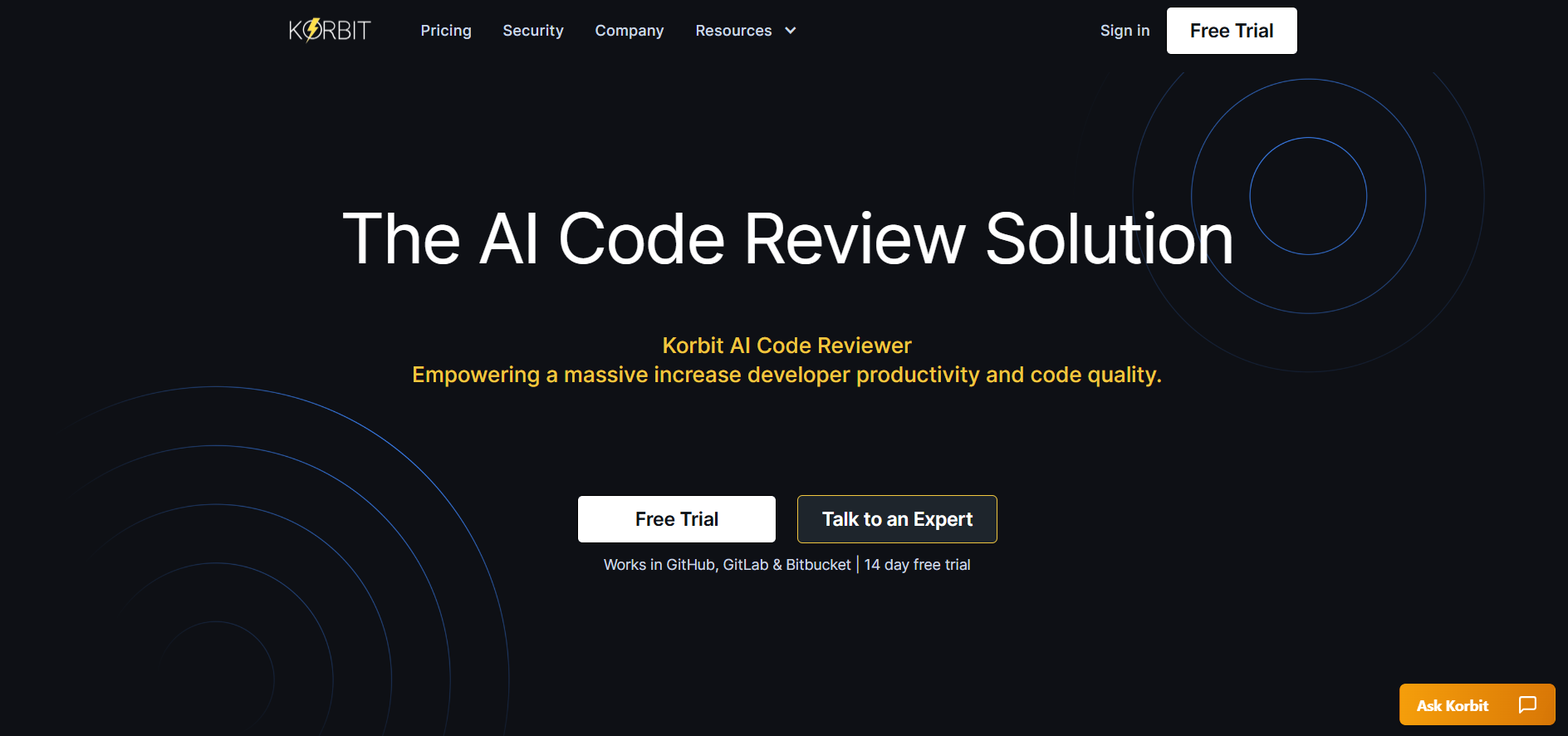
Korbit AI is an AI code-review assistant built to help development teams ship better code faster, by integrating deeply into pull request workflows on platforms like GitHub, GitLab, and Bitbucket. It automatically analyzes every PR to find bugs, security issues, style/policy violations, or maintainability risks, provides real-time feedback, and even suggests how to fix problems. It creates summary commentary, incident investigations, and analytics dashboards that help managers and teams understand the health of their codebase. With zero setup, Korbit works immediately after installation, responds to comments, generates PR descriptions, enforces custom rules and standards, and supports continuous improvement in development processes. Its goal is to reduce review bottlenecks, catch bugs early, maintain consistency, and allow developers to focus more on features instead of firefighting or reviewing trivial style issues.
Korbit
Korbit AI is an AI code-review assistant built to help development teams ship better code faster, by integrating deeply into pull request workflows on platforms like GitHub, GitLab, and Bitbucket. It automatically analyzes every PR to find bugs, security issues, style/policy violations, or maintainability risks, provides real-time feedback, and even suggests how to fix problems. It creates summary commentary, incident investigations, and analytics dashboards that help managers and teams understand the health of their codebase. With zero setup, Korbit works immediately after installation, responds to comments, generates PR descriptions, enforces custom rules and standards, and supports continuous improvement in development processes. Its goal is to reduce review bottlenecks, catch bugs early, maintain consistency, and allow developers to focus more on features instead of firefighting or reviewing trivial style issues.
Korbit
Korbit AI is an AI code-review assistant built to help development teams ship better code faster, by integrating deeply into pull request workflows on platforms like GitHub, GitLab, and Bitbucket. It automatically analyzes every PR to find bugs, security issues, style/policy violations, or maintainability risks, provides real-time feedback, and even suggests how to fix problems. It creates summary commentary, incident investigations, and analytics dashboards that help managers and teams understand the health of their codebase. With zero setup, Korbit works immediately after installation, responds to comments, generates PR descriptions, enforces custom rules and standards, and supports continuous improvement in development processes. Its goal is to reduce review bottlenecks, catch bugs early, maintain consistency, and allow developers to focus more on features instead of firefighting or reviewing trivial style issues.


Kiro AI
Kiro.dev is a powerful AI-powered code generation tool designed to accelerate the software development process. It leverages advanced machine learning models to help developers write code faster, more efficiently, and with fewer errors. Kiro.dev offers various features, including code completion, code generation from natural language prompts, and code explanation, making it a valuable asset for developers of all skill levels.
Kiro AI
Kiro.dev is a powerful AI-powered code generation tool designed to accelerate the software development process. It leverages advanced machine learning models to help developers write code faster, more efficiently, and with fewer errors. Kiro.dev offers various features, including code completion, code generation from natural language prompts, and code explanation, making it a valuable asset for developers of all skill levels.
Kiro AI
Kiro.dev is a powerful AI-powered code generation tool designed to accelerate the software development process. It leverages advanced machine learning models to help developers write code faster, more efficiently, and with fewer errors. Kiro.dev offers various features, including code completion, code generation from natural language prompts, and code explanation, making it a valuable asset for developers of all skill levels.
Blitzy
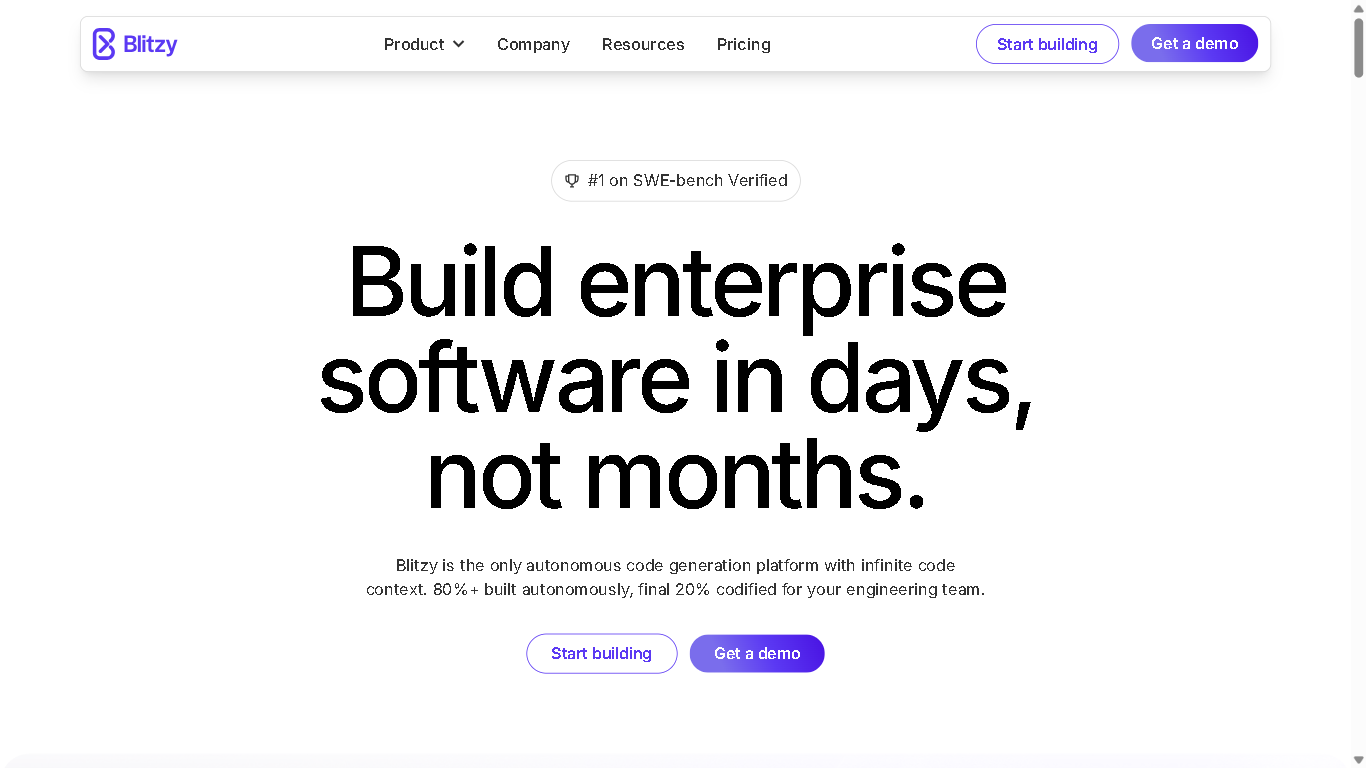
Blitzy is an AI-powered autonomous software development platform designed to accelerate enterprise-grade software creation. It automates over 80% of the development process, enabling teams to transform six-month projects into six-day turnarounds. Blitzy utilizes a multi-agent System 2 AI architecture to reason deeply across entire codebases, providing high-quality, production-ready code validated at both compile and runtime.
Blitzy
Blitzy is an AI-powered autonomous software development platform designed to accelerate enterprise-grade software creation. It automates over 80% of the development process, enabling teams to transform six-month projects into six-day turnarounds. Blitzy utilizes a multi-agent System 2 AI architecture to reason deeply across entire codebases, providing high-quality, production-ready code validated at both compile and runtime.
Blitzy
Blitzy is an AI-powered autonomous software development platform designed to accelerate enterprise-grade software creation. It automates over 80% of the development process, enabling teams to transform six-month projects into six-day turnarounds. Blitzy utilizes a multi-agent System 2 AI architecture to reason deeply across entire codebases, providing high-quality, production-ready code validated at both compile and runtime.

Runcell is an advanced AI agent built specifically for Jupyter notebooks, designed to help developers, data scientists, and learners work faster and more efficiently. It integrates directly into the notebook environment and can generate code, execute cells, debug errors, explain results, and even automate workflows. Instead of switching between coding, running, and fixing, Runcell combines these tasks into one intelligent assistant that understands your notebook context. By reducing repetitive work and assisting with problem-solving, it allows users to focus more on insights, experimentation, and building solutions.
Runcell is an advanced AI agent built specifically for Jupyter notebooks, designed to help developers, data scientists, and learners work faster and more efficiently. It integrates directly into the notebook environment and can generate code, execute cells, debug errors, explain results, and even automate workflows. Instead of switching between coding, running, and fixing, Runcell combines these tasks into one intelligent assistant that understands your notebook context. By reducing repetitive work and assisting with problem-solving, it allows users to focus more on insights, experimentation, and building solutions.
Runcell is an advanced AI agent built specifically for Jupyter notebooks, designed to help developers, data scientists, and learners work faster and more efficiently. It integrates directly into the notebook environment and can generate code, execute cells, debug errors, explain results, and even automate workflows. Instead of switching between coding, running, and fixing, Runcell combines these tasks into one intelligent assistant that understands your notebook context. By reducing repetitive work and assisting with problem-solving, it allows users to focus more on insights, experimentation, and building solutions.

Traycer
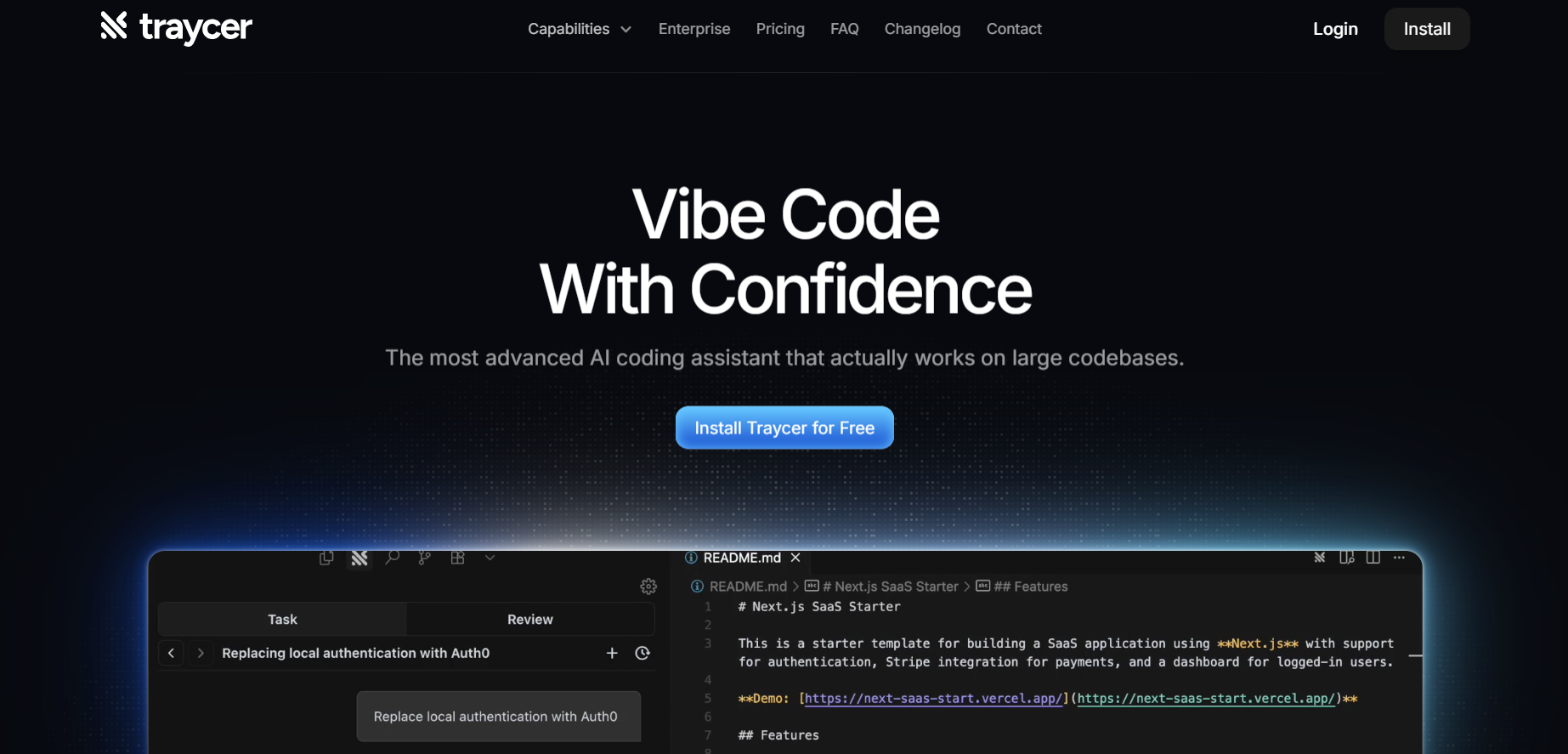
Traycer AI is an advanced coding assistant focused on planning, executing, and reviewing code changes in large projects. Rather than immediately generating code, it begins each task by creating detailed, structured plans that break down high-level intent into manageable actions. From there, it allows users to iterate on these plans, then hand them off to AI agents like Claude Code, Cursor, or others to implement the changes. Traycer also includes functionality to verify AI-generated changes against the existing codebase to catch errors early. It integrates with development environments (VSCode, Cursor, Windsurf) and supports features like “Ticket Assist,” which turns GitHub issues into executable plans directly in your IDE.
Traycer
Traycer AI is an advanced coding assistant focused on planning, executing, and reviewing code changes in large projects. Rather than immediately generating code, it begins each task by creating detailed, structured plans that break down high-level intent into manageable actions. From there, it allows users to iterate on these plans, then hand them off to AI agents like Claude Code, Cursor, or others to implement the changes. Traycer also includes functionality to verify AI-generated changes against the existing codebase to catch errors early. It integrates with development environments (VSCode, Cursor, Windsurf) and supports features like “Ticket Assist,” which turns GitHub issues into executable plans directly in your IDE.
Traycer
Traycer AI is an advanced coding assistant focused on planning, executing, and reviewing code changes in large projects. Rather than immediately generating code, it begins each task by creating detailed, structured plans that break down high-level intent into manageable actions. From there, it allows users to iterate on these plans, then hand them off to AI agents like Claude Code, Cursor, or others to implement the changes. Traycer also includes functionality to verify AI-generated changes against the existing codebase to catch errors early. It integrates with development environments (VSCode, Cursor, Windsurf) and supports features like “Ticket Assist,” which turns GitHub issues into executable plans directly in your IDE.


Roo Code
Roo Code is an open-source AI-powered coding assistant available on GitHub through the RooVetGit repository. It integrates directly with Visual Studio Code, providing developers with an autonomous “AI dev team” that can plan, write, debug, and refactor code across multiple files. Built as a fork of the earlier Roo Cline project, Roo Code uses agentic modes—such as Code, Architect, Ask, and Debug—to handle distinct development tasks. Developers can customize modes, connect various AI model providers, and fine-tune workflows for maximum control. Fully open-source, it supports local and cloud-based models while prioritizing privacy and flexibility.
Roo Code
Roo Code is an open-source AI-powered coding assistant available on GitHub through the RooVetGit repository. It integrates directly with Visual Studio Code, providing developers with an autonomous “AI dev team” that can plan, write, debug, and refactor code across multiple files. Built as a fork of the earlier Roo Cline project, Roo Code uses agentic modes—such as Code, Architect, Ask, and Debug—to handle distinct development tasks. Developers can customize modes, connect various AI model providers, and fine-tune workflows for maximum control. Fully open-source, it supports local and cloud-based models while prioritizing privacy and flexibility.
Roo Code
Roo Code is an open-source AI-powered coding assistant available on GitHub through the RooVetGit repository. It integrates directly with Visual Studio Code, providing developers with an autonomous “AI dev team” that can plan, write, debug, and refactor code across multiple files. Built as a fork of the earlier Roo Cline project, Roo Code uses agentic modes—such as Code, Architect, Ask, and Debug—to handle distinct development tasks. Developers can customize modes, connect various AI model providers, and fine-tune workflows for maximum control. Fully open-source, it supports local and cloud-based models while prioritizing privacy and flexibility.


Emergent
Emergent is an AI-powered development platform that enables anyone to build and ship full-stack, production-ready applications from plain English prompts. Known as the world’s first “agentic vibe coding” platform, Emergent uses specialized AI agents for coding, design, testing, and deployment. Users can create complex apps—from e-commerce stores to SaaS platforms—without writing a single line of code. It autonomously handles frontend, backend, authentication, and hosting, offering seamless integration with GitHub and VS Code. Whether you’re a developer or a non-coder, Emergent turns your ideas into live, deployable software within minutes.
Emergent
Emergent is an AI-powered development platform that enables anyone to build and ship full-stack, production-ready applications from plain English prompts. Known as the world’s first “agentic vibe coding” platform, Emergent uses specialized AI agents for coding, design, testing, and deployment. Users can create complex apps—from e-commerce stores to SaaS platforms—without writing a single line of code. It autonomously handles frontend, backend, authentication, and hosting, offering seamless integration with GitHub and VS Code. Whether you’re a developer or a non-coder, Emergent turns your ideas into live, deployable software within minutes.
Emergent
Emergent is an AI-powered development platform that enables anyone to build and ship full-stack, production-ready applications from plain English prompts. Known as the world’s first “agentic vibe coding” platform, Emergent uses specialized AI agents for coding, design, testing, and deployment. Users can create complex apps—from e-commerce stores to SaaS platforms—without writing a single line of code. It autonomously handles frontend, backend, authentication, and hosting, offering seamless integration with GitHub and VS Code. Whether you’re a developer or a non-coder, Emergent turns your ideas into live, deployable software within minutes.

Developer Toolkit
DeveloperToolkit.ai is an advanced AI-assisted development platform designed to help developers build production-grade, scalable, and maintainable software. It leverages powerful models like Claude Code and Cursor to generate production-ready code that’s secure, tested, and optimized for real-world deployment. Unlike tools that stop at quick prototypes, DeveloperToolkit.ai focuses on long-term code quality, maintainability, and best practices. Whether writing API endpoints, components, or full-fledged systems, it accelerates the entire development process while ensuring cleaner architectures and stable results fit for teams that ship with confidence.
Developer Toolkit
DeveloperToolkit.ai is an advanced AI-assisted development platform designed to help developers build production-grade, scalable, and maintainable software. It leverages powerful models like Claude Code and Cursor to generate production-ready code that’s secure, tested, and optimized for real-world deployment. Unlike tools that stop at quick prototypes, DeveloperToolkit.ai focuses on long-term code quality, maintainability, and best practices. Whether writing API endpoints, components, or full-fledged systems, it accelerates the entire development process while ensuring cleaner architectures and stable results fit for teams that ship with confidence.
Developer Toolkit
DeveloperToolkit.ai is an advanced AI-assisted development platform designed to help developers build production-grade, scalable, and maintainable software. It leverages powerful models like Claude Code and Cursor to generate production-ready code that’s secure, tested, and optimized for real-world deployment. Unlike tools that stop at quick prototypes, DeveloperToolkit.ai focuses on long-term code quality, maintainability, and best practices. Whether writing API endpoints, components, or full-fledged systems, it accelerates the entire development process while ensuring cleaner architectures and stable results fit for teams that ship with confidence.

Chef
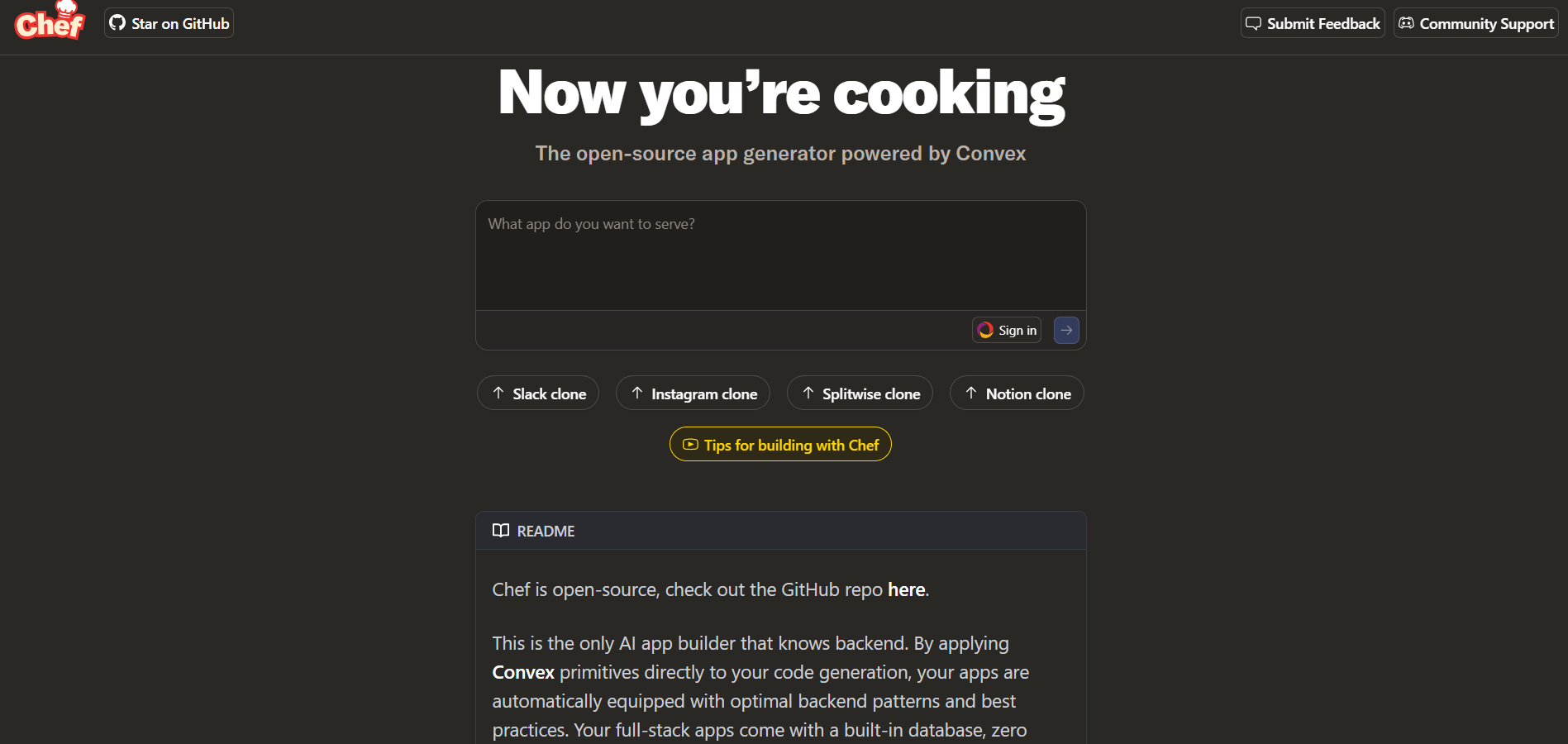
Chef by Convex is an AI-powered development assistant built to help developers create, test, and deploy web applications faster using natural language prompts. Integrated with Convex’s backend-as-a-service platform, Chef automates code generation, database setup, and API creation, enabling developers to move from concept to functional prototype within minutes. The tool understands developer intent, allowing users to describe what they want and instantly receive production-ready code snippets. With collaborative features and integrated testing environments, Chef by Convex simplifies modern app development for both individuals and teams, combining AI intelligence with backend scalability.
Chef
Chef by Convex is an AI-powered development assistant built to help developers create, test, and deploy web applications faster using natural language prompts. Integrated with Convex’s backend-as-a-service platform, Chef automates code generation, database setup, and API creation, enabling developers to move from concept to functional prototype within minutes. The tool understands developer intent, allowing users to describe what they want and instantly receive production-ready code snippets. With collaborative features and integrated testing environments, Chef by Convex simplifies modern app development for both individuals and teams, combining AI intelligence with backend scalability.
Chef
Chef by Convex is an AI-powered development assistant built to help developers create, test, and deploy web applications faster using natural language prompts. Integrated with Convex’s backend-as-a-service platform, Chef automates code generation, database setup, and API creation, enabling developers to move from concept to functional prototype within minutes. The tool understands developer intent, allowing users to describe what they want and instantly receive production-ready code snippets. With collaborative features and integrated testing environments, Chef by Convex simplifies modern app development for both individuals and teams, combining AI intelligence with backend scalability.

Unbound
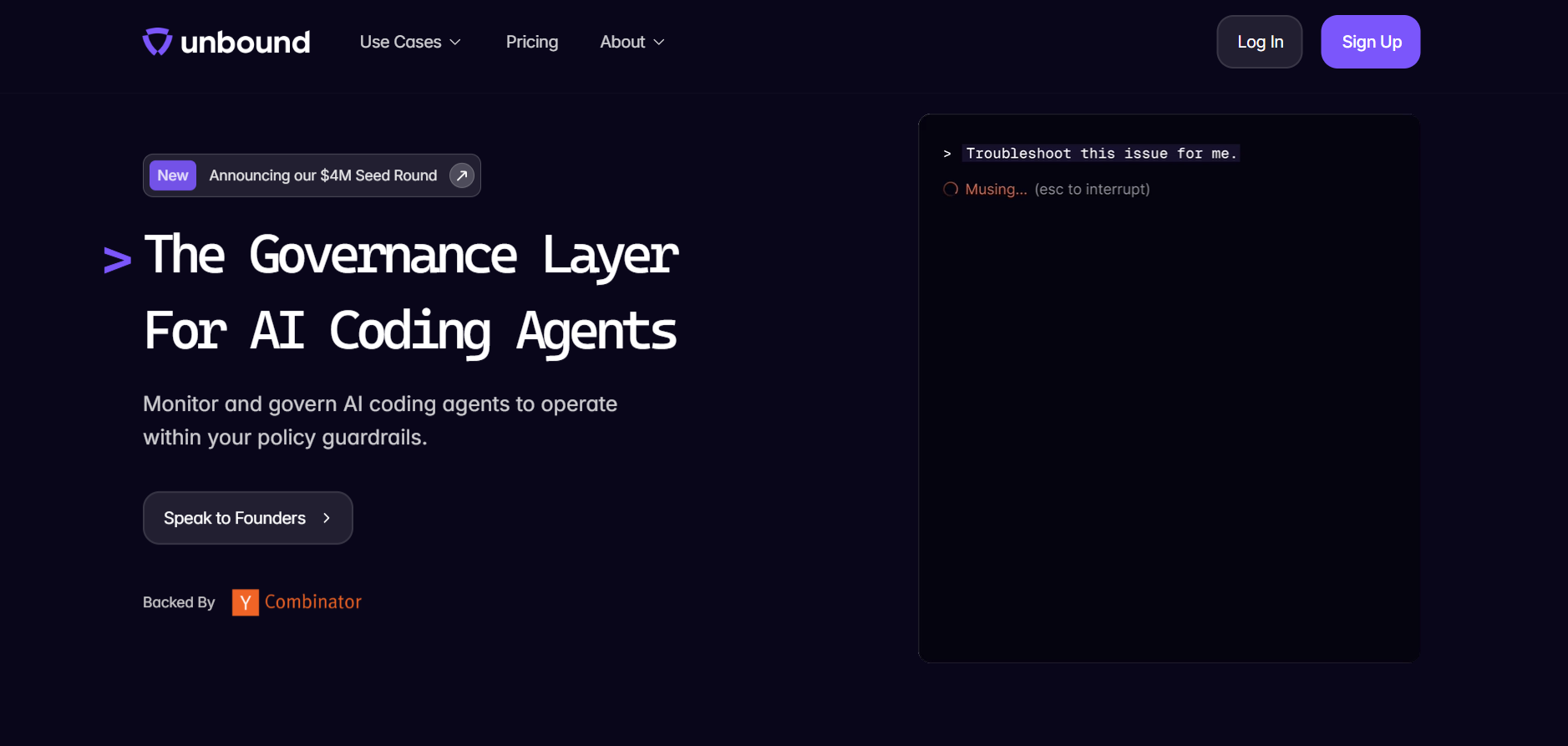
Unbound is a governance and monitoring layer designed specifically for AI coding agents operating within enterprise environments. It enables organizations to observe, control, and enforce policy guardrails around autonomous or semi-autonomous coding systems. By providing oversight into agent behavior, decisions, and outputs, Unbound helps ensure AI coding agents operate safely, compliantly, and within defined organizational standards. The platform addresses growing concerns around uncontrolled AI agents in software development workflows.
Unbound
Unbound is a governance and monitoring layer designed specifically for AI coding agents operating within enterprise environments. It enables organizations to observe, control, and enforce policy guardrails around autonomous or semi-autonomous coding systems. By providing oversight into agent behavior, decisions, and outputs, Unbound helps ensure AI coding agents operate safely, compliantly, and within defined organizational standards. The platform addresses growing concerns around uncontrolled AI agents in software development workflows.
Unbound
Unbound is a governance and monitoring layer designed specifically for AI coding agents operating within enterprise environments. It enables organizations to observe, control, and enforce policy guardrails around autonomous or semi-autonomous coding systems. By providing oversight into agent behavior, decisions, and outputs, Unbound helps ensure AI coding agents operate safely, compliantly, and within defined organizational standards. The platform addresses growing concerns around uncontrolled AI agents in software development workflows.
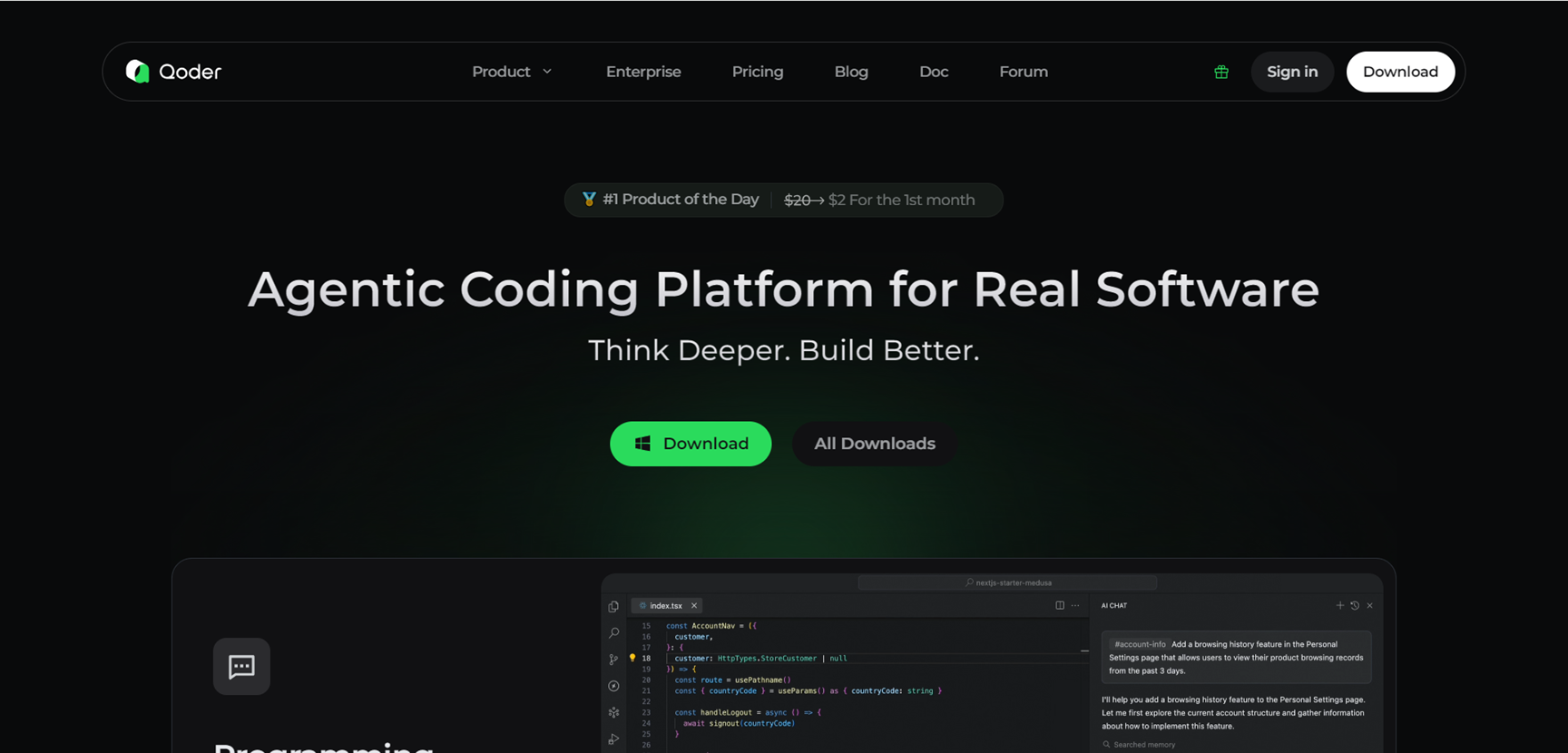

Qoder
Qoder is an agentic coding platform that powers real software development with AI agents handling complex tasks like code generation, testing, refactoring, and debugging across 200+ languages. It features NES intelligent suggestions, Quest mode for autonomous multi-file work, inline chats, codebase wikis, persistent memory learning, and MCP tool integration for external services. Downloadable for Windows, Mac, and Linux, it combines multi-model AI (Claude, GPT, Gemini) with deep context engineering for precise, iterative coding support.
Qoder
Qoder is an agentic coding platform that powers real software development with AI agents handling complex tasks like code generation, testing, refactoring, and debugging across 200+ languages. It features NES intelligent suggestions, Quest mode for autonomous multi-file work, inline chats, codebase wikis, persistent memory learning, and MCP tool integration for external services. Downloadable for Windows, Mac, and Linux, it combines multi-model AI (Claude, GPT, Gemini) with deep context engineering for precise, iterative coding support.
Qoder
Qoder is an agentic coding platform that powers real software development with AI agents handling complex tasks like code generation, testing, refactoring, and debugging across 200+ languages. It features NES intelligent suggestions, Quest mode for autonomous multi-file work, inline chats, codebase wikis, persistent memory learning, and MCP tool integration for external services. Downloadable for Windows, Mac, and Linux, it combines multi-model AI (Claude, GPT, Gemini) with deep context engineering for precise, iterative coding support.
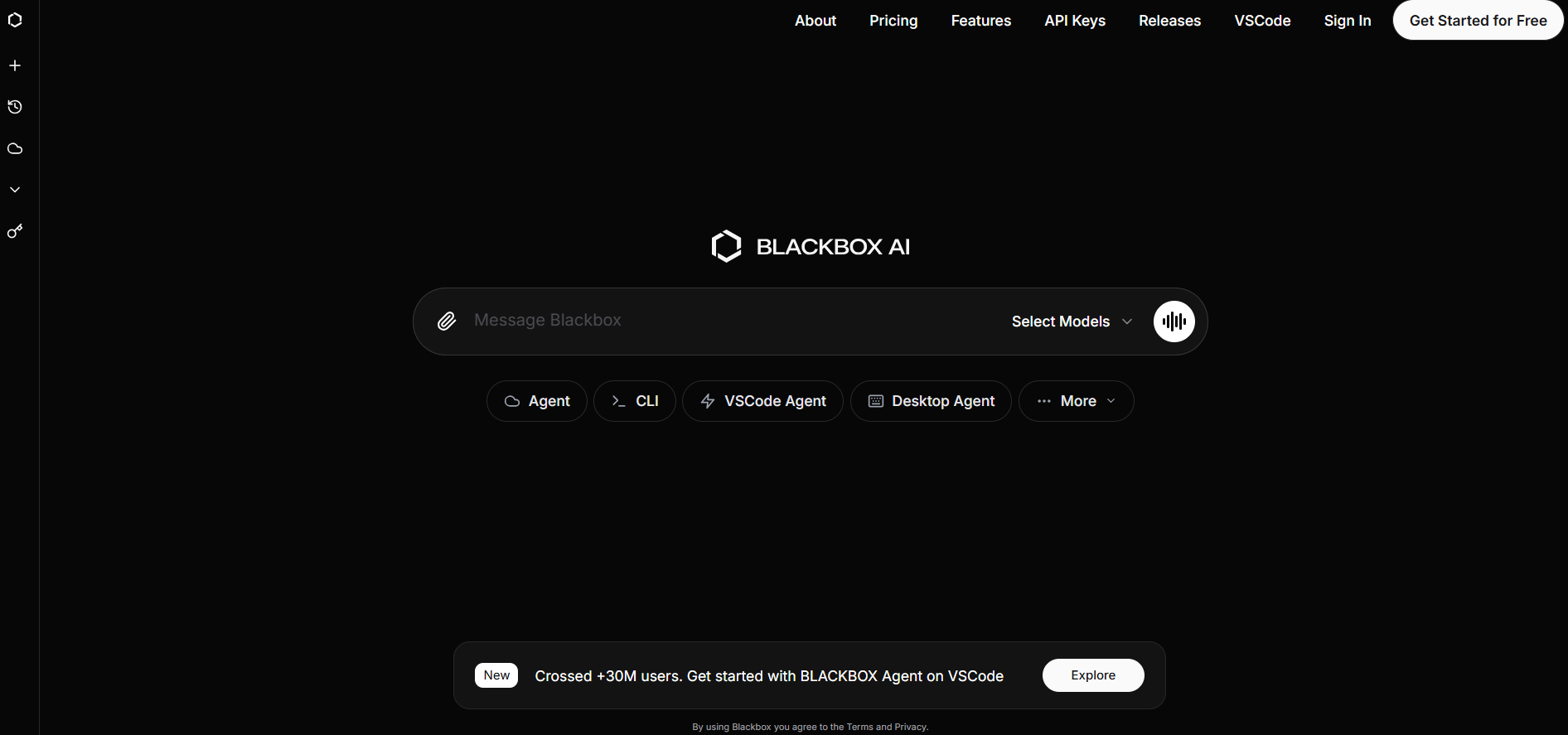

BlackBox AI
Blackbox.ai is a unified coding assistant platform that merges leading AI coding agents—Claude Code, Codex, Gemini, and Blackbox—into one environment used by over 30 million developers. It provides multi-agent code generation, debugging assistance, code translation, and intelligent search across projects. Instead of switching between tools, developers can query multiple coding agents in a single interface to compare solutions, fix errors, and accelerate development. Blackbox.ai reduces friction in coding tasks by enabling AI collaboration, helping developers build, debug, and ship faster with assistance from several powerful models working together.
BlackBox AI
Blackbox.ai is a unified coding assistant platform that merges leading AI coding agents—Claude Code, Codex, Gemini, and Blackbox—into one environment used by over 30 million developers. It provides multi-agent code generation, debugging assistance, code translation, and intelligent search across projects. Instead of switching between tools, developers can query multiple coding agents in a single interface to compare solutions, fix errors, and accelerate development. Blackbox.ai reduces friction in coding tasks by enabling AI collaboration, helping developers build, debug, and ship faster with assistance from several powerful models working together.
BlackBox AI
Blackbox.ai is a unified coding assistant platform that merges leading AI coding agents—Claude Code, Codex, Gemini, and Blackbox—into one environment used by over 30 million developers. It provides multi-agent code generation, debugging assistance, code translation, and intelligent search across projects. Instead of switching between tools, developers can query multiple coding agents in a single interface to compare solutions, fix errors, and accelerate development. Blackbox.ai reduces friction in coding tasks by enabling AI collaboration, helping developers build, debug, and ship faster with assistance from several powerful models working together.
Editorial Note
This page was researched and written by the ATB Editorial Team. Our team researches each AI tool by reviewing its official website, testing features, exploring real use cases, and considering user feedback. Every page is fact-checked and regularly updated to ensure the information stays accurate, neutral, and useful for our readers.
If you have any suggestions or questions, email us at hello@aitoolbook.ai